
Also available in Português
Things to Do in the Azores: A Local's Top Picks
The best things to do in the Azores, picked by a local — whale watching, hot springs, crater lakes, hiking, and the island-by-island experiences worth it.
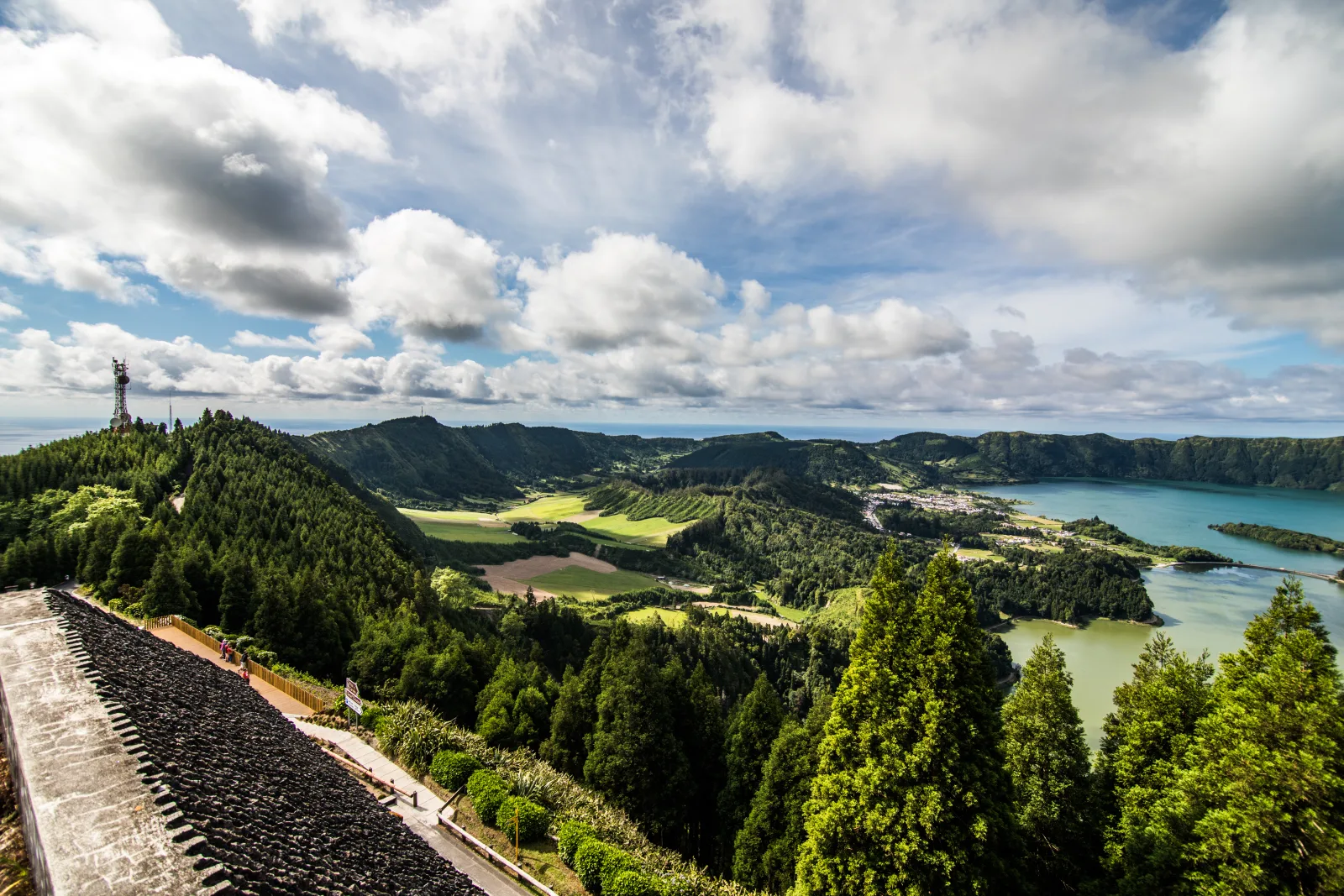
People ask me what to do in the Azores more than any other question — and the honest answer is that it depends on the island, the season, and what kind of traveller you are. I live on São Miguel, and I’ve watched visitors have completely different (and equally great) trips: one couple spends a week chasing hikes and viewpoints, another spends it on boats and in hot springs.
This guide is the overview — the best things to do across the archipelago, organised so you can match them to your trip. It’s a starting point. Every experience below links to a deeper guide if you want the detail.
The essential things to do in the Azores
If you do nothing else, do these. They’re the experiences that define the islands.
| Experience | Where | Why it’s essential |
|---|---|---|
| Whale watching | São Miguel, Pico, Faial | One of the best places on Earth for it |
| Sete Cidades crater lakes | São Miguel | The archipelago’s signature view |
| Furnas hot springs + cozido | São Miguel | Geothermal bathing and underground-cooked stew |
| Climb (or tour) Pico | Pico Island | Portugal’s highest mountain |
| Lagoa do Fogo | São Miguel | The most pristine crater lake |
The rest of this guide breaks these down and adds the next tier — by activity, then by island.
Whale and dolphin watching
The Azores sit on deep-water migration routes, and the result is some of the best whale watching in the world. More than 20 species of cetacean pass through or live in the archipelago’s waters.
- Sperm whales are resident year-round
- Large baleen whales — blue, fin, sei — migrate through in spring, roughly March to May
- Dolphins — common, bottlenose, striped, spotted — are reliable on almost every trip, year-round
Tours run from São Miguel (Ponta Delgada and Vila Franca do Campo), Pico (Lajes), and Faial (Horta). A trip lasts 2.5–3.5 hours. The full breakdown of seasons, operators, and what to expect is in the whale watching in the Azores guide.
Volcanic hot springs and thermal pools
The Azores are volcanic, and that means geothermal water you can bathe in — one of the most distinctive things to do here.
- Terra Nostra (Furnas) — a huge iron-rich thermal pool inside a historic botanical garden
- Caldeira Velha — a forest waterfall and stepped pools, covered in the Caldeira Velha guide
- Poça da Dona Beija (Furnas) — open-air spa pools, best in the evening
- Ponta da Ferraria — a natural sea pool where a hot spring meets the Atlantic, covered in the Ponta da Ferraria guide
The full comparison of all the geothermal sites — temperatures, booking, timing — is in the thermal pools on São Miguel guide.
Crater lakes and viewpoints
The Azores’ volcanic past left a landscape of calderas filled with lakes — and the islands have built viewpoints (miradouros) to look at them.
- Sete Cidades — twin lakes, one blue and one green, in a vast crater. See the Sete Cidades guide. Go before 10am — the crater makes its own cloud.
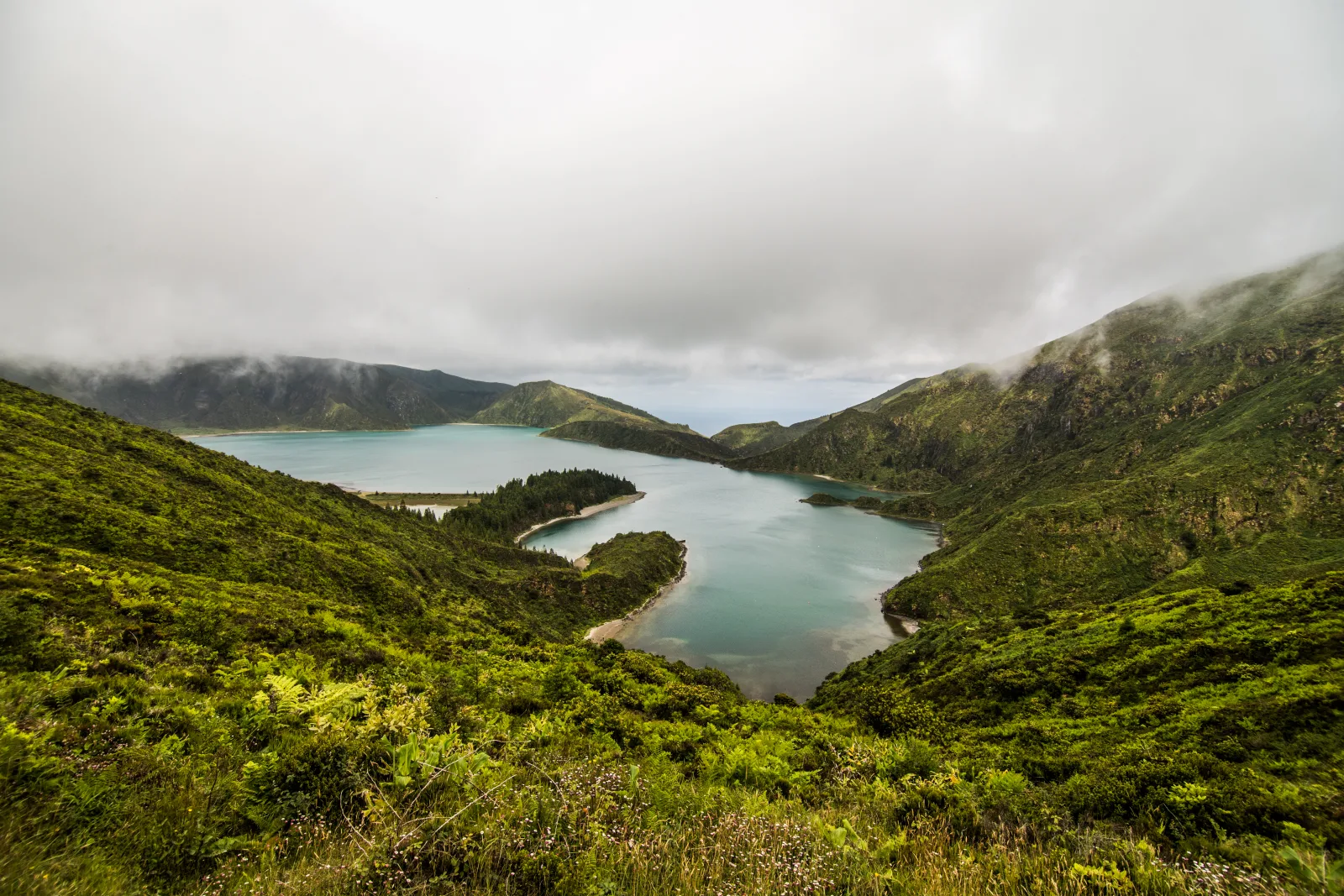
- Lagoa do Fogo — the “Lake of Fire”, the most pristine and protected crater lake, covered in the Lagoa do Fogo guide
- Furnas Lake — the steaming lake where the cozido cooks underground
- Viewpoints — Vista do Rei, Boca do Inferno, and dozens more, mapped in the São Miguel viewpoints guide
Most viewpoints are free and reachable by car — this is the side of the Azores you can enjoy without hiking.
Hiking
The Azores are a hiker’s archipelago — official trails are graded easy, medium, and hard by the regional government, so there’s something for every level.
- Easy — the Sete Cidades rim, the Faial Caldeira loop, coastal fajã paths
- Medium — Lagoa do Fogo descent, Salto do Prego waterfall loop
- Hard — climbing Pico, the Faial Ten Volcanoes traverse
The full picture — trail grades, the best routes on each island, what to pack — is in the hiking in the Azores guide, with São Miguel’s trails detailed in best hikes on São Miguel.
Food and drink
Eating well is one of the real pleasures of the Azores, and some of it is an activity in itself.
- Cozido das Furnas — meat and vegetables cooked for hours underground by volcanic heat. The signature Azorean meal — see the cozido das Furnas guide.
- Gorreana tea plantation — the oldest tea plantation in Europe, with a free factory tour, near Ribeira Grande
- Alcatra — Terceira’s clay-pot beef stew, covered in the alcatra guide
- Local specialities — limpets, fresh tuna, Azorean cheese, pineapple, queijadas. The full picture is in the São Miguel food guide.
Beaches and ocean swimming
The Azores aren’t a beach destination in the Caribbean sense — the coastline is mostly dramatic volcanic cliff — but there’s good swimming if you know where to look.
- Black-sand beaches — volcanic sand, most common on São Miguel’s coasts. Praia de Santa Bárbara (also the main surf beach) and Praia dos Moinhos are the best-known.
- Natural rock pools — lava pools where the Atlantic is tamed by basalt. Found across every island, often free and uncrowded.
- Santa Maria — the exception. The southernmost island has the Azores’ only proper white-sand beach and the warmest water, covered in the Santa Maria guide.
- The Vila Franca islet — a swimmable volcanic crater off São Miguel’s south coast, detailed in the Ilhéu de Vila Franca guide.
The water is Atlantic — cooler than the Mediterranean — warmest from July to September. The full rundown is in the best beaches on São Miguel guide.
Whale watching, surfing, and on-the-water activities
Beyond whale watching, the ocean is central to what there is to do here:
- Surfing — the north coast of São Miguel around Ribeira Grande catches consistent Atlantic swell, with surf schools for beginners
- Scuba diving — clear water, volcanic underwater landscapes, and marine life including rays and, off Santa Maria, summer manta aggregations — see the scuba diving in the Azores guide
- Kayaking and SUP — calm spots like Furnas Lake and sheltered coves
- Coasteering and canyoning — the volcanic terrain makes the Azores strong for both
Things to do island by island
The Azores are nine islands, and each has its own character. Pick two or three for a first trip — don’t try to see them all. Not sure which fits you? Take the free Which Azores island should you visit? quiz.
São Miguel — the main island
The largest and most visited, and the right base for a first trip. Sete Cidades, Furnas, Lagoa do Fogo, the hot springs, whale watching, the city of Ponta Delgada. Most travellers spend their whole trip here and don’t run out — see the 5-day São Miguel itinerary.
Pico — the mountain and the wine
Climb Pico, Portugal’s highest mountain at 2,351m, or tour the UNESCO-listed vineyards built in black lava-stone enclosures. Whale watching from Lajes is excellent. See the Pico Island guide.
Faial — the marina island
Horta’s painted marina is a legendary Atlantic sailing waypoint. The Capelinhos volcano is a 1957 eruption site you can walk through. Detailed in the Faial Island guide.
Terceira — history and festivals
Angra do Heroísmo is a UNESCO World Heritage town. Terceira has the liveliest festival culture in the Azores. See the Terceira Island guide.
The western and quieter islands
Flores has the archipelago’s best waterfalls. Santa Maria has the warmest beaches. Graciosa has Europe’s largest volcanic dome. Corvo is the smallest, most remote island of all.
Culture, towns, and history
The Azores aren’t only landscape. The islands have five centuries of history, and the towns are worth slow time.
- Ponta Delgada — São Miguel’s capital, with the black-and-white Portas da Cidade, churches, the Carlos Machado museum, and a working harbour. See things to do in Ponta Delgada.
- Angra do Heroísmo — Terceira’s UNESCO World Heritage town, the best-preserved historic centre in the archipelago
- Festivals — the Azores’ religious and cultural calendar is dense and genuine, from the Santo Cristo procession to the island festas. The full picture is in the São Miguel festivals and events guide.
- Pronunciation and culture — understanding the islands’ identity, the diaspora, and the language adds depth to a trip — covered in the Azores culture guide.
Things to do with kids and families
The Azores work well for families, with the right pace:
- Whale watching — endlessly engaging for children (choose a calmer-sea operator for younger kids)
- Hot springs — warm, shallow, fun, and a good rainy-day option
- Easy viewpoints — drive-up miradouros mean no hiking required for the big views
- Furnas — the steaming fumaroles and the underground-cooked lunch are genuinely fascinating for children
- Beaches and rock pools — sheltered swimming on calm days
The slower, nature-led pace suits families better than a packed city itinerary would.
What to do for a rainy day
Azorean weather changes fast, so build a flexible plan. When it’s wet:
- Hot springs are better in cool weather — the contrast is the point
- Furnas works rain or shine — cozido, the botanical garden, the fumaroles
- Town days — Ponta Delgada and Angra do Heroísmo have churches, museums, markets
- The Gorreana tea factory tour is indoors
A rainy morning in the Azores often clears by afternoon. Don’t cancel the day — reorder it. The single most useful habit is to keep two or three indoor or weather-proof options in your back pocket each day, so a sudden shower means a swap rather than a wasted morning. Locals plan this way instinctively — the weather here is a variable, not a verdict.
How to fit it together
The mistake most visitors make is trying to do too much. The Azores reward depth over breadth.
- 5–7 days — São Miguel only, no rush. Use the 5-day or 7-day São Miguel itinerary.
- 7–10 days — São Miguel plus one or two more islands. The 7-day multi-island itinerary shows how.
- Pick a base per island — day-tripping between islands burns time. Sleep where you explore.
For when to come, see best time to visit the Azores, and for how many days overall, how many days in the Azores.
And if you’d rather not assemble all this yourself — matching the experiences to your dates, your island choice, and the weather — Pocket Guide Azores is the AI travel planner that does exactly that. You pick what you want to do, it builds the optimized day-by-day itinerary. Built by me, from São Miguel.
The bottom line
The best things to do in the Azores are the ones that play to what the islands actually are: volcanic, oceanic, green, and unhurried. Whale watching, hot springs, crater lakes, hiking, and eating food cooked by the earth itself — that’s the core. Everything else builds around it.
Pick your islands, pick your pace, and don’t over-schedule. The Azores are a place to go deep on a few things, not skim across many — the travellers who leave happiest are always the ones who built in time to do nothing at all.
If you want the bookable parts of this plan sorted before you arrive, these are the ones that fill up first:
What to do next
- Best time to visit the Azores — when to come for what you want to do
- 5-day São Miguel itinerary — the experiences in a day-by-day plan
- Whale watching in the Azores — the standout activity, in depth
- How many days in the Azores — planning the length of your trip
Frequently asked questions
What are the best things to do in the Azores? +
The standouts are whale watching (the Azores is one of the world's top spots), bathing in volcanic hot springs at Furnas and Caldeira Velha, seeing the Sete Cidades twin crater lakes, hiking — from gentle crater rims to climbing Pico, Portugal's highest mountain — and eating cozido cooked underground by volcanic heat. Most of these are on São Miguel, the main island, but each island has its own signature experiences.
How many days do you need to see the Azores? +
For São Miguel alone, 5–7 days covers the highlights without rushing. For a multi-island trip, allow 7–10 days and pick two or three islands rather than trying to see all nine. A week on São Miguel plus a few days on Pico and Faial is a strong first Azores trip. Day-tripping between islands is possible but eats time — it's better to base on each island.
What is the Azores best known for? +
Volcanic landscapes and the Atlantic. The Azores are famous for crater lakes (Sete Cidades, Lagoa do Fogo), geothermal hot springs and the underground-cooked cozido stew at Furnas, world-class whale and dolphin watching, dramatic hiking, Europe's only commercial tea plantations, and Pico — Portugal's highest mountain. The islands are green, wild, and far less crowded than mainland European destinations.
Can you do the Azores without hiking? +
Yes. While hiking is a highlight, plenty of the best experiences need little or no walking — whale watching boat trips, the Furnas hot springs and botanical garden, driving to viewpoints like Vista do Rei over Sete Cidades, the Gorreana tea plantation, town walks in Ponta Delgada and Angra do Heroísmo, and thermal pools. You can have a full, rewarding Azores trip at a gentle pace.
What is there to do in the Azores when it rains? +
Plenty. The thermal pools and hot springs are arguably better in cool, wet weather. Furnas works rain or shine — the cozido lunch, the botanical garden, the fumaroles. Towns like Ponta Delgada and Angra do Heroísmo have churches, museums, and covered markets. The Gorreana tea factory tour is indoors. The Azorean weather changes fast, so a rainy morning often clears by afternoon — keep the plan flexible.
Is the Azores worth visiting? +
Yes — especially for travellers who want dramatic nature without the crowds of mainland Europe. The Azores offer volcanic scenery, whales, hot springs, and genuine local culture at a slower pace and lower cost than most of Europe. They suit hikers, nature lovers, and anyone after an authentic, uncommercialised destination. They suit big-resort, beach-holiday travellers less well.
What can you do in the Azores for free? +
A great deal. The viewpoints (Vista do Rei, Miradouro da Boca do Inferno, Santa Iria), most hiking trails, the Furnas fumaroles, the Ponta da Ferraria natural sea pool, town centres, beaches, and the Gorreana tea factory tour are all free. The paid experiences — whale watching, some thermal pools, the islet boat — are worth budgeting for, but a low-cost Azores trip is entirely possible.
What are the best things to do in the Azores beyond São Miguel? +
Climb Pico, Portugal's highest mountain, and tour the UNESCO-listed vineyards on Pico Island. Visit Horta's painted marina and the Capelinhos volcano on Faial. Walk Angra do Heroísmo, a UNESCO World Heritage town, on Terceira. See the waterfalls and biosphere reserve of Flores. Each island has a distinct character — the further west you go, the wilder and quieter it gets.