
Also available in Português
Alcatra: The Terceira Pot Stew Most Visitors Miss
A local's guide to alcatra — Terceira's slow-baked beef stew. What it is, where to eat it on the island, and how to cook it properly at home in a Dutch oven.
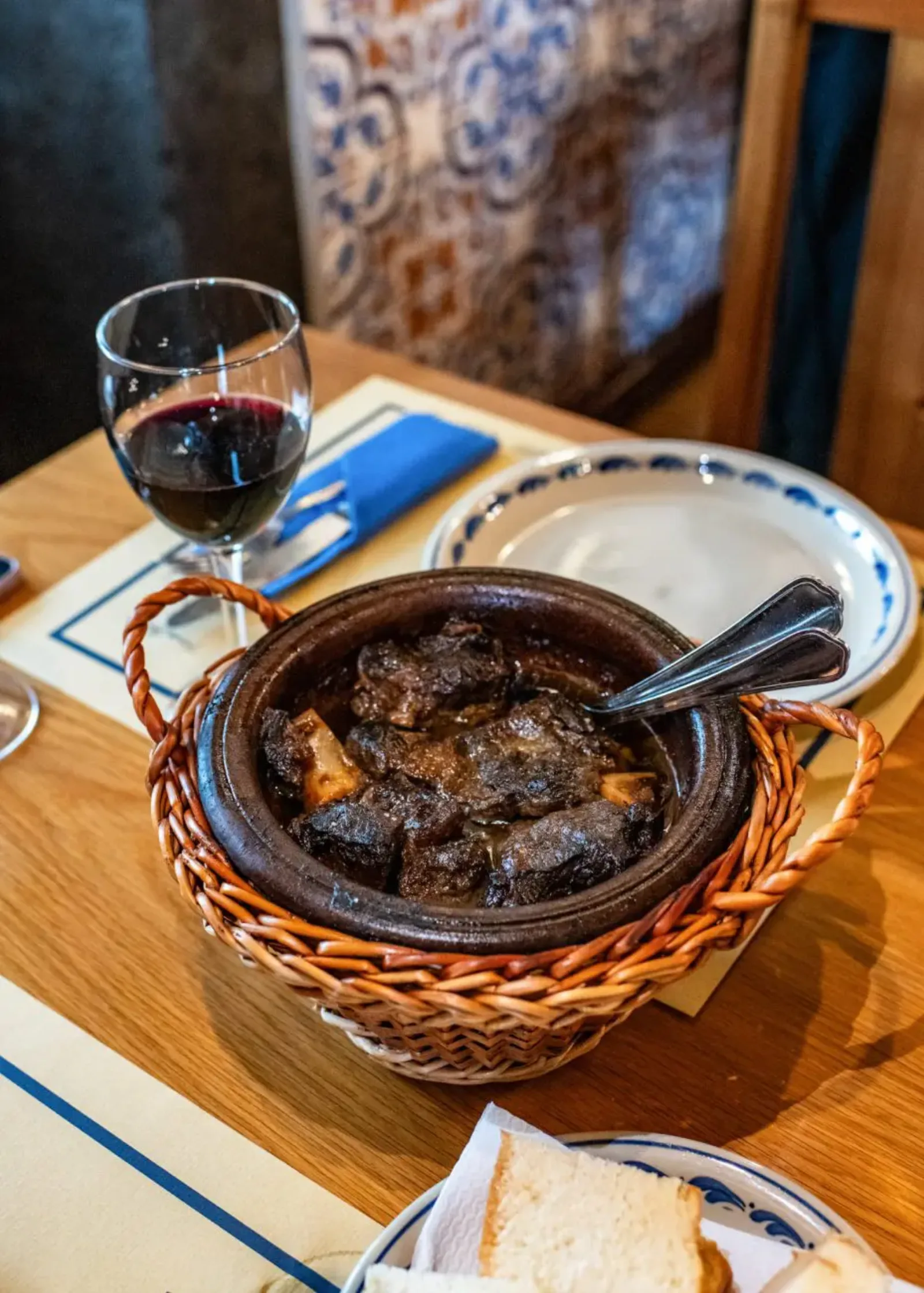
Alcatra is the dish I’d eat for my last meal in the Azores. I’m biased — I’m Azorean, but I lived on Terceira for two summers and the version they serve at the local festas in Vila de São Sebastião is one of the most quietly spectacular meals you’ll have in Portugal.
It’s also the dish most visitors miss entirely. Cozido das Furnas gets all the press because it’s cooked in volcanic earth and that makes for a great photo. Alcatra is just a clay pot in an oven — but the food itself is, in my opinion, better.
This guide covers what alcatra actually is, where to eat it on Terceira, and how to make a credible version at home. I’ve cooked it dozens of times, including on a domestic oven in a regular Dutch oven. The technique is forgiving and the result is reliable.
What is alcatra?
A slow-baked beef stew from Terceira island, cooked overnight in a traditional clay pot called an alguidar de barro. The ingredients are simple: beef, bacon, red wine, onions, garlic, bay leaves, allspice, cinnamon, salt, and pepper. There’s no browning, no flour, no thickening, no broth. The meat goes in raw, the wine does the work, and 4–6 hours at low heat turns it into something that tastes much more complex than the ingredient list suggests.
The name “alcatra” technically refers to the cut of beef — rump or chuck — though Azorean usage has long since drifted to mean the dish itself. On a Terceira menu, alcatra invariably means this stew.
Where alcatra comes from
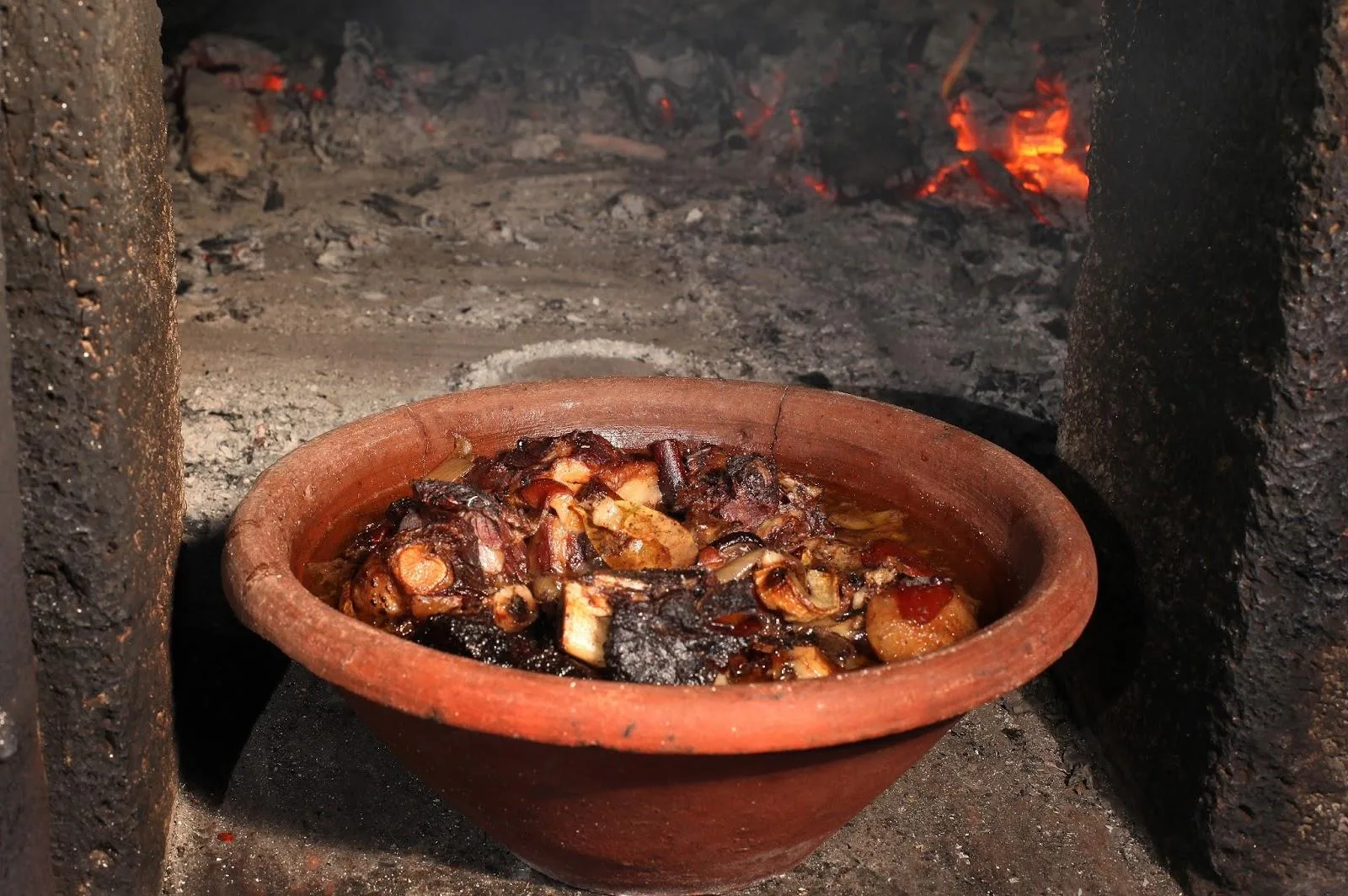
Terceira, one of the central group of nine Azorean islands. The dish evolved from Portuguese settler cooking after the 15th-century colonization, with the warm spices reflecting the Portuguese spice trade with India. The volcanic clay used in the Terceira alguidares is local — and it matters. The pots’ porous walls absorb seasoning over years of use, and an old family pot makes a measurably different stew from a new one.
The dish is most strongly associated with Vila de São Sebastião, a small village on Terceira’s south coast, and with the festas (religious feast-day celebrations) held throughout the summer. The Holy Spirit festivals (festas do Espírito Santo) are when alcatra appears on every table — sometimes for hundreds of guests at once, baked in dozens of pots in a single wood-fired oven.
For broader context on Terceira and the rest of the central islands, the Pico Island guide covers the neighbouring volcano-island that pairs naturally with a Terceira trip.
The classic alcatra ingredients
The ingredient list looks short and the proportions matter more than the quantities. This is the version I learned from a friend’s grandmother in Vila de São Sebastião.
| Ingredient | Amount (for 6) | Notes |
|---|---|---|
| Beef (chuck or rump) | 1.5 kg | Cut into 5-6 cm chunks |
| Smoked bacon (in one piece) | 250g | Fat is the carrier — don’t skimp |
| Red wine | 750 ml | A full bottle. Douro or Alentejo. Not cooking wine. |
| Onions | 3 large | Sliced thick, not minced |
| Garlic | 8 cloves | Whole, peeled, lightly crushed |
| Bay leaves | 4 | Dry is fine |
| Allspice berries | 1 tbsp | Whole, not ground |
| Cinnamon stick | 1 (10 cm) | Whole, not powder |
| Black peppercorns | 1 tsp | Whole |
| Sea salt | 2 tsp | To taste at the end |
That’s it. No oil, no broth, no flour, no tomato. The richness comes from the bacon fat rendering through the wine over hours.
The method (proper)
The traditional technique uses a tall clay pot in a wood-fired oven. You don’t need either to make a credible alcatra at home, but knowing the proper method helps you adapt.
Traditional Terceira method
The night before — pack the alguidar in this order: half the onions on the bottom, then beef chunks layered with bacon strips, then remaining onions on top. Tuck garlic, bay, allspice, cinnamon and peppercorns through the layers. Pour wine over everything. Salt last. Seal with the lid.
Into the wood oven at low heat (around 150°C / 300°F) for 5-6 hours. The pot is left undisturbed — no stirring, no checking, no opening. The wood oven’s slow, declining heat is part of the technique.
Pull from oven, rest 30 minutes. Serve straight from the pot at the table with massa sovada bread.
The seal matters. Air leaking in dries out the top layer and cools the dish unevenly. Real alcatra pots have lids that fit snugly — sometimes weighted down with a flat stone.
Home oven method (works fine)
Use a Dutch oven with a tight-fitting lid. Layer the ingredients exactly as above — no browning, beef goes in raw.
Pour wine over everything until the meat is just covered. If your wine bottle isn’t enough, add water to make up the difference rather than using more wine.
Bake covered at 150°C / 300°F for 4-5 hours. Check at 4 hours by lifting the lid only — if the meat falls apart with a fork, it’s done. Don’t stir.
Rest 30 minutes off the heat with the lid still on before serving. This is non-negotiable — the rest redistributes the gravy through the meat fibres.
Total active time: 15 minutes. Total elapsed time: about 6 hours. The oven does everything.
Clay pot vs Dutch oven differences
The home version comes out about 90% of the way to a real Terceira festa alcatra. The differences are real but minor:
- Texture of the meat. Clay pot alcatra has a slightly drier, more concentrated bite. Dutch oven alcatra is wetter and more falling-apart. Both are good — they’re different in the way two valid versions of the same dish can be.
- Gravy depth. A seasoned clay pot adds a subtle smokiness from years of absorbed wine and fat. A new Dutch oven gives you cleaner, brighter wine notes. Neither is wrong.
- Crust on the top layer. Traditional alcatra develops a slight crust where the top onions catch the heat. A Dutch oven with a tight lid keeps everything wetter — no crust, but more even cooking.
If you want the closer-to-authentic version, source an unglazed terracotta pot (Italian coccio or Spanish cazuela both work) and use it consistently. After 5-6 cooks, it’ll start behaving like a Terceira alguidar.
Common mistakes when making alcatra
After cooking this dozens of times and watching others fail at it, the patterns are predictable.
1 — Browning the meat first. Don’t. Azorean alcatra goes in raw. Browning adds Maillard flavours that compete with the gentle warm spices. The texture also suffers — pre-browned meat doesn’t break down the same way over 5 hours.
2 — Using cooking wine. Cooking wine is over-salted and stripped of its tannins. Use a real bottle of red wine you’d happily drink. Douro and Alentejo are the closest mainland equivalents to Azorean reds. Avoid heavily oaked wines and anything with high residual sugar.
3 — Skipping the bacon. The fat from the bacon is what carries the spices through the gravy. Without it, you get a thin, sour wine reduction. Smoked bacon is the right call — sweet/maple bacon will skew the flavour wrong.
4 — Stirring or peeking. The seal matters. Every time you open the lid, you lose hours of slow-built temperature and aromatics. Set a timer for 4 hours, then check — that’s the only check you should do.
5 — Serving it too hot. Like all slow-cooked stews, alcatra improves with a 30-minute rest. The meat continues to cook in residual heat, and the gravy thickens slightly as it cools. Pulling it straight from the oven and serving immediately means hot meat in thin gravy. Wait.
6 — Serving it with rice or potatoes. The traditional pairing is massa sovada — the slightly sweet Azorean bread — used to mop up gravy. Rice and potatoes are recent additions that compete for attention with the gravy. If you can’t get massa sovada, a good crusty country bread is a better substitute than starches.
Where to eat alcatra in the Azores
On Terceira is the answer. A few specific places I’d recommend:
| Restaurant | Town | Notes |
|---|---|---|
| O Forno | Vila de São Sebastião | Wood-oven specialist, alcatra is their signature dish. Reservation required. |
| Beira Mar | Praia da Vitória | Less famous, equally good. Family-run, no English menu. |
| Quinta do Martelo | Cantinho | Rural setting, festa-style alcatra in summer. Pre-book. |
| Restaurants in Angra do Heroísmo | Angra | Several in the old town serve it as a daily special. |
Outside Terceira, alcatra is rarely on menus. A handful of São Miguel restaurants serve it as a guest dish, but it’s never as good as eating it on the island it comes from. If alcatra matters to your trip, build a Terceira day around it. Fly into PDL, take a SATA inter-island flight to Lajes (TER), spend two days on Terceira, fly back. The full airport breakdown is in the Azores airport guide.
Alcatra vs cozido: which is better?
Cozido das Furnas is the famous one. Alcatra is, in my opinion, the better-tasting one.
| Cozido das Furnas | Alcatra | |
|---|---|---|
| Island | São Miguel | Terceira |
| Cooking method | Underground at volcanic vents | Wood oven in clay pot |
| Cooking time | 6-7 hours | 4-6 hours |
| Meat | Beef + pork + chicken + chouriço | Beef only |
| Spices | Salt-forward, mild | Cinnamon + allspice + wine |
| Best with | Wine + bread | Massa sovada bread + wine |
| Drama level | High (theatre of unearthing pots) | Low (just a pot from an oven) |
| Flavour | Mild, broth-forward, layered | Deep, gravy-forward, focused |
The full breakdown of cozido is in the cozido das Furnas guide. The right answer is eat both if you have the days for both islands. If you only have time for one, cozido is more of a tourist event and alcatra is more of a meal you’ll remember.
A few cultural notes
Alcatra is festa food first. On Terceira, alcatra is associated with festas do Espírito Santo (Holy Spirit festivals), held in villages across the island throughout summer. These festivals are open — anyone can show up, eat alcatra at long communal tables, and watch the procession. If your trip overlaps with one, prioritize it over a restaurant meal.
The clay pot has a name. Alguidar de barro is the proper term. Caçoila is sometimes used interchangeably but technically refers to a wider, shallower vessel. Real alcatra pots are tall and narrow — about 30 cm tall, 20 cm wide at the rim. They’re made in Terceira itself, mostly in São Bartolomeu de Regatos.
Grandmother variations. Every Terceira family has small variations — some add a splash of port wine, some add cloves, some swap beef for veal for special occasions. The version above is the classic baseline. If you cook it a few times, you’ll start tweaking it.
If you’d rather skip planning the inter-island trip yourself, Pocket Guide Azores builds a Terceira day around alcatra into your itinerary automatically — flight times, restaurant reservations, and the right festivals to align with.
The bottom line
Alcatra is the dish to eat if you go to Terceira. It’s slower, simpler, and more focused than cozido das Furnas, and most travel guides skip it because it doesn’t make a dramatic photograph. The eating is what matters, not the unearthing.
Make it at home with a Dutch oven if you can’t get to Terceira. Use real wine, real smoked bacon, and don’t brown the meat. Five hours at 150°C, then 30 minutes of rest, then bread on the table.
What to read next
- Cozido das Furnas guide — São Miguel’s volcanic-cooked counterpart.
- Azores airport guide — flight connections from PDL to Terceira (TER).
- What to eat in São Miguel — what to order on the island your flight lands on.
- Pico Island guide — the natural pairing island for a multi-island trip.
- Where are the Azores? — the orientation guide if you’re new to the archipelago.
Frequently asked questions
What is alcatra? +
Alcatra is the signature beef stew of Terceira island in the Azores — slow-baked overnight in a traditional clay pot called an alguidar de barro, with red wine, allspice, cinnamon, garlic, bay leaves, bacon, and onions. The dish takes its name from the cut of beef traditionally used (a rump or chuck cut), and the slow cooking style is what defines it — the meat falls apart, the wine reduces into a deeply spiced gravy, and the bread served alongside soaks up the rest. It's a Terceira-specific dish, not found on São Miguel restaurants the same way.
Where is alcatra from? +
Alcatra is from Terceira, one of the central group islands in the Azores. The dish is most strongly associated with the village of Vila de São Sebastião and the area around Angra do Heroísmo, the historic capital of the Azores. Both the recipe and the clay-pot cooking method came over with Portuguese settlers in the 15th and 16th centuries and evolved on Terceira into something distinct from mainland Portuguese stews. The classic Terceira festas (religious feast days) almost without exception serve alcatra as the centerpiece dish.
What does alcatra taste like? +
Deep, warm, gently spiced. The dominant notes are cinnamon, allspice, and slow-cooked beef fat, balanced by red wine acidity and the saltiness of the bacon. It's not aggressive — Azorean cooking generally isn't — but it's rich and layered. The meat is fall-apart tender, the gravy coats a spoon, and the spice profile feels closer to medieval Portuguese cooking than to anything modern Mediterranean. If you've had Moroccan tagine, the spice direction is similar but milder; if you've had French daube, the cooking method is similar but the spice palette is wider.
How is alcatra cooked traditionally? +
In a tall, unglazed clay pot called an alguidar de barro (or simply alguidar), baked slowly in a wood-burning oven for 4-6 hours at low heat. The pot's porous walls absorb wine and fat as it cooks and release that flavour back into the next batch — old alcatra pots are prized possessions in Terceira families, sometimes passed down for generations. The meat, bacon, onions, garlic, spices, and red wine go in cold and seal under a lid. Nothing is browned first. The slow heat does all the work.
Where can I try alcatra in the Azores? +
On Terceira island, primarily. The classic places are O Forno in Vila de São Sebastião (a wood-oven specialist, alcatra is their signature), Beira Mar in Praia da Vitória, and several restaurants in Angra do Heroísmo's old town. Reservations help on weekends. Outside Terceira, alcatra is harder to find — a handful of São Miguel restaurants serve it as a guest dish but it's never as good as eating it on the island it comes from. If you're planning a multi-island trip and want to try alcatra, build at least one full day on Terceira around it.
Can I make alcatra at home? +
Yes, and it's surprisingly forgiving. You don't need a real Azorean clay pot — a Dutch oven works fine, though the texture won't be quite the same. The main rules: use a flavourful red wine (a Douro or Alentejo), don't skimp on the bacon (it's the fat that carries the spices), and cook it low and slow at 150°C / 300°F for 4-5 hours. Don't brown the meat first — Azorean alcatra goes in raw. Spice ratios matter more than ingredient quantities. The full method is in the recipe section below.
What do you eat with alcatra? +
Massa sovada — the sweet, slightly fluffy Azorean bread — is the traditional pairing, used to mop up the gravy. A simple green salad sometimes appears alongside, though it's not essential. The drink is invariably red wine, often the same Verdelho-derived wine from Pico that the recipe used. No starches like potatoes or rice — the bread does the carb work. Some families serve a small bowl of plain rice on the side; this is more recent and not strictly traditional.
What's the difference between alcatra and cozido das furnas? +
They're completely different dishes from different islands. Cozido das Furnas is from São Miguel, cooked underground at volcanic vents, mixes pork and beef and chouriço with cabbage and potatoes, and tastes mild and broth-forward. Alcatra is from Terceira, cooked in a clay pot in a wood-burning oven, uses only beef with bacon and red wine and warm spices, and tastes deep and gravy-forward. Cozido is a one-pot earthy meal of many ingredients; alcatra is a focused beef stew. Visitors who try both usually rank alcatra as more flavourful and cozido as more atmospheric to eat.