
Also available in Português
Pico Island, Azores: A Local's Guide to Portugal's Tallest Mountain
Pico Azores, by a local — a complete guide to Pico Island, Portugal's highest mountain, the UNESCO vineyards, whale watching, and the 2-day plan that works.
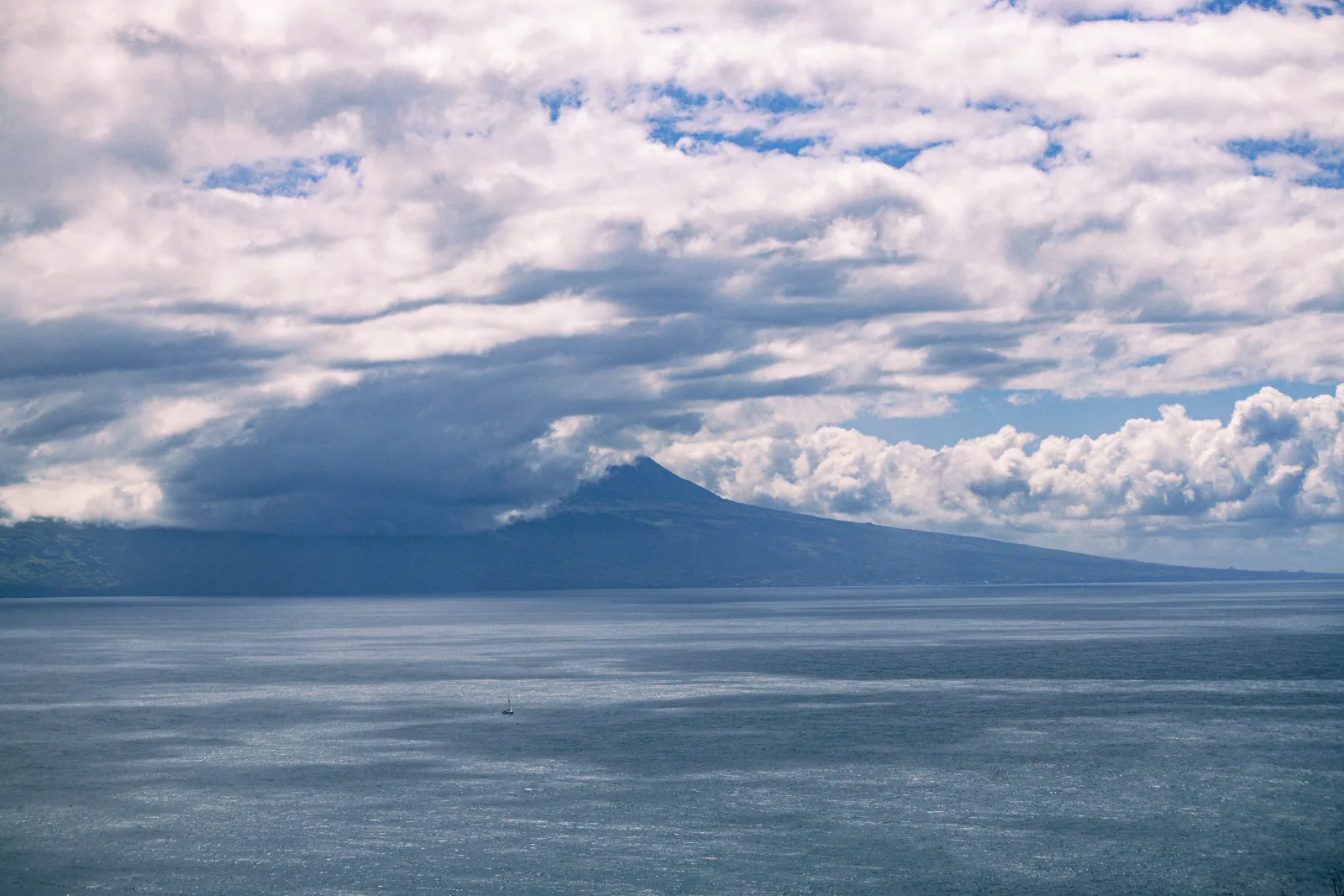
Pico Azores is what most travellers type into Google when they mean Pico Island — the second-largest island in the Azores archipelago, named for the volcano at its centre. The silhouette is the image most Azoreans carry in their head: from the Madalena ferry pier on a clear morning the mountain rises directly out of the sea, conical and improbably tall, with the basalt vineyard walls running down to the water in geometric stripes. The view changes very little from the day Portuguese settlers first saw it in the 15th century. It is the most photographed thing on the island and somehow still looks better in person.
Most visitors arrive on a 50-minute flight from São Miguel for two days, climb the mountain (or don’t), drink the wine, and leave with the same shocked report: this is a different Azores from the one they thought they knew. Pico is volcanic moonscape and 19th-century stone walls and rough Atlantic coastline. It’s not green caldera lakes. It’s something stranger.
I live on São Miguel but I cross the channel to Pico three or four times a year. This guide is the version I’d hand to a friend with one week in the Azores who already knows São Miguel deserves four days — what the remaining three look like if Pico is the second island.
Where Pico Island, Azores actually is
Pico is the second-largest island in the Azores at about 444 km², roughly 50 km long and 16 km wide, sitting in the central group of the archipelago. Its closest neighbours are Faial (a 30-minute ferry across the channel, 8 km west) and São Jorge (visible to the north on a clear day). The island is named after the volcano at its centre — Montanha do Pico, 2,351m, Portugal’s highest peak.
The geography divides into three clear zones:
- The mountain interior. Pico Mountain dominates the centre of the island. The flanks are barren lava flows, sparse vegetation, and weather that changes hourly. Almost no one lives here.
- The south coast. The vineyard lava-stone landscape (UNESCO World Heritage), Madalena (the main town and ferry port), Lajes (the old whaling town), and most of the population.
- The north coast. Wilder, less developed, smaller villages, the natural rock pools at Cachorro and Furnas Santo António, and dramatic sea cliffs.
You can drive the island’s perimeter in about 3 hours without stops. With proper stops, plan a full day for each coast.
What Pico is famous for
Three things define what Pico Island is: the mountain, the vineyards, and the whales.
Pico Mountain (Montanha do Pico)
At 2,351m, Pico Mountain is the highest point in Portugal — taller than any peak on the mainland, taller than anything in Madeira. It’s a stratovolcano that last erupted in 1718, and the small Piquinho secondary cone at the summit still vents warm sulphurous gas in places. The summit hike is the headline outdoor experience on the island and one of the most demanding trails in the archipelago.
You don’t have to climb it. Many visitors are happy to drive up to the Casa da Montanha visitor centre at 1,200m, look at the cone from the base, take photos, and call it a day. The view from the parking area on a clear afternoon is already one of the best in the Azores.
The vineyard landscape (UNESCO listed)
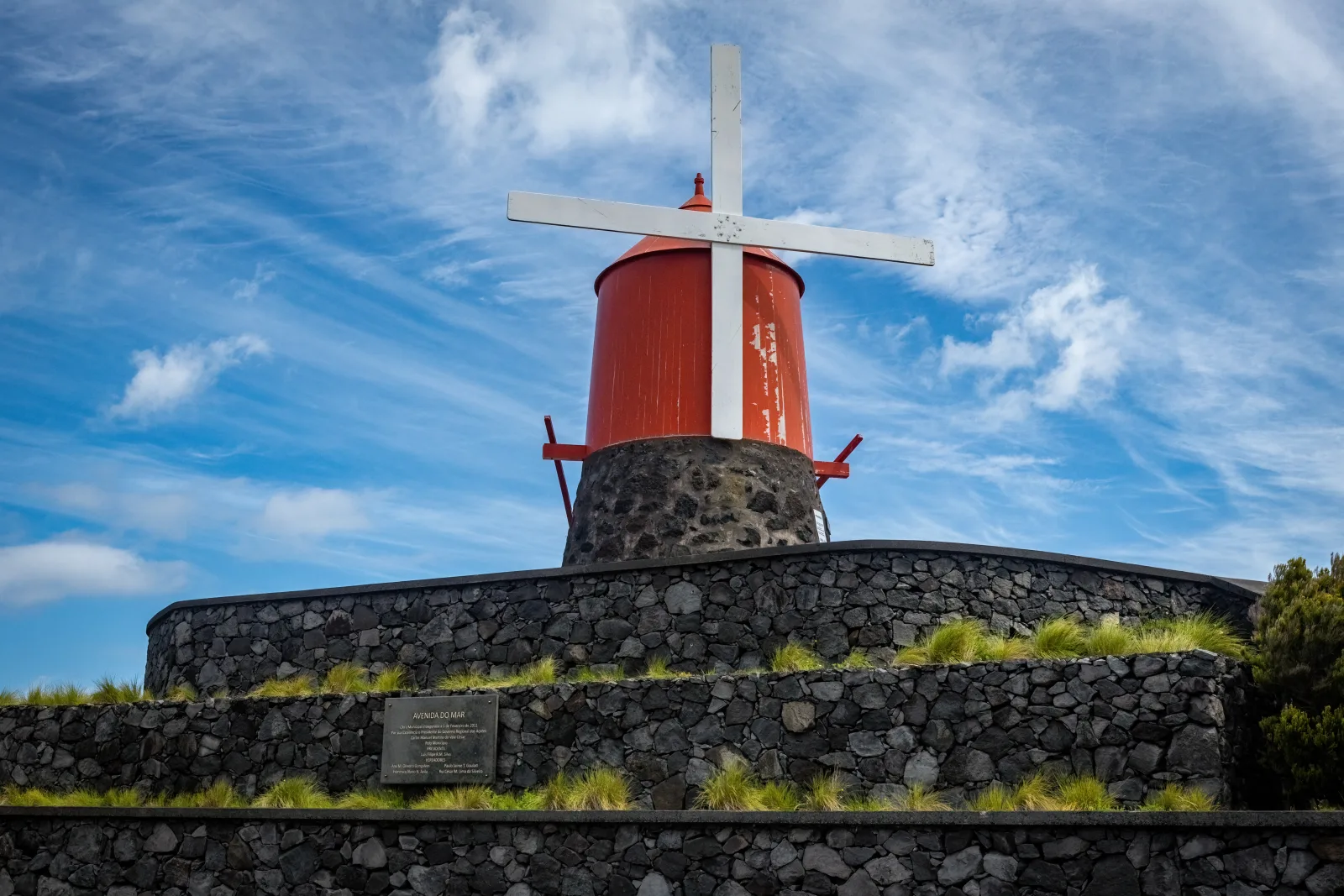
Pico’s south and west coasts are covered by currais — small rectangular plots enclosed by dry-stone walls of black volcanic basalt. The walls protect the vines from Atlantic salt spray and hold the heat into the night, letting Verdelho grapes ripen in soil where almost nothing else will grow. The result is some of the most distinctive wine in Portugal and a UNESCO World Heritage cultural landscape since 2004.
The walls themselves are the story. They were built by hand, mostly between the 16th and 19th centuries, by farmers turning lava rubble into vineyards. Walking the trails between Lajido and Criação Velha on a still afternoon is like walking through a piece of agricultural sculpture.
Whales
Lajes do Pico was the centre of Azorean whaling from the 18th century until commercial hunting ended in 1984. The harbour, the old whale factory (now a museum), and the lookout huts on the cliffs are still in place. The economy moved from killing whales to watching them, and Pico is now one of the best whale-watching bases in the Atlantic. Sperm whales are resident year-round — the great migratory whales (blue, fin, sei) pass through from March to May.
How to get to Pico Island
Two routes, both straightforward. Pick based on whether you’re already on Faial or starting from São Miguel.
| From | Route | Duration | Cost |
|---|---|---|---|
| Ponta Delgada | SATA flight to Pico | 50 min | €60–€140 |
| Faial (Horta) | Ferry Horta → Madalena | 30 min | €4 |
| Lisbon | SATA via Ponta Delgada | ~5h total | €180–€300 |
| Faial | SATA flight Horta → Pico | 15 min | Often skipped |
Practical reality: if you’re already on Faial, take the ferry — it’s faster than going to the airport. If you’re coming from São Miguel, fly direct. The Pico runway sits in a flat coastal section near the town of São Roque and weather occasionally diverts flights — book a buffer day if Pico is your last stop before flying home.
The Pico Mountain isn’t visible during the approach unless you arrive in the late afternoon with the right light. Most first-time visitors expect a dramatic mountain view from the plane and don’t get one — that’s normal.
A 2-day Pico Island day plan
Two days is the realistic minimum to see Pico without rushing. Here’s the version I’d hand to a friend, assuming arrival on the morning ferry from Horta or the morning flight from Ponta Delgada.
Day 1: Madalena + south coast
10:00 — Arrive in Madalena (ferry pier or rental car pickup at the airport). Drop bags at your accommodation. Quick coffee at one of the cafés near the church.
10:30 — Drive ten minutes south to Lajido de Santa Luzia — the heart of the UNESCO vineyard landscape. Walk the old wine cellar interpretation centre and the field of stone walls running down to the sea. About an hour.
12:00 — Continue west along the coast to Cachorro — a series of small natural rock pools and a basalt arch where the locals swim. Photogenic in any weather, swimmable from June to September.
13:00 — Lunch at Cella Bar in Madalena (modern Pico-influenced food in a striking wooden building) or Ancoradouro down the coast (more traditional, big seafood platters with the volcano in the background).
15:00 — Drive south to Lajes do Pico — the old whaling town. Visit the Whalers Museum (Museu dos Baleeiros) for an hour. The exhibits about the 19th-century industry are detailed and unsettling.
17:00 — Climb to one of the vigia da baleia — the lookout huts on the clifftops where whale-spotters used to scan for blows. Empty now, but the view is the same one the spotters had for two centuries.
19:00 — Back to Madalena for dinner. Magma does a creative tasting menu with Pico wine pairings. Petisqueira O Marítimo is the local pick for grilled fish and a ceramic jug of vinho da casa.
Day 2: Pico Mountain or whale watching
There’s a fork on Day 2. Most visitors pick one of these two things, not both.
Option A: Pico Mountain summit. Arrive at Casa da Montanha by 6am, register, start hiking by 6:30. The ascent takes 3–4 hours, the descent another 2–3. Plan to be back at the visitor centre by mid-afternoon. Eat at Cantinho do Cais in São Roque on the drive back. Easy evening, early sleep — your legs will be done.
Option B: Whale watching. A morning trip out of Lajes (3 hours, ~€60–€80) is the high-success-rate option. Sperm whales appear on most trips year-round. Migratory whales add to the bill from March to May. Boats are smaller than the São Miguel operators and the experience is more focused. Pair with a north coast drive in the afternoon — Cachorro on the way back, sunset at Ponta da Ilha lighthouse.
Don’t try to combine the two
The mountain and a whale trip are both half-day commitments and both physically demanding in their own way. Trying to fit both in one day either gives you a rushed mountain attempt or a missed boat. Pick the one that matches what you came to Pico for.
Things to do beyond the mountain and the vineyards
A 2-day Pico Island plan covers the headlines. Here’s what fills out a third day if you have one.
| Spot | What it is | Time |
|---|---|---|
| Furnas de Santo António | Quiet north-coast lava pools | ~1h |
| Ponta da Ilha | Eastern lighthouse, sea views | ~1h |
| Gruta das Torres | Lava tube cave (largest in Azores) | 1.5h |
| Lagoa do Capitão | Highland lake with mountain reflection | ~30 min |
| Madalena lava pools | Sea pools right in the main town | 1h+ |
| Caves at Cachorro | Hidden swimming spots through arches | ~1h |
The lava tubes at Gruta das Torres are the most underrated attraction on the island. A 5-km-long lava tube with a guided tour through the first 450m. The light, the cold air, the geological scale — it’s a different kind of experience from anything else in the Azores.
Lagoa do Capitão is a small highland lake at 800m elevation. On a clear morning the volcano reflects perfectly on its surface. On a cloudy morning it’s a bog. Worth a 30-minute detour if you’re already on the central spine road.
Where to stay on Pico Island
Pico has fewer accommodation options than São Miguel — the island runs on guesthouses and small hotels, not resorts. Three main bases:
Madalena (ferry port, west coast) — most options, walkable to restaurants and shops, base for the Mountain access road. The default choice for first-timers.
Lajes do Pico (south coast) — the whaling town. Quieter, more historic feel, ideal if whale-watching is the priority. About 30 minutes from Madalena.
São Roque do Pico (north coast) — small fishing town, fewer options, but the nearest base for the lava tubes and the north coast pools.
Booking opens up in winter — in summer book 4-6 weeks ahead. The good Madalena guesthouses sell out first.
Best time to visit Pico Island
The mountain dictates everything.
June to September is the most reliable summit window. Weather is stable, days are long, and the south coast is warm enough for swimming. This is also when prices and crowds peak — book ahead.
May and October are the local favourites. Vineyards green, weather mild, summit attempts often clear, ferries reliable, prices noticeably lower than summer.
November to March is the off-season. Mountain summits are rare and risky. But this is when the whales arrive, the storms produce dramatic Atlantic photography, and you’ll have the south coast vineyards almost entirely to yourself. The best time to visit the Azores guide covers the trade-offs in detail.
How Pico fits with São Miguel and the multi-island plan
Pico isn’t a substitute for São Miguel — it’s a complement. The two islands offer different experiences and the standard approach is to pair them.
A 5-day São Miguel-only trip is one type of Azores trip. The classic 5-day São Miguel itinerary covers Sete Cidades, Furnas, Lagoa do Fogo, and the east coast.
A 7-day São Miguel + Pico + Faial trip is a different experience entirely. The volcanic moonscape, the wine landscape, the mountain summit, and the whale-watching base in Lajes — none of this is replicated on São Miguel. The 7-day multi-island itinerary builds the full triangle without backtracking.
For trips of 8 days or more, adding a third island (São Jorge, Terceira, or Flores) becomes possible. For shorter trips, stick to the São Miguel + Pico pair if you want maximum variety. The 7-day São Miguel itinerary is the alternative if you’d rather go deep on one island than spread across two.
Common mistakes on Pico Island
After watching dozens of friends do versions of this trip, the patterns repeat.
1 — Booking the summit attempt for an arbitrary day. Mount Pico’s weather changes daily and clouds at the summit are dangerous. Book your Pico hotel for at least 2 nights and pick the better of those two mornings to attempt the summit. A flexible plan beats a fixed one.
2 — Skipping Lajes. Most travelers stop at Madalena, do the vineyards, and skip the whaling town. Lajes is 30 minutes south and worth a half-day on its own — the museum, the lookout huts, the harbour, and a slower lunch. The island makes more sense once you’ve seen both towns.
3 — Underestimating the wine. Pico produces serious wine, not gift-shop souvenirs. The Verdelho whites and the Arinto dos Açores varieties are good enough that mainland Portuguese sommeliers stock them. Visit at least one adega (winery) on Day 1, ideally with a tasting. Czar wine at Cella Bar’s cellar is the local pour worth seeking out.
4 — Trying to fit Pico into a single day from Faial. A day trip from Horta gives you 4 hours on the island — barely enough for the south coast and lunch. Stay overnight if you can.
5 — Forgetting the layer system. Pico’s interior is 5–10°C cooler than the coast. The summit is colder still. Even on a 22°C summer day in Madalena you’ll want a fleece in the car for the highland drive.
The bottom line
Pico Island is what people mean when they say the Azores feel like a different place. It is geologically stranger than São Miguel — a single volcano rising out of the Atlantic with a UNESCO vineyard landscape running down its flanks. The island rewards two days, deserves three, and slots naturally into a one-week São Miguel + Pico trip.
If you’re going to combine islands on a single Azores trip, this is the one to combine. The geological contrast, the wine, the mountain, and the whales make it impossible to confuse with any other day of the trip.
For an itinerary that sequences Pico with the rest of the Azores and accounts for inter-island flight scheduling and ferry timing, Pocket Guide Azores builds it automatically — pick the islands, get the day-by-day plan with ferry times, mountain weather windows, and the right order to do everything in.
Tours and day trips on the island, bookable ahead — worth sorting early, because inventory here is thinner than on São Miguel and the good trips fill first:
What to read next
- 7-day multi-island itinerary — the São Miguel + Pico + Faial triangle in detail.
- Things to do in the Azores — the archipelago-wide roundup of experiences.
- Whale watching in the Azores — the seasonal calendar and operator picks for Lajes.
- Best time to visit the Azores — month-by-month with mountain summit windows highlighted.
- Do you need a car in the Azores? — the answer is yes on Pico too, and the ferry options.
Frequently asked questions
Where is Pico Island in the Azores? +
Pico is in the central group of the Azores archipelago, about 240 km northwest of São Miguel. The island sits between Faial (a 30-minute ferry to the west) and São Jorge (visible to the north). Most travelers reach Pico on a 50-minute SATA flight from Ponta Delgada or via the Madalena ferry from Horta on Faial.
What is Pico Island famous for? +
Three things define Pico: Mount Pico (Portugal's highest mountain at 2,351m), the UNESCO-listed vineyard landscape of dry-stone walls along the lava coast, and a centuries-long whaling tradition that has shifted into world-class whale watching. The island also produces some of the most distinctive volcanic-grown wines in Portugal.
How long do you need on Pico Island? +
Two full days minimum, three is comfortable. One day for the vineyards and coast, one for either the Pico Mountain summit or whale watching. A third day lets you explore Lajes (the old whaling town), the natural pools at Cachorro, and a leisurely lunch in Madalena. Multi-island itineraries usually allocate 2 days here paired with a Faial day trip.
Can you climb Pico Mountain? +
Yes. The summit hike is a guided 4-7 hour climb up Portugal's highest peak. You must register at the Casa da Montanha visitor centre, pay a fee (~€20), and most people hire a local guide. The trail is steep and the upper section is exposed lava and ash. Clear weather is mandatory — clouds at altitude can turn dangerous fast. Most fit hikers can do it. Technical climbing skills aren't required.
How do you get to Pico Island? +
Two options. Fly: SATA Air Açores runs 1-2 daily flights from Ponta Delgada (50 minutes) and connects to Lisbon and other Azorean islands. Ferry: the Madalena-Horta ferry connects Pico and Faial in 30 minutes, multiple crossings daily. There are no direct international flights to Pico. The runway at Pico Airport (PIX) is small and weather-sensitive — flights occasionally divert in fog.
What's the best time to visit Pico Island? +
June through September for the warmest, most stable weather and the best chance at a clear summit attempt. May and October are local favorites — fewer crowds, vineyards greenest, ferries reliable. November through March brings dramatic weather, off-season prices, and the start of the great whale migration in March. Avoid winter if Mount Pico is the priority — clear summit days are rare.
Is Pico Island worth visiting? +
If you have at least 6 days in the Azores, yes. Pico delivers experiences you cannot find on São Miguel — the volcanic moonscape, the vineyard walls running into the sea, the mountain summit, and a different rhythm of daily life entirely. For a 3-4 day trip, stay on São Miguel. For a week, the São Miguel + Pico combination is the classic multi-island itinerary.
What's the difference between Pico Island and Pico Mountain? +
Pico Island is the second-largest island in the Azores. Mount Pico (Montanha do Pico) is the volcano at its centre — Portugal's highest point at 2,351m. The island takes its name from the mountain. When people say 'Pico' they usually mean the island as a destination. When they say 'Montanha do Pico' or 'Pico Mountain' they specifically mean the summit hike.