
Also available in Português
Furnas, Azores: Cozido, Hot Springs & Where to Eat (Local's Guide)
A local's guide to Furnas, Azores — the volcanic São Miguel village famous for cozido cooked underground, three thermal pools, and the steaming caldeiras.
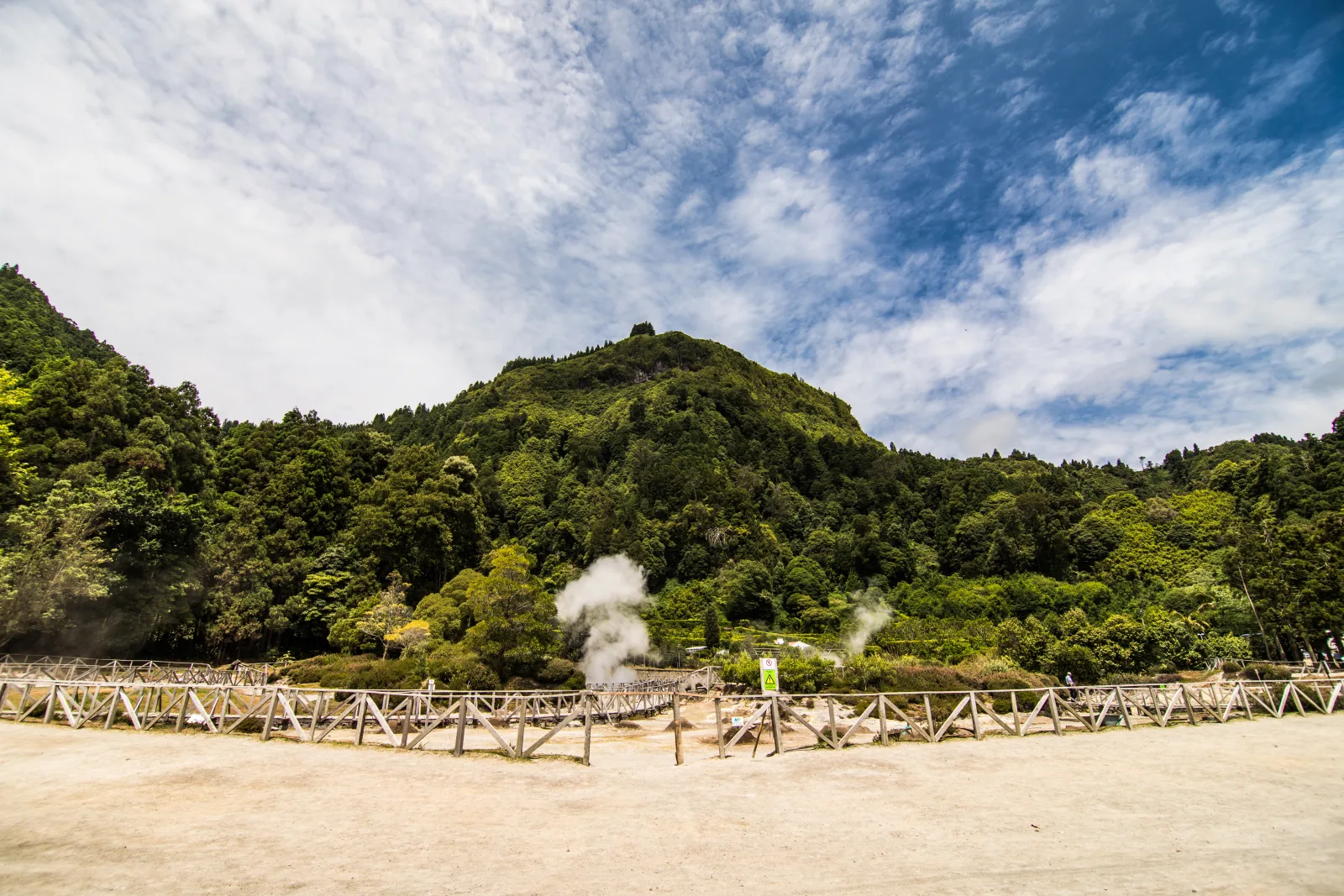
If Sete Cidades is the postcard of São Miguel, Furnas is the story. It’s a small village in the volcanic interior of the island where the ground steams in a dozen places, lunch is cooked underground, and you finish the day in an iron-rich thermal pool the color of strong tea. There is no other place in Europe quite like it, and most first-time visitors to the Azores leave saying it was the day they remember most.
This guide is how to do it properly: what to eat, where to eat it, which hot spring to pick, and how to sequence the whole day so nothing rushes.
What is Furnas, Azores?
Furnas is a village of around 1,500 people sitting inside an old volcanic crater on the eastern half of São Miguel. The geology of the area is active — not in a “this might erupt tomorrow” way (the last major eruption was 1630), but in a “the village smells faintly of sulfur and there’s a fumarole field in the town square” way. Geothermal vents heat the ground, mineral-rich springs bubble out of the earth at 100°C, and locals have been using both for cooking and bathing for centuries.
The result is a place where three things converge:
- A culinary tradition with no equal — cozido das Furnas, a stew cooked using nothing but volcanic steam.
- Multiple natural hot springs, of three quite different kinds.
- A walkable, working geothermal field in the middle of the village that you can wander through for free.
You can experience all three in a single day, and you should.
What is cozido das Furnas, and where to eat it?
Cozido (pronounced koo-ZEE-doo) is the dish that put Furnas on the international culinary map. The technique is simple and ancient: meat and vegetables go into a tall metal pot, the pot is wrapped in a cloth bag, lowered into a hole on the shore of Lagoa das Furnas, and buried under earth that’s already hot from the geothermal vents below. Six to seven hours later it’s pulled out, brought back to the village, and served at lunch.
If you’re coming to Furnas specifically for the lunch, I’ve written a separate deep-dive: the full cozido das Furnas guide — restaurant pricing, phone numbers, timestamped day plan, and the honest answer to “is it worth the trip.” The section below is the short version.
The result is unlike any other stew you’ve eaten. The slow geothermal cook — no fire, no boiling — produces something incredibly tender, with a faint smoky-mineral taste from the volcanic steam. A typical pot has beef, pork, chicken, blood sausage, chouriço, cabbage, kale, carrots, potatoes, sweet potato, and yam. It’s not a delicate dish. It’s farmer food at its best.
The cooking ritual
Restaurants put the pots in the ground at 5-6am. They come out around midday. If you want to see this happen, drive to Lagoa das Furnas in the morning (around 11:30-12:00) and walk to the small fumarole area on the southern shore — the holes are clearly marked with restaurant names. You’ll see staff lifting smoking pots out of the earth, brushing off the dirt, and loading them into vans to drive back to the village. It takes 5 minutes but it’s the most photogenic part of the whole experience.
Where to actually eat cozido
There are roughly five restaurants in Furnas that cook cozido. Honest local rankings:
- Restaurante Miroma — Quietly the best. Locals’ choice. Generous portions, no-frills dining room, owners who care. Full on weekends — book ahead.
- Tony’s Restaurant — The famous one. Tourists, tour groups, big space, reliably good but rarely surprising. Reserve.
- Restaurante Caldeiras & Vulcões — Right on the village square, next to the steaming caldeiras. Convenient and good. Reserve.
- Terra Nostra Garden Restaurant (at the Terra Nostra Park Hotel) — Fancier, more expensive, served plated rather than in the pot. The “tasting menu” version.
- Restaurante Pôr do Sol — Smaller, less famous, and reliably good when the others are full.
Critical: reserve in advance
Each restaurant only cooks a fixed number of pots — typically 4-8 — because there are only so many holes in the ground. They sell out, especially on weekends and in summer. Reserve at least one day ahead by phone, more on weekends. Showing up at noon hoping for cozido is the most common mistake tourists make in Furnas.
If you arrive without a reservation and everything is full, every restaurant in the village serves a regular non-cozido menu (grilled fish, steak, the usual) and most are very good. You haven’t ruined your day. But you’ve missed the thing.
Which Furnas hot spring should you choose?
Furnas has three swimmable thermal experiences within driving distance, and they’re not interchangeable. Pick based on the time of day and the kind of soak you want.
Terra Nostra Garden Park
The one you’ve seen in photos. A large iron-rich thermal pool, around 38°C, sitting in the middle of one of Europe’s most important botanical gardens (12 hectares of camellias, ferns, and rare tropical species, mostly planted in the 19th century). The water is iron-orange-brown, not because it’s dirty, but because of dissolved iron from the volcanic soil. It looks dramatic and stains everything.
- Cost: ~€10 for non-hotel guests
- Open: roughly 10am-6pm (varies seasonally — check)
- Best for: a long mid-day soak combined with walking the gardens (allow 2-3 hours)
- Critical: do NOT wear light-colored swimwear. The iron will stain it permanently. Black or dark navy only.
- Vibe: dramatic, photogenic, popular, slightly crowded, lots of people taking photos in the pool
Poça da Dona Beija
A smaller complex of four pools at slightly different temperatures (~36-39°C), set in a small landscaped area on the edge of the village. Less famous, less crowded, open until 11pm.
- Cost: ~€8
- Open: 7am-11pm year-round
- Best for: an evening soak after dinner. Going at 9pm in summer is one of the great Azorean experiences — the water is hot, the air is cool, the stars are out, and it’s quiet.
- Same iron-water rule — dark swimwear only
Caldeira Velha
Technically not in Furnas but on the road between Furnas and Ribeira Grande, about a 20-minute drive. This is the most natural-feeling of the three: a thermal stream and small pool in a forest setting, with a hot waterfall you can stand under.
- Cost: ~€8 (capped capacity, can sell out in summer — book online when possible)
- Best for: people who prefer “wild” thermal experiences over manicured pool ones
- Smaller pool, steamier vibe, photographers love it
My recommendation if you can do two: Terra Nostra in the day for the gardens, Poça da Dona Beija at night to actually relax. If you can only do one and it’s your first Azores trip, Terra Nostra. If it’s your second, Poça da Dona Beija.
The Caldeiras (free, in the village)
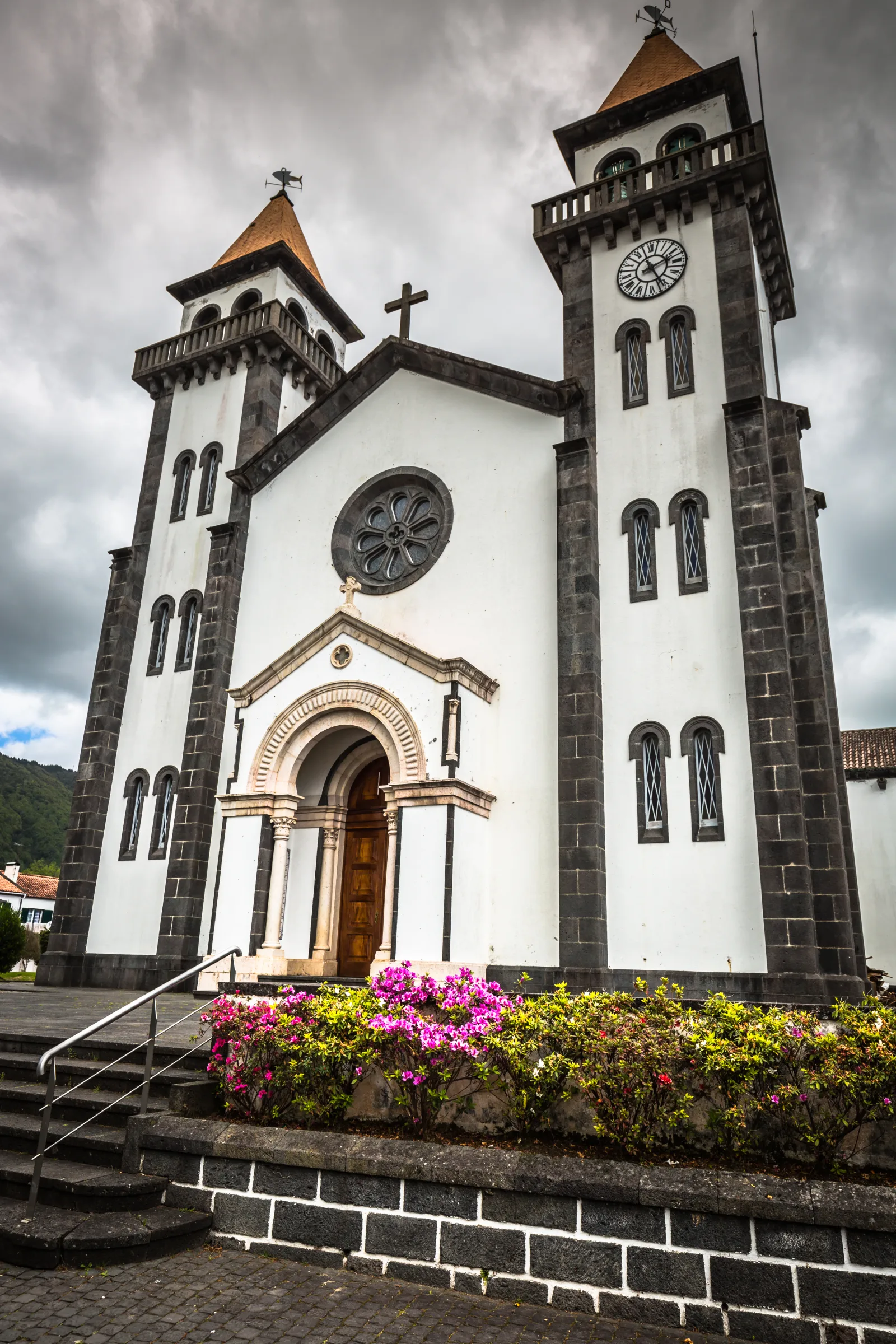
In the middle of Furnas village there’s a small fenced area called the Caldeiras das Furnas — a fumarole field where boiling mud bubbles, steam vents hiss, and the air smells like a hot spring. It’s free, it’s right next to the road, and it takes about 30-45 minutes to walk through properly.
A few things to look for:
- Boiling mud pots — small craters of grey clay slowly boiling
- Hot mineral springs — locals fill up plastic bottles here for cooking and drinking. The different springs have very different mineral profiles. Some are flat, some sparkling, some sulfurous. Try one (it’s safe).
- Smaller cozido cooking holes — same technique as the lake site, used by some village families for personal cooking on Sundays
This is the most “I’ve never been anywhere like this” part of Furnas. Don’t skip it.
Lagoa das Furnas and the viewpoints
About 2 km outside the village, Lagoa das Furnas is the lake where the cozido pots are buried. It’s worth driving to even if you’re not interested in the cooking, for two reasons:
- Miradouro do Pico do Ferro — the viewpoint above the lake. The drive up is steep and narrow but the view back down at the lake, with the village beyond, is one of the best on São Miguel. Go in the morning before clouds form.
- The Chapel of Nossa Senhora das Vitórias — a small neo-Gothic chapel on the shore of the lake, photogenic and worth a 10-minute stop.
- The lake walking trail — a flat ~3 km path that loops around part of the lake through laurel forest. Quiet, easy, takes about an hour.
A copy-and-paste full-day plan
This is how I’d do Furnas on a typical day from Ponta Delgada:
08:30 — Leave Ponta Delgada (it’s a 45-minute drive). 09:30 — Arrive at Miradouro do Pico do Ferro. Stop for 15 minutes for the morning view of the lake. 10:00 — Drive down to Lagoa das Furnas. Walk to the cozido cooking holes on the southern shore. Wait for the 11:30-12:00 unearthing if you can — it’s the photo of the day. 12:00 — Drive back into the village (5 minutes). Park near the central square. 12:30 — Cozido lunch at your reserved restaurant. Allow 90 minutes — this isn’t a meal you rush. 14:00 — Walk through the Caldeiras das Furnas in the village. Try a sip of mineral water at one of the springs. 15:00 — Terra Nostra Garden Park. Walk the gardens first (the camellia collection alone is worth an hour), then the long thermal soak. Stay 2-3 hours. 18:00 — Quick dinner at any local restaurant in the village (everywhere closes early). 19:30 — Drive 5 minutes to Poça da Dona Beija for an evening thermal soak under the stars. Stay until ~9pm. 21:00 — Drive back to Ponta Delgada.
That’s the full Furnas experience. Long day, but worth every hour.
Mistakes to avoid
- Showing up for cozido without a reservation. Already covered. Don’t do it.
- Wearing white or light swimwear in the thermal pools. It will not be white again.
- Skipping the lake. Most people stay in the village and drive home. The lake is the soul of Furnas.
- Trying to combine Furnas and Sete Cidades in one day. They’re on opposite ends of the island. Doable but rushed and you’ll do neither well. Two separate days.
- Going on a Monday. Some restaurants and the village museum close on Mondays. Tuesday-Sunday is safer.
- Underestimating the weather. Furnas is in a basin and gets noticeably more cloud and rain than Ponta Delgada. Bring a jacket even in summer.
What is special about Furnas?
Most travel guides describe Furnas as a “quaint thermal village.” That’s not wrong, but it misses the point. The thing that makes Furnas different from any spa town anywhere else in Europe is that the geothermal isn’t a tourist attraction here — it’s infrastructure. People cook with it. They drink the mineral springs. They bathe in the pools after work. There’s a public laundry building in the village where you can still see locals washing clothes in hot mineral water. The village has lived intimately with the volcano for 400 years and it shows in the rhythm of daily life.
That’s what you come for. Not the photo. The day.
What to do next
- For the other end of São Miguel, read the Sete Cidades guide — the twin-lake caldera that’s the photo-famous half of the island.
- For a deeper dive on the springs themselves, the thermal pools in São Miguel guide covers Terra Nostra, Caldeira Velha, and Ferraria with timing tips for each.
- Planning a longer trip? The 5-day São Miguel itinerary builds Sete Cidades, Furnas, Lagoa do Fogo, and the east coast into one trip without backtracking.
- If volcanic-cooking is the draw, the cozido das Furnas guide goes deeper than this section — booking phone numbers, an at-home recipe, and the timestamped pot-burying ritual.
- And if you’d rather not assemble all this yourself, Pocket Guide Azores is the AI travel planner that does exactly that — pick the spots, get the optimized day-by-day plan with timings, restaurant reservations, and microclimate-aware sequencing baked in.
Furnas is the most singular place on São Miguel. Sete Cidades will put you on a postcard. Furnas will put you in a story.
Frequently asked questions
What is cozido das Furnas? +
Cozido das Furnas is a traditional Portuguese stew of meat (beef, pork, chicken, blood sausage, chouriço) and vegetables (cabbage, carrots, potatoes, kale, sweet potato) that is buried in a volcanic steam vent on the shore of Lagoa das Furnas and cooked for 6-7 hours using natural geothermal heat. It is one of the only dishes in the world cooked entirely without fire or electricity. The pots go in the ground around 5-6am and come out at midday.
Where is the best place to eat cozido in Furnas? +
Tony's Restaurant is the most famous and a safe pick. Restaurante Miroma serves the most generous portions and is favored by locals. Restaurante Caldeiras & Vulcões is convenient because it's right on the village square next to the steaming caldeiras. Terra Nostra Garden Restaurant inside the hotel is the upscale version. Reserve at least one day ahead — they only cook a fixed number of pots and they sell out, especially on weekends.
Which hot spring in Furnas should I go to? +
Three main options. Terra Nostra Garden Park (€10) is the iconic iron-rich brown pool inside a botanical garden — the photo-famous one, around 38°C, open during the day. Poça da Dona Beija (€8) is smaller, hotter (~39°C), with multiple pools and is open until 11pm — much better for an evening soak after dinner. Caldeira Velha (€8) is technically between Furnas and Ribeira Grande and is the most natural-feeling, set in a forest with a hot waterfall. If you can do two, do Terra Nostra in the day for the gardens and Poça da Dona Beija after dinner.
What should I wear to the hot springs in Furnas? +
Old, dark swimwear that you don't care about. The iron-rich water at Terra Nostra and Poça da Dona Beija will permanently stain anything light-colored — including white swimsuits, jewelry, and sometimes even tattoos. Black, dark grey, or navy is safe. Bring a dark towel too. Many locals keep a 'thermal pool swimsuit' that they only use here.
How long do you need in Furnas? +
A full day is the right amount. You need time for the caldeiras (1 hour), cozido lunch (1.5 hours, plus a reservation that locks in your timing), one or two hot springs (1-2 hours each), and a stop at the lake or a viewpoint. A rushed half-day works only if you skip the hot springs, which is the wrong tradeoff.
Is Furnas worth visiting? +
Yes — Furnas is the most singular experience on São Miguel. Sete Cidades is the photo, but Furnas is the place that genuinely doesn't exist anywhere else: a working village built on top of an active geothermal field, where the locals cook lunch in the ground, bathe in iron-rich hot springs, and have a casual relationship with steam coming out of cracks in the road.
Can you visit Furnas without a car? +
It's possible but not great. There is a regular bus from Ponta Delgada (route 110, ~1 hour) that runs several times a day, and a few tour operators offer day trips that include cozido lunch. Without a car you can walk to everything inside the village (caldeiras, all three restaurants, Terra Nostra, Poça da Dona Beija) but you can't reach Lagoa das Furnas (the lake where the cooking pots go in the ground) which is 2 km out of town and worth seeing.