
Also available in Português
Whale Watching in the Azores: When, Where & Which Tour Operator
A local Azorean's honest guide to whale watching in the Azores — peak season (not what you think), best operators, harbors, costs, species, mistakes to avoid.
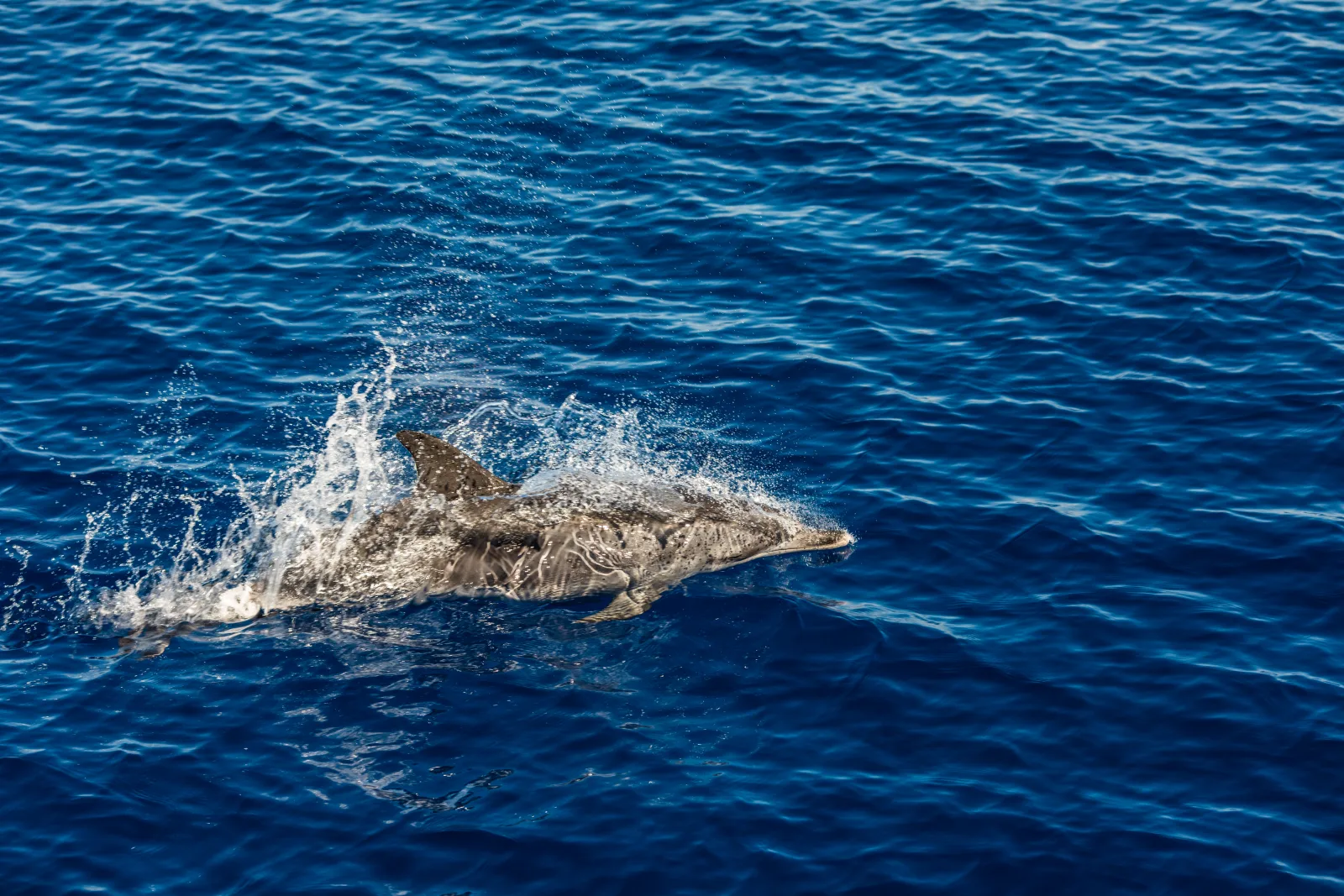
The Azores is one of the best whale watching destinations in the world. That’s not tourism-board language — that’s a measurable fact. Over 25 cetacean species have been recorded in these waters, sperm whales are resident year-round, and the islands sit directly on the migration path of the largest animals on earth.
And yet most visitors schedule whale watching wrong. They book tours in July “for the whales” — July is fine, but it’s not peak. They pick Ponta Delgada by default — Ponta Delgada is fine, but Pico Island is plausibly better. They take the longest tour they can find — shorter is often more fun.
This guide is how locals actually think about Azores whale watching. I’m Azorean, I live on São Miguel, and I’ve been on enough tours to have opinions.
Why the Azores is world-class for whale watching
A few things combine to make this one of the top three whale watching regions on earth (alongside Norway for orcas and Baja California for grey whales):
1. The seafloor drops off fast. The Azores are the tops of underwater volcanoes rising from 3,000+ meters of ocean floor. Deep-water species (sperm whales, beaked whales, pilot whales) feed within sight of land. You don’t need a 6-hour offshore trip — 30 minutes out often gets you into whale territory.
2. The vigia system. For 500 years, Azoreans hunted whales from cliff-top lookouts (vigias) staffed by spotters with binoculars who’d direct boats to prey. Commercial whaling stopped in the 1980s, but the vigia network was repurposed for tourism. Most tour operators still use land-based lookouts to locate whales before boats leave the harbor. This is why Azores sighting rates are 95-98% on typical tours.
3. The islands sit on the migration highway. The Gulf Stream and North Atlantic Current bring blue whales, fin whales, sei whales, and humpbacks right past the Azores every spring.
4. Year-round residents. Unlike most whale watching destinations that depend on migration windows, the Azores has resident sperm whales and several dolphin species. You can reliably see cetaceans in January.
When to go — this is where most people get it wrong
The popular narrative is “come in summer for whales.” It’s not wrong, but it’s not optimal. Here’s the real seasonal picture:
Peak season — April & May
The big baleen whales migrate through. Blue whales (the largest animal that has ever lived), fin whales (the second-largest), and sei whales pass the Azores in spring. April is the statistical peak for blue whale sightings. This is when the serious whale watchers come.
Downsides: seas are rougher, more trips cancelled for weather, water is cold. This is not the comfortable tourist version.
Excellent season — June through September
Calmer seas, most species, longest daylight. Sperm whales are consistently here. Dolphins are abundant. Whale sharks and mantas (rare but possible) show up occasionally in late summer. Best for first-timers and people who get seasick.
The catch: You miss the big baleen whales (mostly gone by June). Peak crowds and prices July-August.
Shoulder — October
Weather window narrows. Some operators switch to reduced schedules. But you can still have excellent trips. Fin whales sometimes return in late autumn.
Winter — November through February
Reduced schedules, more weather cancellations. But sperm whales are still there. Sometimes pilot whales show up in big pods. A handful of operators run year-round — the most atmospheric trips of the year happen in winter with nobody else on the boat.
The quick decision matrix
| Your priority | Go in |
|---|---|
| See the largest whale species | April or May |
| Comfortable trip, most likely to run, good odds | June or September |
| Warmest weather, calmest seas | July or August |
| Empty boats, atmospheric, sperm whales only | November–February |
| First-time whale watcher, seasickness concern | July–September |
Where tours leave from — the three harbors
Ponta Delgada (São Miguel)
The default choice. Biggest harbor, most operators, biggest boats, most tour options. Easy 10-minute drive from the airport (PDL). Most international visitors base here.
- Best for: First-timers, travelers not on Pico, shorter notice bookings
- Boats: Range from 12-person RIBs to 30-person catamarans
- Water access: 30-45 minutes to typical whale zones
Vila Franca do Campo (São Miguel)
The intimate alternative. 25 minutes east of Ponta Delgada. Smaller harbor, smaller operators, smaller boats. Often feels more personal.
- Best for: Small groups, couples, photographers
- Boats: Usually 8-12 person RIBs
- Water access: Similar to Ponta Delgada, slightly different zones (Ilhéu de Vila Franca area)
Lajes do Pico (Pico Island)
The atmospheric pick. The historic capital of Azorean whaling — the last commercial whaling station in Europe closed here in 1987. The town has a small whaling museum (Museu dos Baleeiros) that’s genuinely great, the vigia system is still visible on the cliffs, and the operators here lean more marine-biology than tourism.
- Best for: Serious whale watchers, repeat Azores visitors, photographers, anyone who’ll already be on Pico Island for the mountain hike
- Boats: Mix of RIBs and traditional boats
- Water access: 20-30 minutes — Pico’s underwater topography is particularly rich
Which operator — honest picks
On São Miguel (Ponta Delgada)
- Futurismo — the biggest, most professional, best for first-timers. Large boats (40+ people) mean less seasickness but less intimacy. Strong safety record. Multiple daily departures in summer. €70-80 per trip. Biologist-led commentary.
- Picos de Aventura — slightly cheaper than Futurismo (€60-70), similar quality, smaller fleet. My personal usual recommendation for budget-conscious first-timers.
- Terra Azul — smaller operator, biologist-owned, more science-focused tours. 12-person RIBs. €65-75. Books up faster.
On São Miguel (Vila Franca do Campo)
- Moby Dick Tours — small boats, intimate experience, skipper-owner operation. €60-70. More weather cancellations because of boat size, but when they run, they’re excellent.
On Pico (Lajes do Pico)
- Espaço Talassa — the respected Pico operator. Marine biology focus, run by long-time Azorean locals with direct connections to the old whaling community. €70-80. Book ahead.
- Pico Sport — also does diving — if you want to combine, this is your call.
What to look for regardless of operator
- Does the price include wet-weather gear? (Should.)
- Are they using a vigia to locate whales? (Should be — ask.)
- How long is the tour? (2.5-3 hours is standard. 4+ is unnecessary unless going offshore.)
- How many people on the boat? (Under 20 is better.)
- Do they have a biologist on board? (Not essential but nice.)
Most of these operators sell the same trips through GetYourGuide, and in peak season it’s the quickest way to see what’s actually still running on your dates instead of emailing three companies and waiting:
What to expect on the boat
Departure: Check in 30 minutes early. You’ll get a safety briefing, a windbreaker (usually bright orange, collapsible), and a life jacket if seas are rough.
Transit: 20-45 minutes to whale zones. This is the bumpy part. If you get seasick, take medication 30 minutes BEFORE the trip (too late if you wait until you feel it).
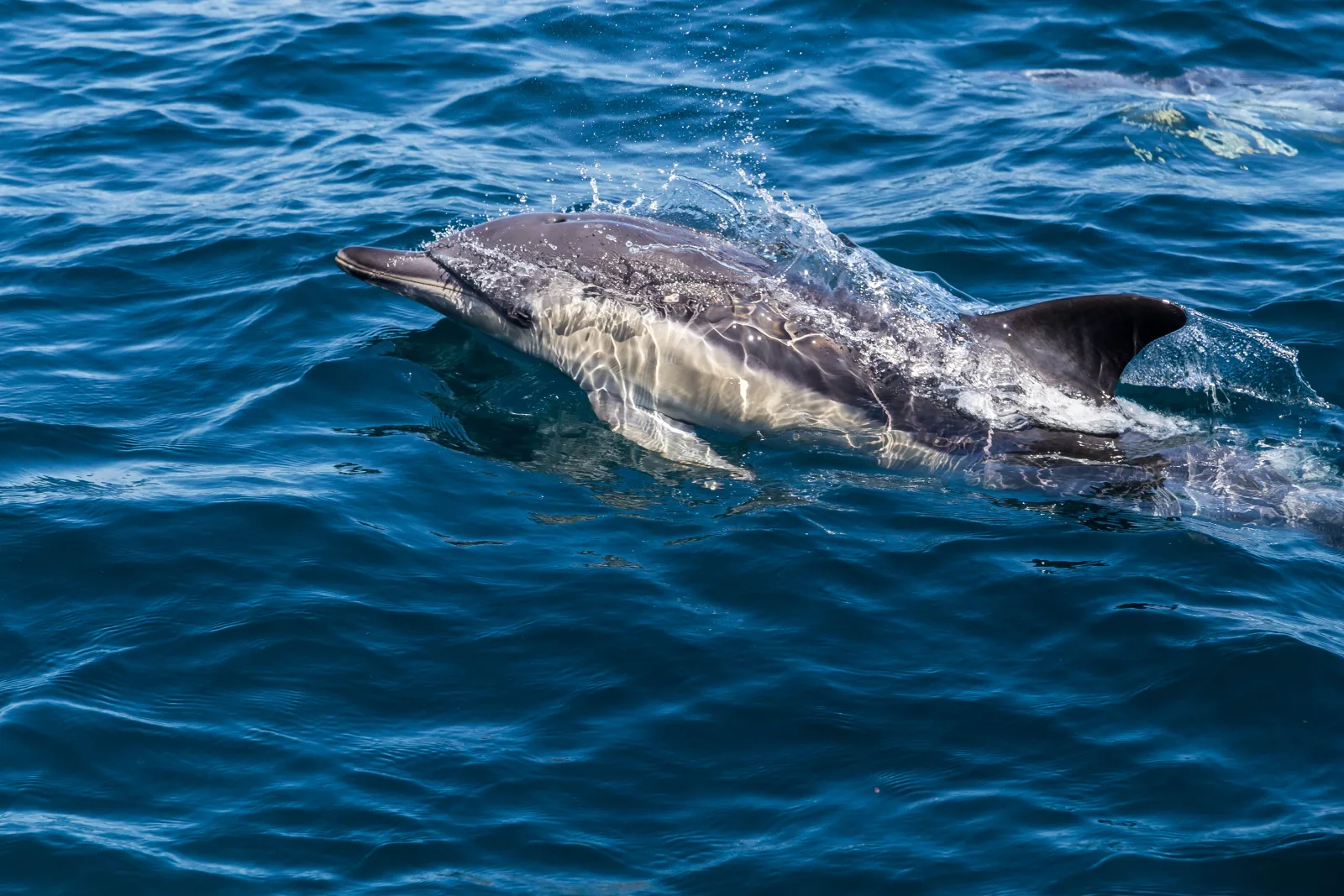
Sightings: Tours track sperm whales by sound (hydrophones) and by vigia direction. When a whale is located, the boat slows to 5 knots and approaches from a distance. You’ll have 15-45 minutes with any given whale group depending on behavior. Dolphin encounters are often the highlight — pods of 50+ Atlantic spotted dolphins are common, and they frequently bow-ride.
Duration: 2.5-3 hours total. Morning tours (9am-12pm) and afternoon tours (2pm-5pm). Morning is typically calmer seas.
How to maximize your odds
- Book a morning trip. Seas are calmer, dolphins more active, whales more surfaced.
- Skip rainy-forecast days if flexible. Rough seas reduce sighting quality even if tours still run.
- Pick the longest viable trip. A 4-hour tour isn’t 33% better than a 3-hour tour — it’s usually about the same experience plus an extra hour of looking at empty ocean. Unless you’re going to an offshore seamount, 3 hours is the sweet spot.
- Wear the right clothing — see the FAQ.
- Bring a proper camera if you care about photos. Phone zoom doesn’t cut it at 30m+ distance from a sperm whale.
- Don’t skip the briefing. The spotter’s description of what to look for (logs = sperm whales resting, breaches = humpbacks, bow-riding = dolphins) helps you see more.
Common mistakes tourists make
- Booking for July because “that’s the whale month.” July is fine but not peak. Book April/May if you want maximum species.
- Picking the biggest boat “because it’s safer.” Bigger boats have more people between you and the water — smaller boats give you closer encounters.
- Not taking seasickness medication because “I don’t usually get seasick on ferries.” The Atlantic 15 km offshore is a different animal from a ferry ride. Take it.
- Booking a 4-hour trip thinking it’s better value. Rarely is.
- Skipping the pre-trip vigia report. Most operators brief you on recent sightings — it’s useful data about what to expect.
- Shooting photos the whole time. You’ll miss the actual experience. Take 2-3 shots and put the camera down.
Cost summary
| Trip type | Duration | Cost (2026) | Book ahead |
|---|---|---|---|
| Standard whale watching | 2.5–3 hours | €55–€75 | 1–5 days |
| Small boat / premium | 3 hours | €75–€95 | 2–7 days |
| Offshore seamount trip | 5–7 hours | €120–€180 | 1–2 weeks |
| Private charter | 3 hours | €400+ | 2–3 weeks |
| Winter trip | 2.5–3 hours | €55–€65 | Same day often OK |
When whale watching gets cancelled
Tours cancel for seas above Beaufort 5 (roughly 25 knot winds, 2.5m swell). Most operators make the call 1-2 hours before departure. Cancellations are most common November-March and unpredictable May-October. Reputable operators refund or reschedule at no penalty.
If your trip is cancelled and you’re tight on schedule, try a different harbor — Pico sometimes runs when São Miguel doesn’t, and vice versa (the wind patterns differ).
What to expect on the boat itself
Most boats are RIBs (rigid inflatable boats) with 8-12 passengers, plus a captain and a marine biologist guide. You sit on inflatable side benches with a backrest and a handhold. The first 20-30 minutes is the run out to where the vigias have spotted whales — typically 8-15 km offshore. The captain throttles back when you’re close. Engines off for the actual encounter, drift with the swell, watch the water surface for breaches or blows.
The biologist will narrate species, behaviour, and rough estimated counts. Sperm whale dives last 45 minutes, so you’ll often watch a whale at the surface for 10-12 minutes (the “breathing window”), then see it raise its tail (fluke up) and disappear. The boat then waits or moves to find another animal.
A typical 3-hour tour gives you 30-60 minutes of actual whale or dolphin time — the rest is travel and waiting. This is normal. Anyone telling you they got “non-stop whales for 3 hours” had a freakishly good day.
The emotional part
The first time you hear a sperm whale breathe at 10 meters away in a calm ocean — a long sigh that sounds like a cathedral exhaling — it reorganizes how you think about the planet. The Azores used to hunt these animals. Now we watch them. On a good trip, you’ll see species you didn’t know existed, and the whole thing will feel like it took 20 minutes even though it took 3 hours.
It’s not just an activity. It’s one of the reasons to come to the Azores at all.
What to read next
- Best Month to Visit the Azores — includes whale season specifically
- 5-day São Miguel Itinerary — includes an optional whale watching morning on Day 5
- 7-day Multi-island Itinerary — combines Pico (with its whaling history) and São Miguel
- Scuba diving in the Azores — the other great way to experience Azorean marine life, from the same boats and harbors
And if you want a trip that optimizes for whale watching alongside Sete Cidades, Furnas, and the rest of São Miguel, Pocket Guide Azores builds weather-aware day plans with the same local knowledge used in this guide.
Frequently asked questions
When is the best time for whale watching in the Azores? +
April and May are peak season — this is when the big baleen whales (blue, fin, sei) migrate through. Most travelers assume summer is peak because that's when they visit, but spring offers the widest range of species. Sperm whales are resident year-round, so you'll almost certainly see them in any month. Summer (June-September) has calmer seas and is more comfortable for first-timers, though fewer species. Winter is slower but sperm whales remain and there are often sharks and pilot whales.
What's the chance of seeing whales in the Azores? +
Very high. Sighting success rates are 98% for some species (sperm whales and dolphins are near-guaranteed year-round). Seeing a specific species like blue whales is weather and season dependent — best odds in April-May. Tour operators use a network of land-based lookouts called vigias (inherited from the old whaling days) to spot whales before boats even leave the harbor, which is why Azores success rates are among the highest in the world.
Where do whale watching tours leave from in the Azores? +
Three main harbors. Ponta Delgada on São Miguel (biggest operators, most tour options, easiest access from the airport). Vila Franca do Campo on São Miguel (smaller harbor, smaller boats, often more intimate trips). Lajes do Pico on Pico Island (the historic whaling capital, still the most atmospheric, and often the best trips for experienced whale watchers — see the Pico Island guide for context). All three access the same waters but the experience differs.
How much does whale watching cost in the Azores? +
€55-75 per person for a standard 3-hour boat trip in 2026. Private charters start around €400. Half-day trips to offshore seamounts (for rarer pelagic species) run €120-180. Most tours include wet-weather gear, a guide, and light refreshments. Book 1-2 days ahead in shoulder season, 3-5 days ahead in July-August. Cancellations due to rough seas happen — operators typically refund or reschedule.
Which whale watching operator in the Azores is the best? +
Futurismo (Ponta Delgada) is the biggest and most reliable — good for first-timers, larger boats, strong safety record. Picos de Aventura (also Ponta Delgada) offers slightly cheaper tours with solid quality. Moby Dick Tours (Vila Franca do Campo) runs smaller boats and feels more personal, though weather cancellations are more frequent on smaller vessels. Espaço Talassa (Lajes do Pico) is the respected local operator on Pico island, with a strong marine-biology focus.
What whales can you see in the Azores? +
Over 25 cetacean species have been recorded in Azorean waters. Year-round residents: sperm whales, bottlenose dolphins, Atlantic spotted dolphins, Risso's dolphins. Migratory (March-May peak): blue whales, fin whales, sei whales, humpback whales. Occasional: orcas, pilot whales, striped dolphins, various beaked whales. In the water around the Azores, on a good day, you can see more whale species than almost anywhere else on earth.
Do you get seasick on Azores whale watching trips? +
Many people do, yes. The open Atlantic is rarely flat calm, and tours typically go 10-20 km offshore. If you're prone to seasickness, take medication 30 minutes before the trip (Stugeron, Scopolamine patches, or ginger tablets work for most). Book morning tours (seas are usually calmer) and pick summer months (July-September are the gentlest). Avoid reading on the boat and look at the horizon.
Should I book whale watching in advance? +
Yes, especially in July-August when every major tour operator runs at capacity. In peak season, book 3-5 days before your preferred date. In shoulder season (May-June, September-October) 1-2 days ahead is usually fine. In winter (November-March), often you can book the same day. Most operators let you book online; a few local ones prefer phone bookings.
What should I wear for whale watching in the Azores? +
Waterproof layers, even in summer. The Atlantic spray is cold and relentless. Wear closed shoes with grip (deck can be wet), sunscreen (reflection off water is brutal), sunglasses, and a hat with a strap (the wind takes hats). Bring a small bag for phone and camera in a waterproof pouch. Most operators provide high-vis windbreakers and life jackets.