
Also available in Português
Scuba Diving in the Azores: Sites, Seasons & Blue Sharks
A local's guide to scuba diving in the Azores — Princess Alice Bank, blue shark diving off Pico, mobula rays, operators by island, water temps and best season.
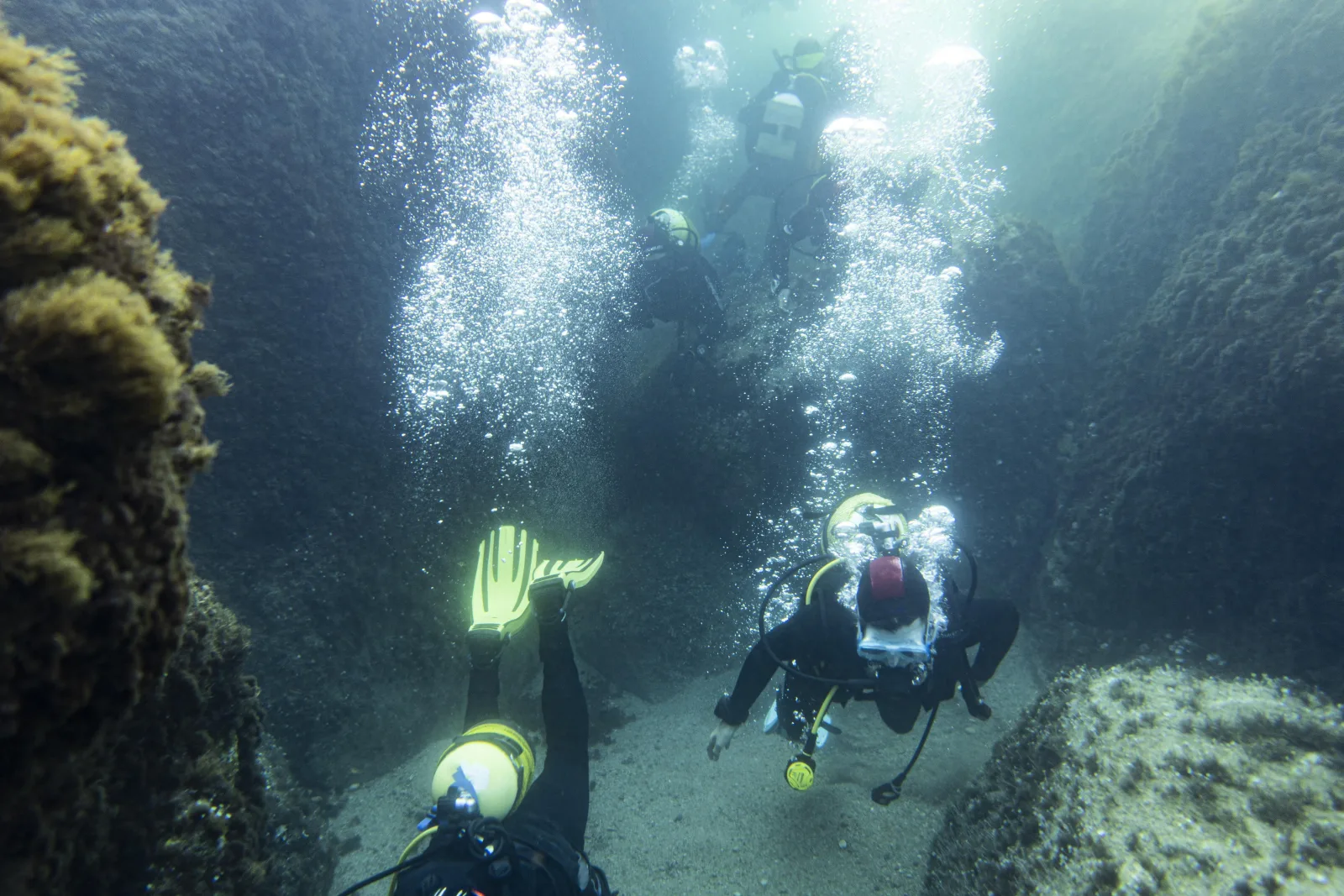
Scuba diving in the Azores is one of Europe’s best-kept open-water secrets. If you know the Azores for Sete Cidades and cozido, you probably don’t know it’s one of the best diving destinations in the continent. Most visitors miss this entirely. That’s partly because the surface experience is so dominant — volcanic craters, hot springs, green hills — that the underwater side rarely makes the travel blogs. And partly because serious divers keep it a bit secret.
The Azores sits directly on the Mid-Atlantic Ridge. What you see above the waterline (volcanoes, calderas, arches, pinnacles) continues below it — plus big-species pelagic marine life you don’t get in the Med or the Canary Islands. Blue sharks, mobula rays, tuna schools the size of football pitches, and the occasional whale shark or manta.
I’ve dived here since I was a teenager. This is how it actually works.
Why scuba diving in the Azores is world-class
Three things set it apart:
1. The Mid-Atlantic Ridge topography
The Azores islands are the tops of volcanoes that rise from 3,000m of ocean floor. Underwater, you get:
- Lava arches and tunnels — swim-throughs shaped by volcanic eruption
- Underwater pinnacles — seamounts rising from deep water, attracting pelagic species
- Dramatic wall dives — cliffs continuing underwater with visibility 20-30m standard
- Natural swimthroughs and caves — especially on Pico and Faial
2. Pelagic marine life
Because the seafloor drops off fast, big open-ocean species hunt close to the islands. On a normal dive you might see:
- Blue sharks (especially off Pico, July-October)
- Mobula rays (summer, large schools at specific sites)
- Mackerel sharks (occasional, sites near Princess Alice)
- Tuna schools — often massive, fast-moving
- Whale sharks and mantas — rare but do occur, especially off Santa Maria
And of course the full range of Atlantic temperate-water species: groupers, moray eels, octopus (abundant), barracuda, conger eels, and the island-specific Atlantic rays (common torpedo rays and stingrays on sandy bottoms).
3. Water quality
Because there’s essentially nothing upstream — the Azores is 1,400 km from the nearest continent — water is clean. 20-30m visibility is typical, and in late summer you regularly get 35-45m. Temperature range is modest (16-24°C depending on season), and there’s minimal algae bloom, sediment, or runoff.
The best sites by island
Pico — the diver’s island
Pico has the best diving in the archipelago, especially for experienced divers:
- Princess Alice Bank (offshore seamount, advanced+, 50 nm offshore — see dedicated section below)
- Ambrósio Reef — underwater pinnacle, 20-35m, frequent mobula and shark sightings
- Arcos de Caneiras — lava arches and swim-throughs, 15-25m, good for intermediate divers
- Baixa da Bariera — wall dive with pelagic sightings, 20-30m
- Cabeços do Baixio — shallower reef dive, 10-20m, good for less experienced divers
- Blue shark dives — open water off southwest Pico, baited dives, 5-10m
Dive season on Pico: May to October is reliable. November-April is dive-at-own-risk.
Faial — wrecks and Capelinhos
- SS Canção do Mar — WWII-era wreck at 35m, for advanced+ divers. Penetration possible with proper training. One of the better European wreck dives.
- Capelinhos underwater — the 1957 volcanic eruption created new underwater landscape — still barren in places and evolving. Fascinating dive.
- Monte da Guia — shallow reef dive, 10-15m, good for training
- Entre Os Ilhéus — between Pico and Faial, channel with current and pelagic species
Faial pairs well with Pico for a multi-island dive trip.
São Miguel — the gateway island
Smaller dive scene than Pico/Faial, but accessible and varied:
- Dori WWII wreck — near Ponta Delgada, 25-35m, intact hull, one of the best wreck dives in the Azores
- Baixa do Ambrósio (not the same as Pico’s Ambrósio) — pinnacle dive, mobulas in summer
- Ilhéu de Vila Franca — diving inside the volcanic crater, 5-20m, good for novices in calm weather
- Caloura walls — cliffside diving off the south coast, 10-20m, easy access from shore
São Miguel is the best choice if you’re combining diving with a standard São Miguel trip — you don’t need to island-hop.
Santa Maria — the warm-water island
- Formigas Islets — 27 nm offshore, Advanced+ only. Home to mantas, sharks, whale sharks (occasional), massive schools of fish. The sister site to Princess Alice. Full-day trip.
- Baía dos Anjos — shallow bay dive, 10-15m, good for training
- Pedrinha — pinnacle dive, mobulas and pelagics in season
Santa Maria has warmer water than other islands (Gulf Stream influence) and is worth a dedicated trip if you’re serious about pelagic diving.
Flores and Corvo
Legendary but remote. Weather-dependent and logistically challenging to reach. Advanced divers with time and budget should consider — otherwise stick to the main islands.
Princess Alice Bank — the legendary dive
Let’s talk about this one separately because it’s the dive most people come for.
What it is: an underwater seamount 50 nautical miles (~90 km) southwest of Faial island. The peak of the seamount sits at about 35m below the surface, with walls dropping thousands of meters on all sides. This topography creates a natural upwelling that attracts huge schools of pelagic fish, which in turn attract bigger species.
What you see:
- Massive schools of Atlantic bonito, bigeye trevally, barracuda
- Mobula rays (schools of 20-100 in season — this is the draw)
- Mackerel sharks, occasional blue sharks
- Occasionally: mantas, hammerheads, whale sharks
- consistently: the experience of being on a seamount in the middle of the Atlantic, surrounded by blue, with nothing between you and open ocean
Logistics:
- Full-day trip: 3-4 hours boat ride each way, plus 2-3 dives on site. Typically 8am departure, 6pm return.
- Cost: €250-350 per person including gear, 2 dives, lunch
- Requirements: Advanced Open Water certification minimum, 50+ logged dives strongly recommended, good physical fitness (long boat ride, open-ocean conditions)
- Season: May through October — June-September most reliable
- Weather: Must be calm. Trips cancel frequently. Book flexible days.
- Operators: Pico Sport (Pico), CW Azores (Pico), Azores Diving Centre (Faial)
Book it for multiple days if possible. Your trip may cancel and you want a second chance.
Blue shark diving — Pico’s signature dive
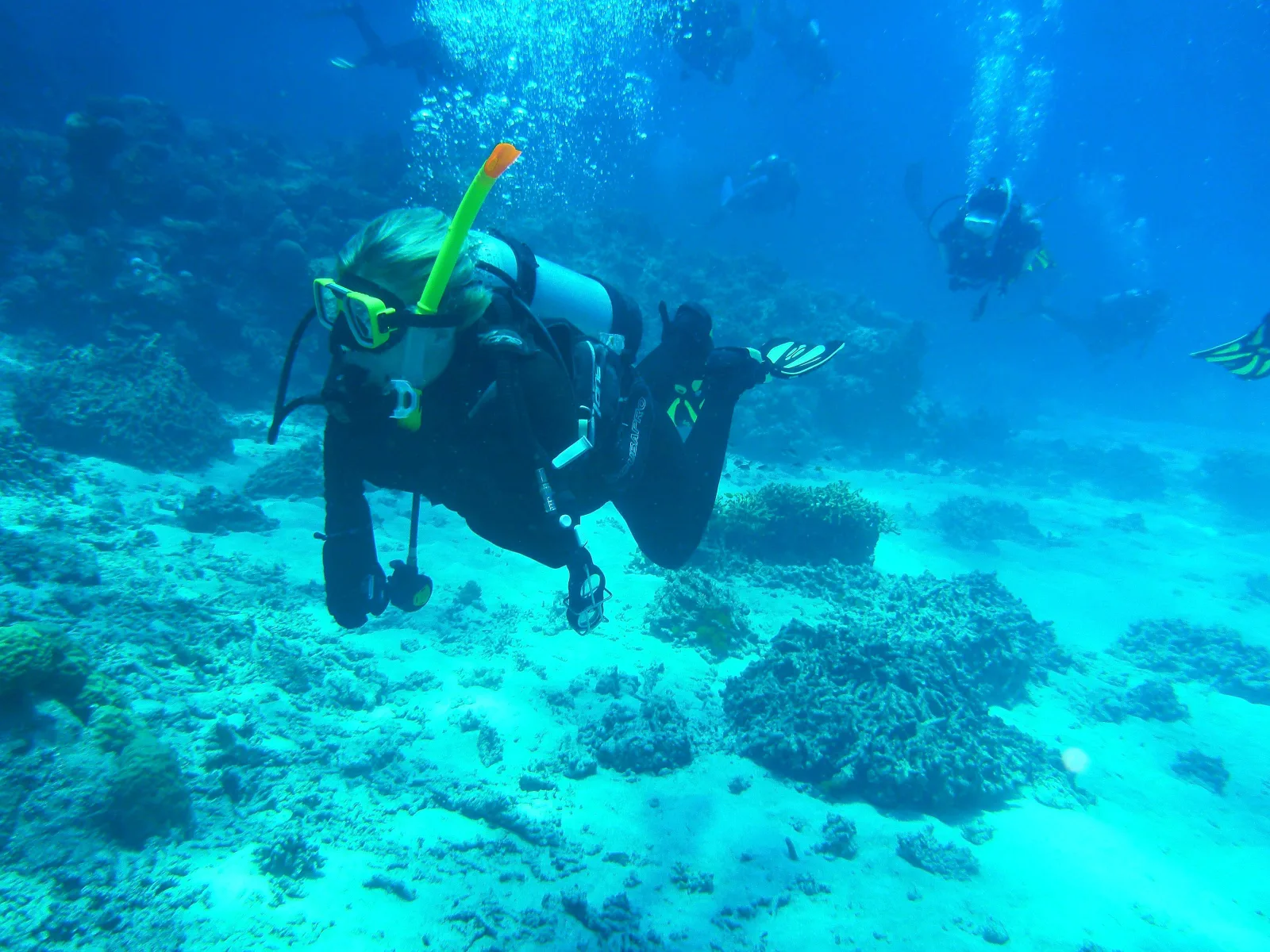
This is the other marquee Azores dive. Blue sharks are beautiful, elegant, non-aggressive pelagic sharks. Full-grown ones run 2-3m. Seeing 10-15 of them circle in clear blue water at 5-10m depth with no cage is a genuinely memorable experience.
How it works:
- Boat departs southwest Pico in the morning
- 30-60 minute ride to a spot about 10-20 nm offshore
- The operator deploys chum (fish blood and parts) to attract sharks
- Divers descend to 5-10m on a line
- Sharks arrive over 15-45 minutes and circle the divers
- Session runs 30-60 minutes
Season: Roughly July through October. Peak August-September.
Safety: Blue sharks are not considered aggressive to divers. Operators follow established protocols (no touching, stay in group, stay close to the line). I’ve done this dive multiple times — at no point did it feel unsafe.
Cost: €150-200 per dive, €250-350 for a double-dive day.
Operators: Pico Sport, CW Azores.
Seasons and water temperatures
| Month | Surface temp | Season | Notes |
|---|---|---|---|
| Jan | 16-17°C | Off | Limited operators running |
| Feb | 15-16°C | Off | Coldest month |
| Mar | 15-16°C | Off | Slowly warming |
| Apr | 16-17°C | Shoulder | Some operators reopening |
| May | 18-19°C | Start of season | Good conditions begin |
| Jun | 20-21°C | Season | Reliable weather windows |
| Jul | 21-22°C | Peak | Blue shark season starts |
| Aug | 22-23°C | Peak | Warmest, busiest |
| Sep | 22-24°C | Peak | Often best diving of the year |
| Oct | 21-22°C | Peak | Season winding down — still excellent |
| Nov | 19-20°C | End of season | Most operators reduce schedule |
| Dec | 17-18°C | Off | Limited operators |
Wetsuit recommendations:
- May-June: 7mm full suit, hood recommended
- July-August: 5mm full suit minimum
- September: 5mm full suit, can get away with 3mm for shorter dives at shallow depths
- October: 5mm back to 7mm as month progresses
- November-April: 7mm + hood + gloves
For beginners
Can you start diving in the Azores? Yes, but with caveats.
Discover Scuba Diving (uncertified intro): €80-120. Sheltered sites only, 10m max. Available with most operators.
PADI Open Water course: €450-600, 3-4 days. Water is warm enough in summer to comfortably learn in. Courses mix pool sessions (in the warmer months, sometimes in the ocean directly) and open water dives.
Recommended islands for beginners: São Miguel (easiest logistics, multiple beginner-friendly sites), Faial (calmer south-side sites).
Not recommended for beginners: Princess Alice, blue shark dives, Formigas Islets. These are advanced+ for good reasons.
Costs summary
| Item | Cost (2026) |
|---|---|
| Shore dive with gear | €40-50 |
| Single boat dive with gear | €60-80 |
| Double boat dive | €110-140 |
| Princess Alice Bank full day | €250-350 |
| Blue shark dive (single) | €150-200 |
| Blue shark double dive | €250-350 |
| Discover Scuba Diving | €80-120 |
| PADI Open Water course | €450-600 |
| Gear rental (full set) | €25-30/day |
| Nitrox upcharge | €8-10/dive |
Which operator
Pico (best diving)
- Pico Sport — the most established, runs Princess Alice trips, blue shark, full PADI training. English-fluent staff, strong safety record.
- CW Azores — heavy on blue shark diving — smaller, more specialized.
Faial
- Espirito Azul Dive Center — good range of wrecks, Princess Alice trips, PADI training.
São Miguel
- Dive Açores — the established Ponta Delgada operator
- Best Spot Azores — smaller, flexible scheduling
- Mysub — focus on Ponta Delgada area wrecks and Caloura
Santa Maria
- Manta Rays Azores — the Santa Maria specialists, good for warm-water / pelagic-focused trips
Common mistakes divers make
- Assuming the Azores is “easy” diving. Some sites are, many aren’t. Currents, depth, and open-water conditions are normal. Be honest about your experience level.
- Not booking Princess Alice early enough. Trips run weather-dependent — you want 2-3 possible days to maximize odds.
- Trying to do blue sharks in April. Season is July-October.
- Forgetting hood and gloves. Even in summer, below 20m gets cold.
- Not packing a dry bag for the boat. Atlantic spray gets everything wet.
- Booking with the cheapest operator found online. Diving safety matters. The top operators charge slightly more for good reason.
Combining diving with a broader Azores trip
If you’re not a dedicated diver but want to add one or two dives to a normal vacation, São Miguel is the answer — you can do a 2-dive day trip from Ponta Delgada without changing hotels or islands, and see the Dori wreck + Ilhéu de Vila Franca crater in one day.
If diving is the main reason you’re coming, fly directly to Horta (Faial) or base on Pico. The diving is materially better and you can ferry between Pico and Faial for varied dives.
For a standard São Miguel trip with 1-2 diving days added:
- See the 5-day São Miguel itinerary — swap Day 4 or Day 5 for a diving day
- Or the 3-day version if short on time
For a dedicated dive trip combining Pico + Faial, the structure in the 7-day multi-island itinerary adapts cleanly — keep the São Miguel portion short and stretch the Pico/Faial portion.
If you’d rather have this locked in before you land, most of the operators above list their trips on GetYourGuide — it’s the easiest way to compare departure times and see what still has space:
The quick summary
- Best island for diving: Pico
- Best season: June-October
- Best water: August-September
- Signature experiences: Princess Alice Bank (advanced+), blue shark diving off Pico, Dori wreck on São Miguel
- Minimum trip: 2-3 days on Pico or Faial with a dedicated operator
- Cost range: €300-1,500+ depending on how serious you go
The Azores diving scene is smaller and less polished than the Canaries or Egypt, and that’s exactly why it’s worth doing. You’ll dive with small groups, at sites that aren’t crowded, with guides who know the water intimately, and you’ll see species most European divers never encounter.
For trips that pair diving with the rest of the islands, Pocket Guide Azores optimizes the full itinerary — you tell the app you want diving days, it works them in around the microclimate and weather patterns of the other activities.
Frequently asked questions
Is the Azores a good place to scuba dive? +
Yes — it's one of Europe's best diving destinations and genuinely world-class for pelagic (open-ocean) encounters. The Azores sits on the Mid-Atlantic Ridge, which means dramatic volcanic underwater topography: lava arches, pinnacles, underwater caves, and seamounts that attract big pelagic species. Visibility is typically 20-30 meters (regularly 40+ in summer), and the marine life is distinctly Atlantic — you're more likely to see blue sharks, mobula rays, mantas, and tuna than you are typical Mediterranean reef fish.
When is the best time to dive the Azores? +
May through October. Water temperatures range from 19°C in May to 23-24°C in August-September, warming to peak in September. July-October has the most reliable weather windows for offshore sites like Princess Alice Bank. Blue shark season runs roughly July through October off Pico island. Winter diving (November-April) is possible but reduced — water drops to 16-17°C, seas are rougher, and several operators close or run reduced schedules.
What is Princess Alice Bank? +
An underwater seamount about 50 nautical miles southwest of Faial island. The top of the seamount sits at around 35 meters depth — well within advanced recreational diving range. Princess Alice is famous for mobula rays (large schools congregate here in summer), mackerel sharks, tuna, and occasional sightings of mantas and hammerheads. It's a full-day trip (8-10 hours round trip from Faial or Pico) and requires Advanced Open Water certification plus typically 50+ logged dives. This is one of the most legendary dive sites in the Atlantic.
Can you dive with blue sharks in the Azores? +
Yes — blue shark diving (and occasionally mako shark diving) is a signature Azores experience, done primarily off Pico island. Operators use a chum-based technique to attract sharks to a baited location offshore. You descend to 5-10 meters and watch blue sharks pass through — typically 5-15 sharks in a good session. Season runs roughly July through October. No cage, open water. Cost: €150-200 per dive, €250-350 for a double-dive day. Operators include Pico Sport and CW Azores.
What are the water temperatures for diving in the Azores? +
Surface: 16-17°C in winter (December-April), 18-19°C in May, 20-21°C in June-July, 22-24°C in August-September, 21-22°C in October-November. At depth, temperatures drop 1-3°C below surface readings. Most recreational divers wear a 5mm or 7mm wetsuit year-round; a 3mm shorty might work in August-September for shorter dives. Hood and gloves recommended below 15m in winter.
Where should I dive in the Azores? +
By island: Faial for wreck diving (the SS Canção do Mar, a WWII wreck at 35m) and the Capelinhos underwater volcanic landscape. Pico for cave diving, lava arches, and blue sharks. São Miguel for the Dori WWII wreck (near Ponta Delgada), the Ilhéu de Vila Franca crater, and Caloura's cliffside walls. Santa Maria for the most warm-water-feeling sites, whale sharks (rare), and mobulas. Flores and Corvo are legendary but very weather-dependent.
Do I need to be certified to dive the Azores? +
Yes for most sites. Open Water is enough for shore and shallow boat dives around the islands (most sites 10-25m). Advanced Open Water is required for offshore sites, deeper dives (Princess Alice, Ambrósio Reef, the Dori wreck at 25m+), and the blue shark dives. Most operators offer discover dives (non-certified, 10m max) at sheltered sites for €80-120. Full PADI Open Water courses run 3-4 days and cost €450-600.
Which dive operators in the Azores are the best? +
On Pico: Pico Sport (the most established, offers Princess Alice trips, blue shark diving, full PADI training) and CW Azores (also respected, heavy on blue shark diving). On Faial: Espirito Azul Dive Center (good range of wrecks and pelagic trips). On São Miguel: Dive Açores, Best Spot Azores, and Mysub — all solid, smaller operations. On Santa Maria: Manta Rays Azores (smaller but the warm-water island specialists).
How much does diving cost in the Azores? +
Shore dives: €40-50 per dive. Boat dives: €60-80. Double-boat dives: €110-140. Princess Alice Bank trip: €250-350. Blue shark dive: €150-200. Full gear rental: €25-30 per day. Discover Scuba Diving (non-certified intro): €80-120. PADI Open Water course: €450-600. Most operators give discounts for multiple dives or multi-day packages.