
Also available in Português
Best Beaches in São Miguel, Azores: A Local's Honest Guide
An honest local's guide to the best beaches in São Miguel, Azores — which are worth the drive, which are for photos only, and where locals actually swim.
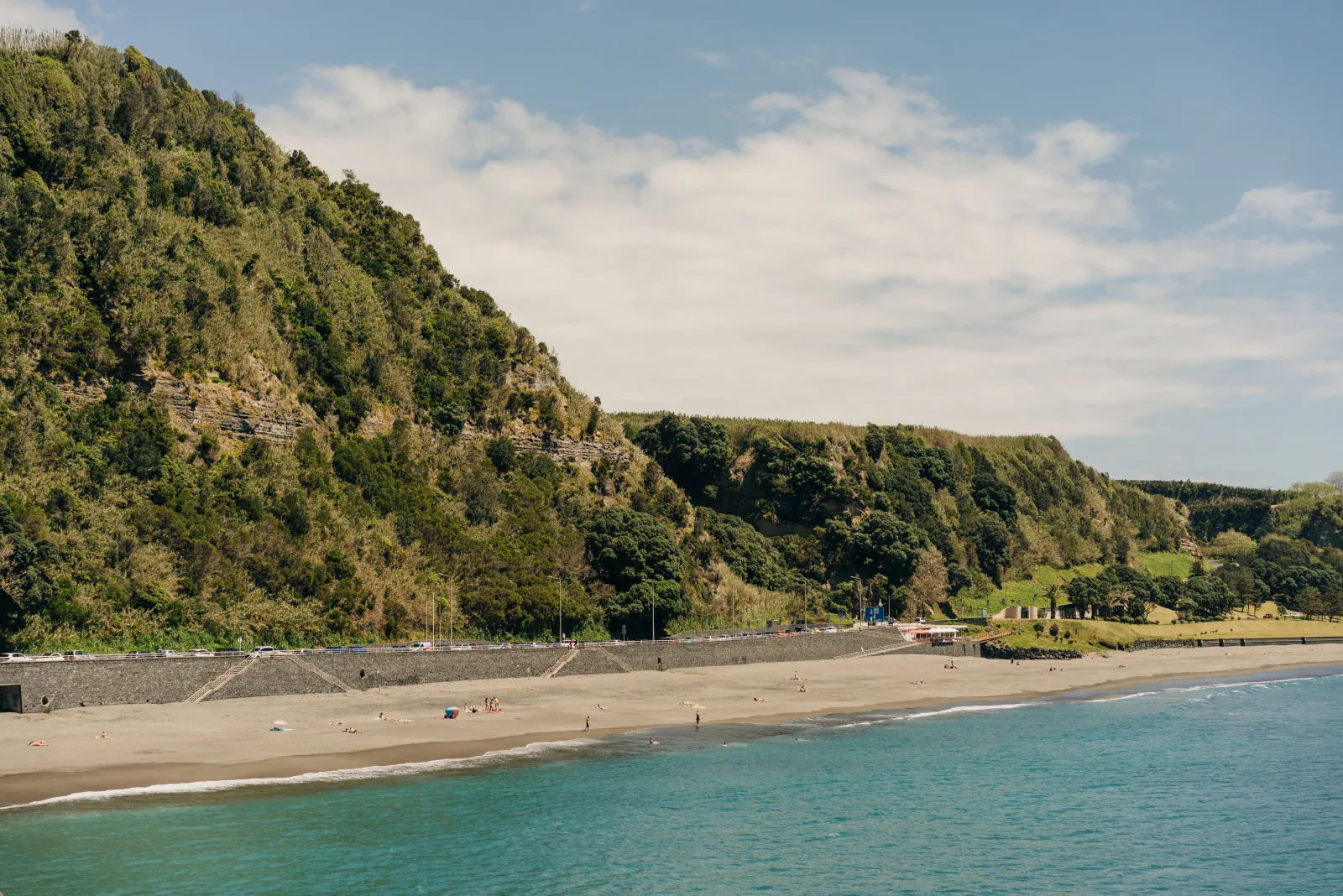
The honest truth about the best beaches in São Miguel: they’re nothing like what most visitors expect from the Azores. No white sand (for that, you want Santa Maria island), no Caribbean blue, no water warm enough to float in lazily for hours. What you get instead is stranger and more compelling — volcanic rock coastlines where the ocean carves natural pools out of basalt, geothermal springs that warm the sea in winter when everything else is cold, and on clear days, Pico’s summit rising 70 kilometres across the Atlantic. I live on São Miguel. I’ve spent time in, near, and around all of these places. This is the honest version of the guide.
Most tourists make one predictable mistake. They see Praia de Santa Bárbara in a photo — and it looks extraordinary, because it is — drive there, find the Atlantic swell is real and the water is cold, and end up standing on the viewpoint unsure what to do next. The thing about São Miguel is that the best swimming is almost never at the most photographed spots. The locals’ choice is the natural pools. The visitors who know this have a completely different island from the ones who don’t.
What “Best Beach” Actually Means on São Miguel
São Miguel has five distinct types of coastal and swimming experience, and understanding which is which is the whole game.
Sand beaches come in two flavours: south coast (calmer bay orientation, better for swimming) and north coast (full Atlantic exposure, excellent for surf and dramatic scenery). The sand throughout is volcanic — dark grey to near-black. Visitors expecting white sand tropical conditions occasionally feel misled. I’d argue the volcanic coast is better, but it’s a genuinely different aesthetic.
Natural pools (piscinas naturais) are the local standard. These are sections of coastline where ancient lava flows built natural rock walls against the sea, creating enclosed pools of calmer ocean water. At their best — Mosteiros in the west — they’re among the finest places to swim on the island.
Geothermal bathing is in a category of its own. Ferraria on the island’s northwest tip has underwater volcanic springs that warm a tidal pool to temperatures found nowhere else on the island, especially in winter when the contrast with the cold Atlantic is most dramatic.
Lake shores exist at volcanic crater lakes like Lagoa do Fogo, but swimming in the protected lakes is mostly restricted. They’re for hiking and the view, not a beach day.
Boat-access lagoons — the Ilhéu de Vila Franca — are a single specific experience: a flooded volcanic crater reachable by ferry, with a calm inner lagoon surrounded by ancient rock walls. Nothing else on the island is like it.
| Type | Main example | Best for | Viable season |
|---|---|---|---|
| South coast sand | Praia Formosa | Family swimming | Jun–Sep |
| North coast sand | Praia de Santa Bárbara | Surfing, photos, sunsets | Year-round |
| Natural pools | Piscinas de Mosteiros | Swim + scenery | May–Oct |
| Geothermal pool | Ferraria | Warm swimming | Oct–Mar strongest |
| Boat-access lagoon | Ilhéu de Vila Franca | Calm snorkelling | Jun–Sep |
South coast — the calmer side for swimming
The south coast faces away from the dominant Atlantic swells. The water is calmer, the beaches more sheltered, and for most visitors who actually want to get in the ocean and not immediately regret it, this is the right side of the island to target.
Praia Formosa (Vila Franca do Campo)
Praia Formosa is the best sand beach on São Miguel for swimming. It sits 40 minutes east of Ponta Delgada, the bay provides genuine protection from Atlantic swell, and the beach is long enough that even in August it doesn’t feel crowded by European standards. The sand is dark volcanic, the facilities are solid — changing rooms, showers, beach bars — and the water quality is consistently good.
The town of Vila Franca do Campo sits directly behind the beach. Eat lunch here before or after — the covered market has honest fish and meat dishes for under €12 a plate. This part of the south coast is where you get the combination of a proper beach day and a meal that doesn’t feel assembled for tourists.
In August the beach fills. Come before 11:00 or after 17:00 to have the best of it.
Ilhéu de Vila Franca do Campo
Five minutes by ferry from Vila Franca’s pier is one of the most distinctive swimming spots in the Azores. The ilhéu is a fully preserved volcanic crater, partially submerged, with a ring of jagged rock enclosing a calm inner lagoon. You reach the lagoon through a natural arch in the crater wall. The water inside is protected from swell, slightly warmer than the open ocean, and clear enough to see the bottom. On a good summer day it looks improbable.
The access is capped. Daily visitor numbers are limited to protect the ecosystem. In July and August, tickets sell out weeks ahead. Book online when you’re planning your trip — this is not the kind of thing to leave to the day. The ferry runs from the pier in Vila Franca — the crossing takes about five minutes.
Praia de São Roque
Fifteen minutes from Ponta Delgada, São Roque is the fastest sand option from the capital. It’s a working beach — a dark strip backed by a functioning fishing village — without the drama of Mosteiros or the facilities of Praia Formosa. Locals use it for quick weekday afternoon swims. If you’re staying in Ponta Delgada and want a short drive to sand and water, it works perfectly well. Don’t expect it to be the centrepiece of your day.
Praia da Água de Alto
A smaller, quieter beach near Vila Franca do Campo, slightly further from the town. The same south coast calm water applies here. Less known than Praia Formosa, which means lower crowds on summer weekends. The facilities are modest. If Praia Formosa is packed and you’re flexible, Água de Alto is the backup.
Best beaches in São Miguel: the natural pools
Natural pools are where the island actually swims. Most tourists walk past them looking for something that resembles a conventional beach. This is exactly the mistake to avoid.
The pools work best from May through October when the sun warms the trapped water above ambient ocean temperature. On a calm, sunny afternoon a good piscina natural on São Miguel is better than almost any conventional beach. The water is calmer, the experience more interesting, and — except at Mosteiros in August — the crowds are thinner than the south coast beaches.
Piscinas Naturais de Mosteiros
Mosteiros is on São Miguel’s west coast, about 45 minutes from Ponta Delgada. The road drops through green hills, narrows past farms and stone walls, then opens suddenly to one of the most dramatic coastlines on the island. Black basalt columns, 15 metres high in places, line the shore. The Atlantic hits the rock and climbs white. At the base, a series of natural pools are linked by wooden walkways, iron ladders, and access points cut into the lava.
On a clear day you can see Pico across the channel. The morning sun hits the west-facing pools well before midday. I’d recommend arriving before 10:00 — the light is good for photos, the pools have warmed from the previous afternoon’s sun, and the Atlantic wind that builds most afternoons on this coast hasn’t arrived yet.
The facility has changing rooms, toilets, a small café, and charges a modest entry fee (a few euros). This is where I bring everyone who visits me on the island. No contest.
Piscinas Naturais de Ribeira Grande
The north coast’s main natural pools are functional and well-maintained. They’re located centrally in Ribeira Grande town, easily accessible without a car detour, and popular with local families. The north coast location means more Atlantic energy and colder water than Mosteiros. If you’re already in Ribeira Grande — for the best hikes on São Miguel or the tea plantation route — these pools are a solid stop. I wouldn’t drive here specifically from Ponta Delgada when Mosteiros exists.
Piscinas Naturais de Rabo de Peixe
A smaller, less visited set of pools near the fishing village of Rabo de Peixe, west of Ribeira Grande. The village has kept its rough-edged character. Lower crowds, more local feel, minimal tourist infrastructure. If Mosteiros is crowded in August and you want an alternative on the north coast, this is the one to know.
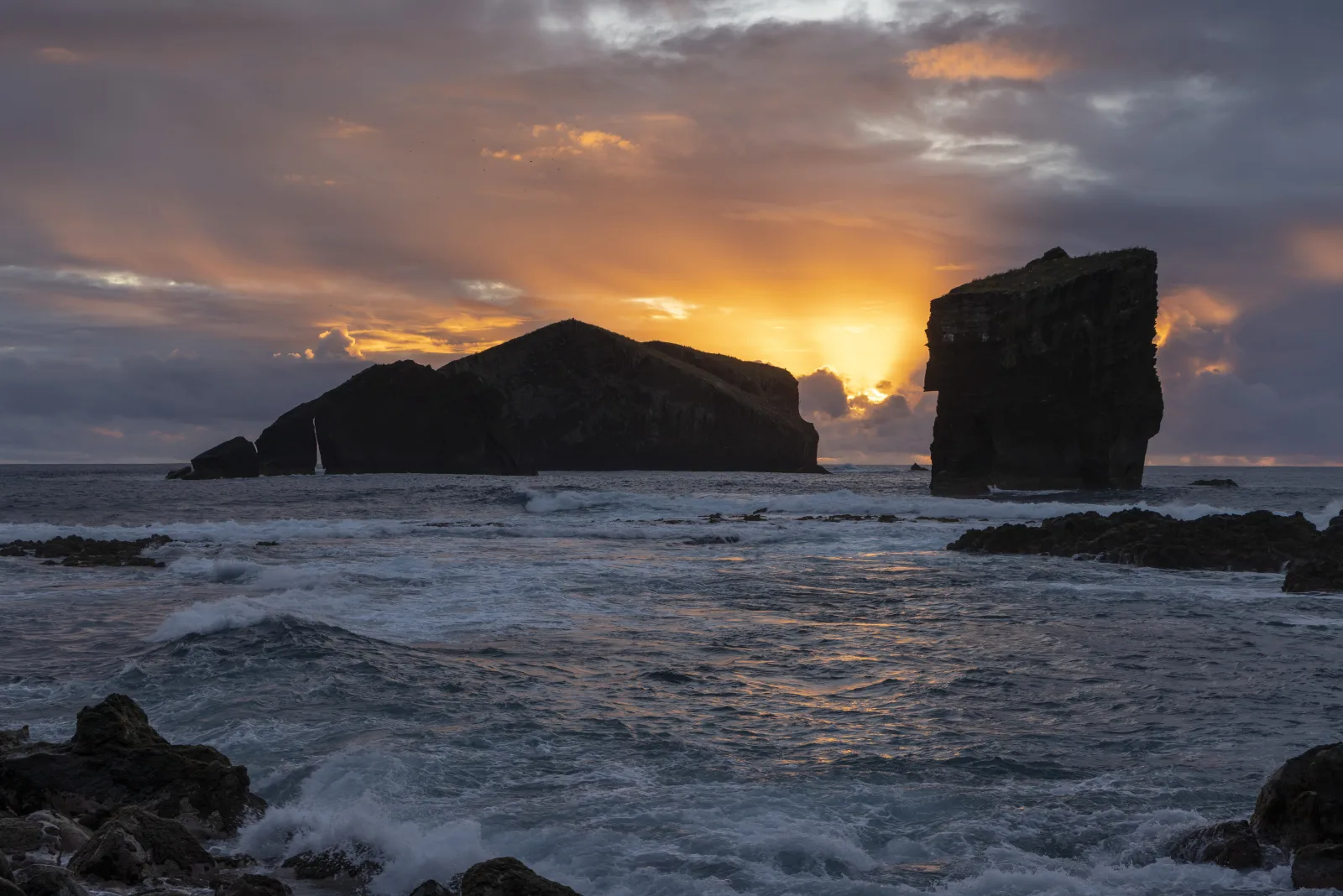
Ferraria — geothermal ocean swimming
This is the one that exists almost nowhere else in the same form.
Ferraria is in the island’s northwest, at the end of a road that runs out of reasons to continue much further. A tidal inlet, enclosed partially by old lava flows, receives underwater volcanic springs that heat the water to temperatures no open beach on São Miguel can match. Near the vents, the water hits 28–30°C. At the outer edges it’s cold Atlantic. In between, the temperature shifts as you move.
The effect is strongest in winter when the contrast between the springs and the cold ocean is most dramatic. From October through March, when every other beach option on São Miguel is too cold for most people, Ferraria is genuinely warm. In summer the warm water is more diluted by the tidal volume, but the springs are still detectable.
Practical details: Steep steps lead down from the facility. The changing rooms and a small café sit above. Entry costs around €5–8 (confirm on-site — prices have changed over the years). The slippery lava rock at the pool edges requires caution. The facility staff track the tide and can tell you if conditions are good — call ahead or check before making the drive.
Timing the tide is essential. Too high: the pool becomes open ocean, the warm water washes out, and the swell can be rough. Too low: you’re in a shallow puddle a metre deep. Mid-tide on a calm day is the window. Check the tide chart and plan accordingly. The drive is 50 minutes from Ponta Delgada — you want to time it right.
The warm water near the vents is unmistakable once you find it. Move slowly across the pool and let the temperature gradient tell you where the springs are.
North coast — surf and scenery
The north coast of São Miguel faces the Atlantic directly. Swells arrive here without obstruction from thousands of kilometres of open ocean. The result: dramatic surf, photogenic conditions, cold water, and coastlines that look exactly like what you imagined when you booked a trip to the Azores. For casual swimming, the conditions are generally poor. For everything else, they’re excellent.
Praia de Santa Bárbara
Santa Bárbara is São Miguel’s most photographed beach and one of the most recognisable images of the island. The bay opens northwest into the Atlantic, the swell arrives consistently, and the long grey-black sand strip with green hills rising behind it looks like no beach anywhere on mainland Portugal. The viewpoint above the bay — a ten-second walk from the main car park — gives you the full composition.
There’s a surf school at Santa Bárbara. If you’ve been meaning to learn to surf, the instructors here are good and the conditions are reliable. If you arrive expecting to swim like you would at Praia Formosa, the first wave will explain why the south coast exists.
Go for the view. Stay for the sunset if the timing works. Don’t swim here unless you surf.
Praia de Porto Formoso
Further east on the north coast, near the Gorreana tea plantation — the oldest operating tea plantation in Europe and entirely free to visit — Porto Formoso is a grey pebble and rock shore with a photogenic sea stack offshore. Combine the beach visit with the plantation: walk the rows of tea bushes above the north coast, then descend to the shore. The views from the Gorreana hillside over the Atlantic are exceptional.
Swimming here is possible on calm summer days, but the north coast is variable. Treat Porto Formoso as a stop on a north coast circuit rather than a destination swim beach.
Planning your São Miguel beach day
The question I hear most from visitors: is it worth renting a car to reach the beaches? Yes, without hesitation. Mosteiros and Ferraria are unreachable without one. If you haven’t settled the logistics yet, do you need a car in the Azores covers the full decision.
The sequencing that works for a west-coast beach day: drive to Mosteiros first for the morning light and warmer pools, check the tide for Ferraria (mid-afternoon is often mid-tide), stop there on the way back, and finish in Ponta Delgada. If you’re building a wider island itinerary, the 5-day São Miguel itinerary shows how to fit beaches alongside the volcanic interior, Furnas, and Sete Cidades.
| Beach | From Ponta Delgada | Drive time | Best time of day |
|---|---|---|---|
| Praia de São Roque | 12 km south | 15 min | Afternoon |
| Praia Formosa | 40 km east | 40 min | Midday–afternoon |
| Ilhéu de Vila Franca | 40 km east | 40 min + ferry | Check ferry schedule |
| Piscinas de Mosteiros | 38 km west | 45 min | Morning (before 10:00) |
| Ferraria | 42 km west | 50 min | Mid-tide, typically afternoon |
| Praia de Santa Bárbara | 28 km north | 35 min | Sunset |
| Piscinas de Ribeira Grande | 30 km north | 35 min | Any |
Water temperature by month — plan your swim season here:
| Month | Avg. water temp | Swim conditions |
|---|---|---|
| Jan–Mar | 17–18°C | Cold open ocean — Ferraria is the move |
| Apr–May | 18–19°C | Natural pools warm up in afternoon sun |
| Jun | 20–21°C | Natural pools comfortable — open beaches cool |
| Jul | 21–22°C | Good across the board |
| Aug–Sep | 23–24°C | Warmest — all spots viable — south coast busiest |
| Oct | 21–22°C | Local favourite — water warm, crowds gone |
| Nov–Dec | 19–20°C | Cool — Ferraria strongest thermal effect |
The honest answer on water temperature: 23–24°C in August feels fine once you’re in. Getting in is the part that takes conviction. After five minutes you stop noticing. I’ve seen people from northern Europe consider it warm. Visitors from Florida occasionally need longer to adjust.
If you’d rather have this locked in before you land, most of the operators above list their trips on GetYourGuide — it’s the easiest way to compare departure times and see what still has space:
What to do next
São Miguel’s beaches are one layer of the island. The volcanic interior — the crater lakes, the thermal valleys, the calderas that produce geothermal heat for everything from Ferraria to Furnas — is the other, and most visitors who stay five or more days come away saying it’s actually what they remember most.
- The Furnas guide covers the volcanic valley where the ground steams, lunch is cooked underground in caldeiras, and the Terra Nostra thermal pool is the best single thing to do on the island
- Lagoa do Fogo is the most dramatic crater lake on São Miguel — best combined with a west-coast beach day, since both are in the same direction from Ponta Delgada
- Best hikes on São Miguel pairs directly with this guide — the Mosteiros crater rim hike sits ten minutes from the natural pools, and the north coast has two of the island’s best ridge trails
- The 5-day São Miguel itinerary shows the full island plan with the sequencing, timings, and the order that actually makes sense logistically
And if you want a trip that optimizes for the best swimming on São Miguel — Mosteiros in the morning, Ferraria at mid-tide, south coast beaches sequenced correctly — Pocket Guide Azores builds weather-aware day plans with the same local knowledge in this guide, including the tide timing and morning-only windows that most generic itineraries miss entirely.
Frequently asked questions
Is the water warm enough to swim at São Miguel beaches? +
In July and August, yes — water temperatures reach 23–24°C, which is cool by Mediterranean standards but very swimmable once you're in. For warmer swimming year-round, Ferraria's geothermal pool is the exception: underwater volcanic springs heat the tidal pool to around 28–30°C near the vents, making it genuinely warm in winter when the open ocean is too cold for most people.
Which beach in São Miguel is best for swimming? +
For natural scenery combined with calm water, the Piscinas Naturais de Mosteiros (natural rock pools on the west coast) are my top recommendation. For a proper sand beach with good swimming conditions, Praia Formosa near Vila Franca do Campo is the best option on the island — sheltered bay, decent sand, and solid facilities.
What are the natural pools (piscinas naturais) in São Miguel? +
Piscinas naturais are natural swimming pools formed where volcanic lava flows created rock walls against the sea, trapping calmer ocean water. The main ones on São Miguel are at Mosteiros (west coast, most scenic), Ribeira Grande (north coast, accessible), and Rabo de Peixe (north coast, quieter). They're generally calmer and slightly warmer than open beaches, and are where most locals prefer to swim.
What is the water temperature in the Azores by month? +
The Atlantic around São Miguel averages 17–18°C in January, rising to a peak of 23–24°C in August and September. It stays above 20°C from roughly June through October. For comfortable swimming without a wetsuit, August and September are the warmest months, though October is a local favourite — the water stays warm while the summer crowds drop.
Can you swim at Ferraria geothermal pool? +
Yes, and it's one of the most distinctive swimming experiences in the Azores. Underwater geothermal springs mix into the tidal pool, warming the water to around 28–30°C near the vents, most noticeably at mid-tide on a calm day. The facility has changing rooms and charges a small entry fee (around €5–8). Timing the tide is essential — too high and the pool becomes open ocean, too low and it's a shallow puddle.
Are there sandy beaches in São Miguel? +
Yes, but the sand is volcanic — dark grey to near-black rather than white. The main sandy beaches are on the south coast: Praia Formosa (Vila Franca do Campo) and Praia de São Roque are the most accessible. North coast beaches like Santa Bárbara also have sand but are exposed to heavy Atlantic swell and are better for surfing than swimming.
Is Praia de Santa Bárbara good for swimming? +
Not really. Santa Bárbara is a surf beach, not a swimming beach. The Atlantic swell is consistent and often powerful. It's one of the most photogenic spots on São Miguel — the viewpoint above the bay is excellent — but if swimming is the plan, you'll find the conditions frustrating. Go for the scenery and the viewpoint, not the dip.
Do you need a reservation for Ilhéu de Vila Franca do Campo? +
Yes, and book as early as you can. Daily visitor numbers are capped to protect the lagoon ecosystem. In July and August, tickets sell out weeks in advance. Check the official booking site when you're planning — the inner lagoon of this flooded volcanic crater is genuinely worth the effort if you secure a spot.