
Also available in Português
Graciosa Island, Azores: A Quiet Local Pick
A local's guide to Graciosa Island, Azores — Furna do Enxofre, Santa Cruz, Carapacho thermal pools, the windmills, and how many days you actually need.
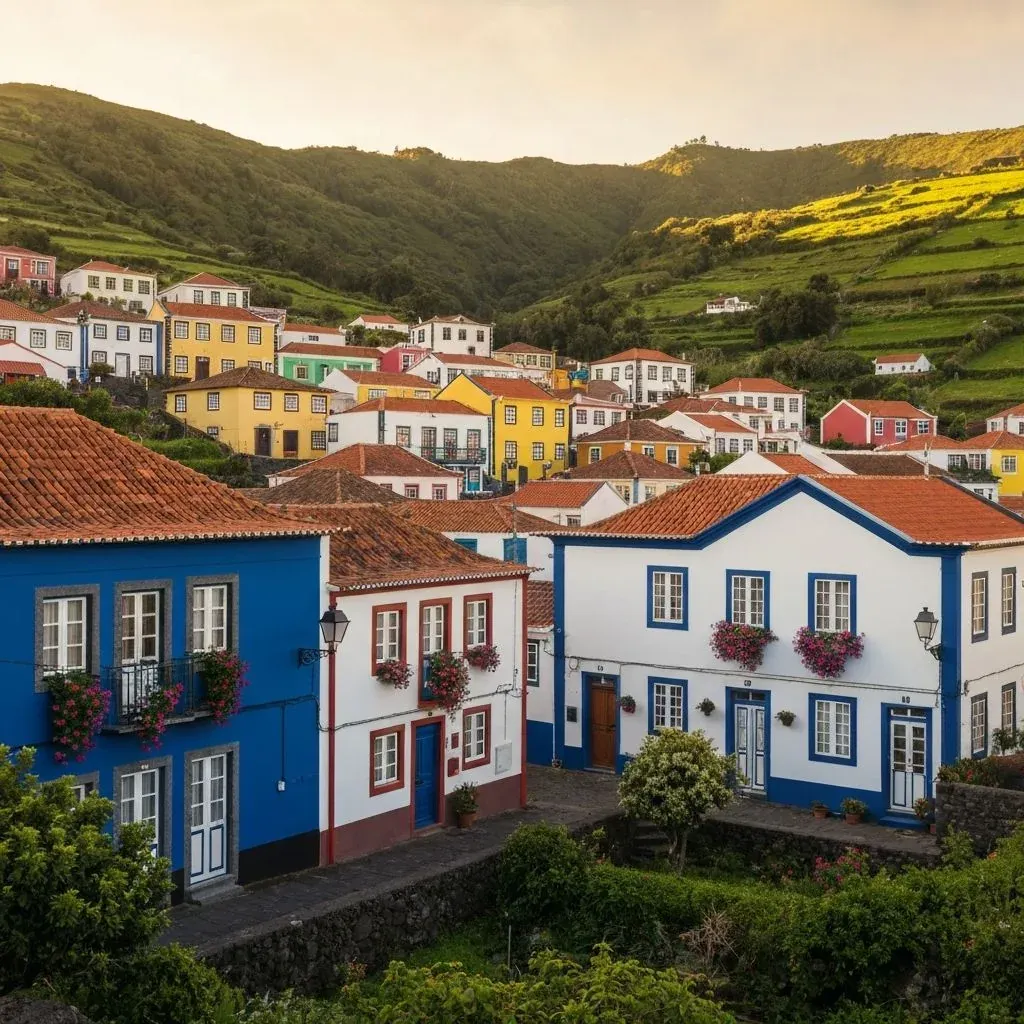
Graciosa is the smallest of the central Azores islands and the one most travellers skip. I live on São Miguel and I’d argue that’s exactly why it’s worth visiting — the pace is slower, the tourist infrastructure is thinner, and the things that make Graciosa specific (the Furna do Enxofre, the windmills, the Carapacho thermal pools at the edge of the Atlantic) feel more like discoveries than checklist items.
This guide is the one I’d hand a friend who’s already done São Miguel and wants a different version of the Azores. Two days, ideally three. Pair it with Terceira if you can — the flight is 25 minutes.
Where Graciosa Island sits in the Azores
Graciosa is the northernmost of the Central Group of the Azores, sitting roughly 60 km north of Terceira. The island is just 60 km² — about 10 km long and 7 km wide at its widest — and home to fewer than 4,000 people, the smallest population of any island except Corvo.
The geography is unusual for the Azores. Most of the island is rolling agricultural plateau rather than volcanic highland, with the Caldeira da Graciosa — a 1.6 km-wide crater — at the southeast corner. The crater is what hosts the Furna do Enxofre, the island’s signature site.
UNESCO classified Graciosa as a Biosphere Reserve in 2007, putting it in the same protected category as Flores and Corvo. If you’re still picking which islands to visit, the Azores islands map and overview covers the geography of the full nine.
How to get to Graciosa
Two options, both run by SATA Azores Airlines or Atlanticoline.
Fly into Graciosa Airport (GRW)
The airport is on the south coast, 7 km from Santa Cruz da Graciosa. SATA runs short hops:
- Terceira (TER) → Graciosa: 25 minutes, daily
- Ponta Delgada (PDL) → Graciosa: 1h 15m, 4–5 weekly
Round-trip from Terceira often runs €70–120 depending on season. Book direct on the SATA site — third-party engines miss the inter-island schedule.
Ferry from Terceira (4 hours)
Atlanticoline runs a passenger ferry from Praia da Vitória (Terceira) → Vila da Praia (Graciosa) about 2–4 times per week between May and September. The crossing is 4 hours and €30–40 one-way for foot passengers. It’s a good option if you want to bring a rental car between islands — the flight cargo holds don’t take cars.
For the broader picture of inter-island flights and ferries, see how to get to the Azores.
Day 1: Santa Cruz, the windmills, and Carapacho
Morning: Santa Cruz da Graciosa
Santa Cruz is the island’s tiny capital — whitewashed houses, cobbled streets, a small harbour, and the pace of a 1950s fishing village. The whole town is walkable in 90 minutes.
09:00 — Start at Largo Conselheiro Vieira de Castro, the central square ringed by café terraces. Order a coffee at one of the corner cafés.
09:45 — Walk to the Igreja Matriz de Santa Cruz, a 16th-century church with a baroque-era expansion. Inside is calmer and more austere than the equivalents in Ponta Delgada or Angra do Heroísmo.
10:30 — Museu da Graciosa, in a beautifully restored 17th-century house. Small but excellent — covers whaling, the island’s vineyard heritage, traditional household life. €3 entry.
11:30 — Quick walk to the harbour and the small Carmo Hill park above town for the view back down to Santa Cruz.
Afternoon: the windmills and Carapacho
Lunch at a marina-side restaurant in Santa Cruz, then head out.
14:00 — Drive north along the coastal road toward Praia. The road passes a string of traditional Graciosa windmills — short, white, wooden-roofed structures used to grind grain for centuries. Several have been restored and a few are now visitable.
15:30 — Carapacho is on the southeast coast — about 25 minutes from Santa Cruz. The Termas do Carapacho is a small spa with indoor thermal pools fed by springs at around 40°C. Outside, just below the spa, are natural sea pools carved into volcanic rock where the geothermal water meets the Atlantic. The combination — hot rock pools framed by black cliffs and ocean spray — is rare anywhere in the Azores.
18:00 — Drive back to Santa Cruz for dinner. Restaurante Dolphin at the marina serves grilled fish straight off the local boats.
Day 2: Furna do Enxofre and the Caldeira
The most distinctive site on Graciosa. Allow most of the morning.
09:30 — Drive 20 minutes from Santa Cruz to the Caldeira da Graciosa, the volcanic crater that dominates the southeast quarter of the island. The road climbs through pasture and ends at a parking area inside the crater itself.
10:00 — Visit the Centro de Interpretação da Furna do Enxofre. It’s a small but well-designed museum that explains the geology of the dome you’re about to descend into. €10 includes museum + Furna access. Open daily 10:00–17:30 in summer, reduced in winter.
10:45 — Walk to the 1939 access tower and descend the spiral staircase — 183 steps down into the dome. The chamber inside is 194 metres long, 50 metres high, and contains a small sulphurous lake at the bottom. The air smells faintly of hot springs. The dome is the largest volcanic cavity in Europe.
12:00 — Back at the surface, walk a section of the Caldeira rim trail — the loop is about 9 km if you do the full circuit, but the first 30 minutes give you the best views over the dome opening and the surrounding pasture.
Afternoon: interior villages
After lunch in Praia (the second-largest village) or back in Santa Cruz, take a slow drive through the interior:
- Luz — small village near the centre, with viewpoints over the agricultural plateau
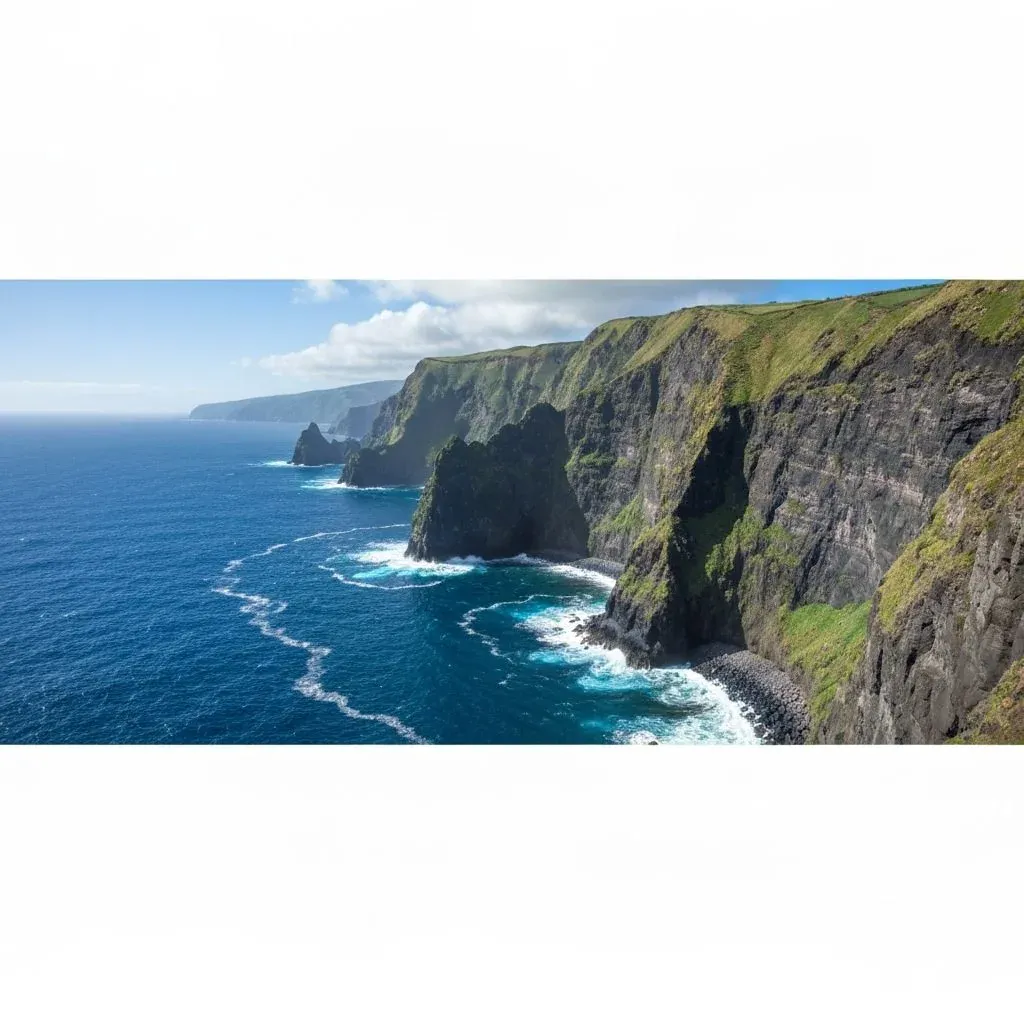
- Pedras Brancas — a viewpoint on the north coast with cliff drops straight to the Atlantic
- Serra Branca — the highest point on the island (398m), with 360° views
The windmills and the agricultural heritage
The moinhos de Graciosa are one of the things that make the island visually distinct from anywhere else in the Azores. Short, white, with conical wooden roofs that pivot on a vertical axis, they were used for centuries to grind cereal and corn for the parish bakeries. At the island’s peak in the 19th century there were over 50 working windmills — agricultural co-operatives that fed villages on the cheap.
Today around 10–12 windmills remain in restored condition, scattered along the north and central coastal roads. The cluster around Pedras Brancas is the most photographed. The windmill at Ribeirinha has been turned into a small interpretation point with milling demonstrations during the summer months.
Beyond the windmills, Graciosa’s other heritage signature is the currais — small stone-walled vineyard enclosures, identical in concept to those on Pico Island but smaller in scale. Each enclosure protects a few vines from the Atlantic wind. The wine produced — vinho de cheiro — is light, faintly sweet, and almost never exported off the island. Buying a bottle from a local producer in Praia or Santa Cruz is one of the takeaway souvenirs that actually means something.
A practical note on Carapacho
Three things to know before you go:
- The Termas building has set sessions. The indoor pools work on 30-minute appointment slots — book ahead by phone in summer or you’ll wait an hour.
- The outdoor sea pools are free, no booking needed. They’re below the spa, accessed by a short staircase carved into the rock. Best at mid-tide: the geothermal water mixes with the sea but doesn’t get swamped by waves.
- The water temperature varies by tide. At low tide the rock pools sit warmer (closer to 35°C). At high tide the mixing with cooler Atlantic water drops them to 22–26°C. Check tide tables before you drive over.
For broader context on how Azorean thermal pools work (the science behind the geothermal heat, the rules around bathing in protected sites), the thermal pools on São Miguel guide covers the framework that applies to Carapacho too.
Where to stay on Graciosa
Three sensible bases.
- Santa Cruz da Graciosa — best for first-timers. Walkable to restaurants, the museum, the harbour. Graciosa Resort & Business Hotel (4-star, outside town) and several restored townhouses around the centre. Smaller guesthouses in the €60–100/night range.
- Praia — the second town, on the east coast. Quieter, near the ferry pier. Good for travellers who want a smaller-village base.
- Carapacho — the southeast corner, near the thermal pools. Graciosa Carapacho Spa Hotel is the obvious choice if you want pool access on tap.
For how to think about basing yourself more generally on the Azores, see where to stay on São Miguel — the same trade-off logic applies.
When to visit Graciosa
| Month | Air temp | Crowds | Notes |
|---|---|---|---|
| Jan–Mar | 14–17°C | Empty | Quiet, often rainy |
| Apr–May | 16–19°C | Building | Hydrangeas start, good prices |
| Jun–Jul | 19–22°C | Moderate | Hydrangea peak inland |
| August | 22–24°C | Peak | Festa do Santo Cristo da Graciosa, busiest |
| Sep–Oct | 20–22°C | Easing | Best balance of weather + space |
| Nov–Dec | 16–18°C | Very quiet | Limited dining hours |
For monthly weather across all of the Azores, Azores temperature by month covers the full picture.
Festa do Santo Cristo dos Milagres da Graciosa in early August is the island’s biggest event — three days of processions through Guadalupe, music in the streets, and food stalls. For a broader Azorean festivals calendar, see São Miguel festivals and events.
What to eat on Graciosa
Graciosa’s food scene is rural and local. A few specific things to seek out:
- Vinho de cheiro — Graciosa’s traditional grape wine, grown in the currais (lava-stone vineyard enclosures) you’ll see across the island. Lighter than mainland Portuguese wines, often consumed young.
- Queijadas da Graciosa — small sweet cheese-and-egg tarts, the local cousin of the more famous Vila Franca version
- Caldeirada de peixe — Azorean fish stew, particularly good at the marina restaurants in Santa Cruz
- Sopa do Espírito Santo — beef, bread, and mint soup served at the Holy Spirit festivities (Pentecost season)
For the broader Azorean food picture, the São Miguel food guide covers most of the regional staples.
Practical notes
- Currency: Euros. ATM in Santa Cruz, card acceptance is patchy at smaller establishments — carry some cash.
- Driving: Easy. The ER1-Z ring road circles the island. Roads are narrow but well-paved.
- Connectivity: 4G in Santa Cruz and along the south coast. Weaker in the interior and the north coast.
- Time zone: Azores Time (UTC-1 winter, UTC summer) — 1 hour behind mainland Portugal.
- Pharmacy: Centro de Saúde da Graciosa in Santa Cruz handles primary care. Hospital trips go to Terceira.
And if you’d rather not stitch this together yourself — the flight or ferry timing, the right time to book the Furna ticket, which Carapacho hotel actually has Atlantic views — Pocket Guide Azores is the AI travel planner that does exactly that. Built by me, from São Miguel, with enough trips to Graciosa to know which Santa Cruz café opens earliest.
The bottom line
Graciosa is the two-day island in a multi-island Azores trip. The Furna do Enxofre alone justifies the flight — there’s nothing else like it in the archipelago, and Europe’s largest volcanic dome is exactly the kind of site that gets understated because Graciosa doesn’t market hard. Add the windmills, the Carapacho pools, and the genuine slowness of Santa Cruz, and you’ve got a strong second or third island.
It’s not the right first Azores island. But for return visitors or anyone who wants the version of the archipelago that hasn’t been polished for the Instagram camera, Graciosa is the smartest pick in the central group.
What to do next
- Terceira Island — the natural pair to Graciosa, 25-minute flight away
- Things to do in the Azores — the archipelago-wide roundup of experiences
- How to get to the Azores — flight + ferry routes for inter-island travel
- Where are the Azores — the broader geography of the archipelago
- Azores temperature by month — pick the right month for Graciosa
Frequently asked questions
How many days do you need on Graciosa Island? +
Two days is the sweet spot. Day one is Santa Cruz, the windmills along the north coast, and the Carapacho thermal pools on the southeast. Day two is the Furna do Enxofre — the volcanic dome that's the island's signature site — plus the Caldeira hike and a slow drive through the interior. One day is doable if you fly in and out, but you'll feel rushed. Three days is generous for an island this small.
How do you get to Graciosa? +
Two ways. SATA Azores Airlines runs short flights from Terceira (about 25 minutes) and Ponta Delgada (about 1 hour 15). There's also a passenger ferry from Terceira (Praia da Vitória) — sailing time around 4 hours, running 2–4 times per week depending on season. Most visitors fly. The ferry is for the determined or those who really want to bring a car over.
What is the Furna do Enxofre? +
The largest volcanic dome in Europe — a giant lava-formed cavern inside the Caldeira da Graciosa. You enter through a 1939 access tower with a spiral staircase of 183 steps, descending into a chamber 194 metres long and 50 metres high. There's a sulphurous lake at the bottom and the air carries a faint hot-spring smell. The Interpretation Center next to the tower covers the geology in detail. Allow 1.5 hours for the full visit.
Why is Graciosa a UNESCO Biosphere Reserve? +
Graciosa was classified by UNESCO as a Biosphere Reserve in 2007. The designation recognizes the island's combination of preserved volcanic landscapes (Caldeira, Furna do Enxofre), its low-impact agricultural heritage (vineyards in stone enclosures, traditional windmills), and a population small enough that human pressure on the ecosystem remains low. It's one of three Azorean biosphere reserves alongside Flores and Corvo.
Are the Carapacho thermal pools worth visiting? +
Yes, if you're already on Graciosa. Carapacho is on the southeast coast — a small thermal spa with indoor hot pools fed by springs around 40°C, plus natural ocean-side rock pools where the geothermal water mixes with sea water. The setting is dramatic — black volcanic rock dropping straight into the Atlantic. It's nothing like the scale of São Miguel's thermal complexes, but the location is hard to beat.
Is Graciosa worth visiting? +
Yes, especially if you've already done São Miguel and want a quieter, slower Azores. Graciosa is the smallest of the central group, has fewer than 4,000 residents, and the pace is genuinely different — windmills, whitewashed villages, almost no tourist infrastructure beyond the basics. It's not the right first-island choice, but it's a strong third or fourth island for return visitors.
When is the best time to visit Graciosa? +
May to September. The Carapacho thermal pools and natural swimming spots are at their best with summer water temperatures, hydrangeas line many of the inland roads in June and July, and the inter-island flights run at their highest frequency. August coincides with the **Festas de Santo Cristo dos Milagres da Graciosa** — the island's biggest festival, three days of processions, music, and food in Guadalupe.
Can you do Graciosa as a day trip from Terceira? +
Technically yes, with the morning SATA flight from Lajes (LJS) and an evening return. You'd have about 7 hours on the ground — enough for Santa Cruz, the Furna do Enxofre with the Interpretation Center, and a quick Carapacho stop if you've got a rental car waiting at the airport. Pre-book the car and the Furna ticket. You won't see the Caldeira hike or the windmills properly, but it's a real taste.