
Also available in Português
Terceira Island, Azores: A Local's Complete Guide
A local's complete guide to Terceira island in the Azores — Angra do Heroísmo, Algar do Carvão, alcatra, festas, and how many days you really need to visit.
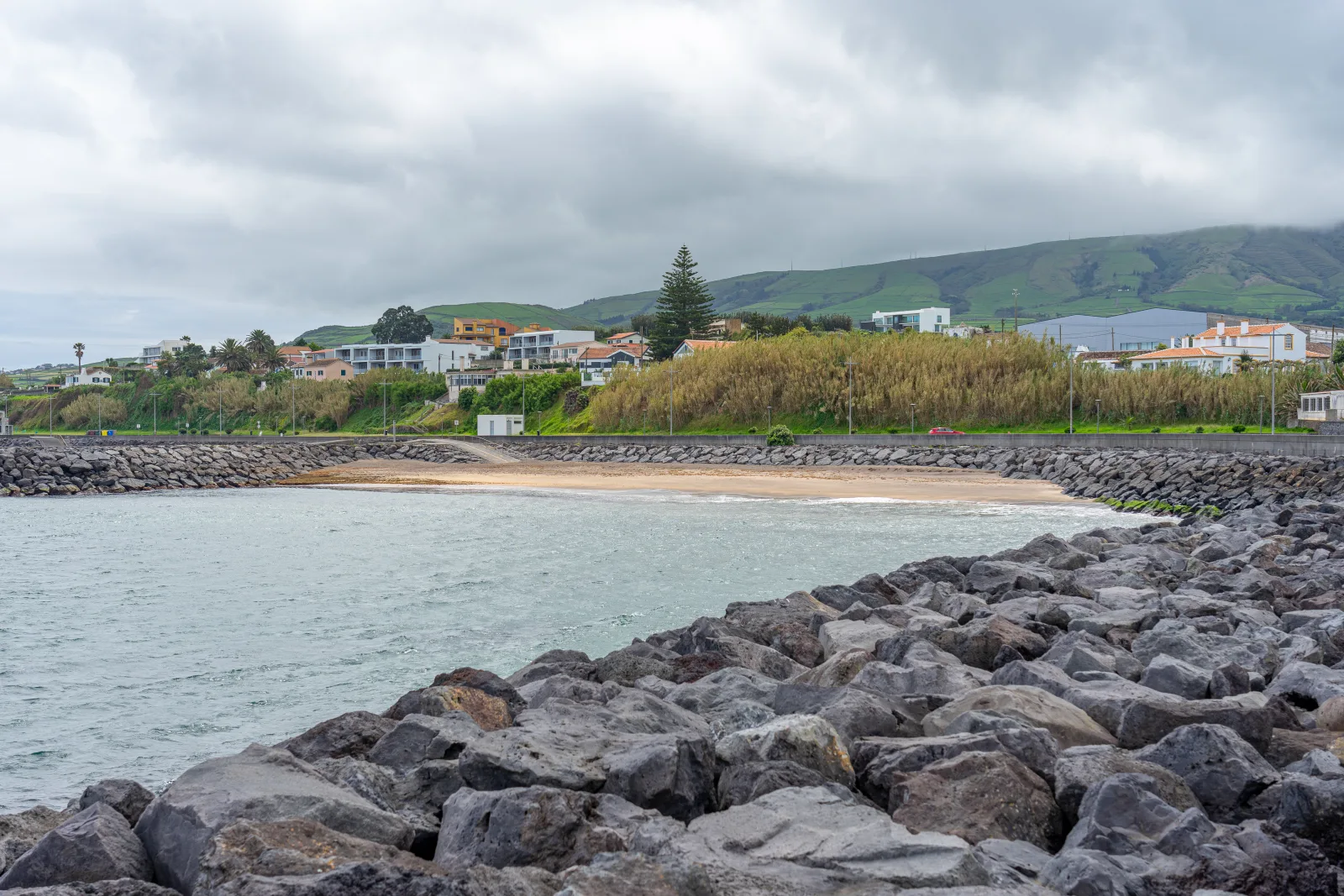
Terceira island is the second-most-visited Azorean island and the most underrated. São Miguel gets the headline experiences (Sete Cidades, Furnas, Lagoa do Fogo) and the international flights. Terceira gets the UNESCO city, the best lava tube in the archipelago, the alcatra, and a year-round calendar of festas that make the rest of the Azores feel quiet by comparison.
I’ve been to Terceira island enough times to have opinions. This is the version of the guide I’d hand to a friend planning their first multi-island Azores trip — what to actually see, what each headline attraction is really like, and the local context behind the festas, the food, and the rope bullfighting that runs from May to October.
If you’re still working out which Azorean islands to combine, the Azores map guide covers the geography. This one is Terceira island in the Azores specifically.
Where Terceira island fits in the Azores
Terceira sits in the Central Group of the archipelago, alongside Pico, Faial, São Jorge, and Graciosa. It’s the third-largest island by area (403 km²) and the second-most-populated (around 56,000 people). The shape is roughly oval, about 30 km long and 18 km wide.
The geography divides into three zones:
- South coast — Angra do Heroísmo (the capital), Monte Brasil peninsula, and most of the population
- Centre / interior — Algar do Carvão, Gruta do Natal, Furnas do Enxofre, Serra do Cume crater
- East coast / north — Praia da Vitória (the sand-beach town), Biscoitos natural pools, Lajes Airport (TER)
You can drive across the entire island in 45 minutes. Most travellers stay in Angra do Heroísmo and day-trip everywhere else.
Why Terceira island is worth visiting
Three things set Terceira apart from the rest of the archipelago:
1. Angra do Heroísmo — The only UNESCO World Heritage city in the Azores. First settled by Portuguese navigators in the mid-15th century, it became one of the most strategically important transatlantic ports for over 200 years. The cobbled streets, baroque churches, and 16th-century fortresses are still mostly intact.
2. Volcanic interior — Algar do Carvão is the only place in the Azores (or anywhere in Europe, really) where you can descend 90 metres into a vertical volcanic chimney. Add Gruta do Natal (a 700-metre horizontal lava tube) and Furnas do Enxofre (a steaming fumarole field) and you have the most concentrated volcanic geology of any Azorean island.
3. Living culture — The Azorean festas calendar runs basically year-round. Festa do Espírito Santo every Sunday for seven weeks after Easter. Sanjoaninas in late June. Tourada à corda (rope bullfighting) from May 1 to October 15. Other islands have festivals, but Terceira lives by them.
Angra do Heroísmo: the UNESCO capital
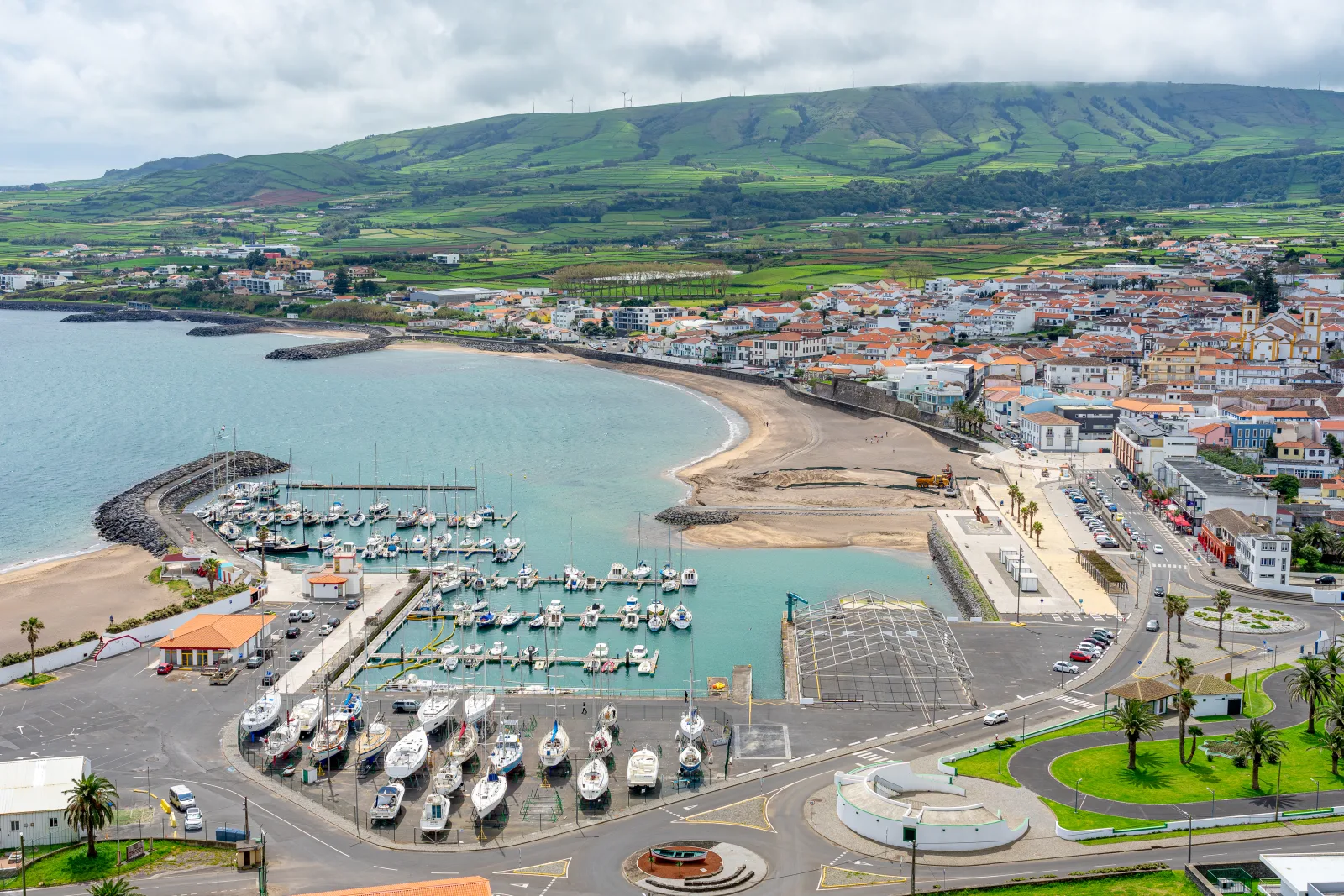
The historic centre of Angra do Heroísmo received UNESCO World Heritage status in 1983. Walk through it slowly — it’s small enough to cover in half a day, dense enough to reward a full one.
The signature spots:
- Portas da Cidade — the 19th-century neoclassical arches at the old-town entrance, built in 1869. The most photographed monument in Angra and the natural start of any walk.
- Sé Cathedral — the largest temple in the Azores, dating from the 16th century. The painted wooden ceiling is the highlight inside.
- Palácio dos Capitães-Generais — 16th-century palace, now a museum. The painted azulejo tile rooms are worth the entrance fee.
- Igreja da Misericórdia — pale yellow façade, baroque interior, sits on the seafront with views over the harbour.
- Public Garden — terraced 19th-century garden climbing up from the city centre, with the Alto da Memória obelisk at the top giving the postcard view of Angra and Monte Brasil.
- Monte Brasil — the volcanic peninsula bordering the city. A short hike or guided tour reaches the Fortress of São João Baptista, with sweeping views over the bay.
A morning walking the old town + an afternoon hiking Monte Brasil = a complete first day on Terceira island.
Algar do Carvão: descend into a volcano
The headline volcanic attraction. Algar do Carvão is a vertical lava tube — a volcanic chimney 90 metres deep — that visitors enter via a staircase descending into the earth. At the bottom: rock walls covered in green moss, lava stalactites, and a small underground lagoon fed by rainwater filtering through the porous basalt.
Practical detail:
| Item | Detail |
|---|---|
| Location | Centre of the island, 25 min from Angra |
| Visit time | 45 min – 1 hour |
| Difficulty | Stairs only, no climbing required |
| Re-opens | Partially reopened March 2026 after maintenance |
| Combined ticket | Often bundled with Gruta do Natal |
| Best time | Mornings on clear days — light penetrates from above |
The descent is dramatic but not technical. Reasonable footing, no claustrophobia issues for most visitors. The walls inside look like enormous abstract paintings — different cooling phases of basalt have left textures and colours specific to this volcano.
Gruta do Natal: the horizontal lava tube
Twenty minutes from Algar do Carvão, Gruta do Natal is a different kind of cave: a 700-metre-long horizontal lava tube that you walk through on foot. The textures inside show the cooling history of the lava — pahoehoe ropes (smooth flow patterns), lava stalactites, marks from successive flow levels, and solidified gas bubbles.
It’s flatter, easier, and less dramatic than Algar do Carvão. Most visitors do both on the same morning — they’re complementary, not redundant.
Furnas do Enxofre: where the ground steams
A fumarole field in the centre of the island, a few minutes from Algar do Carvão. The landscape is striking: red volcanic soil contrasting with bright green moss, with steam vents (fumaroles) pushing volcanic gases out of the ground at high temperatures. The smell of sulphur is unmistakable.
A boardwalk loops through the fumarole area, keeping visitors safely above the hottest vents. The whole walk takes 20-30 minutes.
Serra do Cume: the largest crater in the Azores
A massive volcanic caldera in the eastern interior, now filled with green pasture instead of a lake. The viewpoint at Serra do Cume looks down into the patchwork of small fields divided by stone walls — pure agricultural Terceira. One of the best photo spots on the island, especially at sunrise or late afternoon.
Praia da Vitória: the sandy-beach side
On the east coast, Praia da Vitória is Terceira’s second town and its only proper sand beach — about 1 km of golden sand sheltered in a calm bay. Lifeguards in summer, beachfront cafés, marina, and a small old town worth a wander.
Practical:
| Detail | Value |
|---|---|
| Distance from Angra | ~25 min by car |
| Distance from Lajes airport | 5 min |
| Beach length | ~1 km |
| Sand colour | Golden (rare in Azores) |
| Best for | Family swimming, calm sea |
If you’re flying in late or out early, Praia da Vitória is the closest place to stay near Lajes airport.
Biscoitos: the natural sea pools
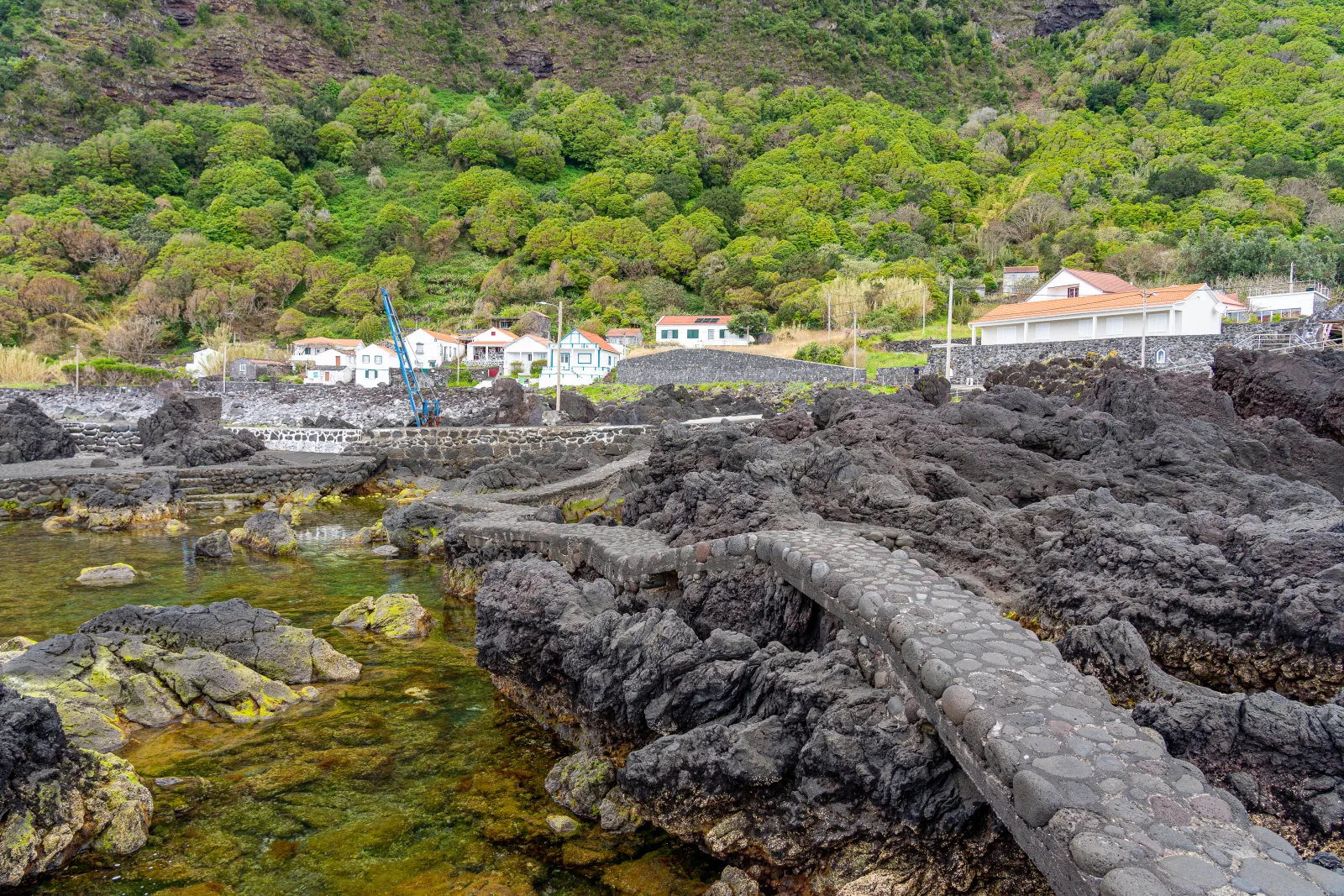
On the north coast, Biscoitos has the largest natural ocean pools on Terceira — basalt-walled enclosures where lava flows once met the sea, now calm bathing spots even when the open ocean is rough. Smaller and quieter than the famous Mosteiros pools on São Miguel, but architecturally similar.
The Biscoitos area is also the centre of Terceira wine-making — Verdelho grapes grown in lava-stone walls similar to (but smaller than) Pico’s UNESCO-listed vineyards.
Tourada à corda: Terceira’s rope bullfighting
One of Terceira’s most distinctive cultural events. Tourada à corda (rope bullfighting) runs from May 1 to October 15 — village squares are temporarily fenced off into arenas, four bulls are released one at a time, each tied by a rope around its neck and controlled by 7-10 pastores (handlers). Locals run the bull, dodge it, sometimes get caught. The bull is not killed.
It’s controversial outside the Azores and traditional inside. Schedules vary by parish — most villages on Terceira hold at least one tourada per summer, often tied to local festas. If you happen to be on the island during one, it’s worth seeing once. They’re free to attend.
Festa do Espírito Santo: the Holy Spirit festivals
The single most distinctive cultural feature of Terceira. Festa do Espírito Santo (Holy Spirit Festival) traces back to 14th-century Queen Saint Elizabeth of Portugal and was brought to the Azores with the first settlers. Every parish on the island has at least one Império — a small, brightly coloured chapel-like building with two windows, a central door, and a crown on top.
The festas run every Sunday for seven weeks after Easter, rotating across parishes. The core ritual: a coronation, a procession, and food distribution to the community — sopas do Espírito Santo (Holy Spirit soup, made of bread, meat, and broth) served free at long communal tables. Anyone can show up. Tourists are welcome.
If your trip overlaps with a festa, prioritize it over a regular dinner. Few cultural experiences in Europe still have this level of community participation.
What to eat on Terceira
Alcatra is the dish you should make a point of trying. A slow-baked beef stew, in a clay pot, with red wine, allspice, cinnamon, garlic, bacon. 4-6 hours in a wood-burning oven. The full breakdown — restaurants, recipe, where to eat the proper version — is in the alcatra guide.
Other Terceira specialties:
- Sopas do Espírito Santo — Holy Spirit soup. Available year-round at traditional restaurants, but most authentically at the festas themselves.
- Dona Amélia — small fragrant cheesecake-style pastry made with cinnamon, lemon, and molasses. Buy them at Forno pastry shop in Angra do Heroísmo.
- Queijo da ilha de Terceira — local cheese, milder and creamier than the more famous São Jorge variety.
- Cracas — barnacles, eaten fresh from the rocks. Local delicacy, acquired taste.
For a broader Azorean food primer, the São Miguel food guide covers what’s common across the archipelago.
How many days for Terceira island
| Trip length | What you fit |
|---|---|
| 2 days | Angra do Heroísmo + Algar do Carvão + Praia da Vitória |
| 3 days | Above + Gruta do Natal + Furnas do Enxofre + Mistérios Negros hike |
| 4 days | Full island, including Biscoitos pools and Serra do Cume + slow eating |
| 5-7 days | Add festa-week pacing if your dates align |
Most travellers add Terceira to a São Miguel trip as a 2-3 day extension. If you’ve already done Pico, Terceira is the natural third island. The 7-day multi-island itinerary covers the combinations.
How to get to Terceira island
Three practical paths:
1. Direct from Boston — Azores Airlines runs weekly Boston-Lajes flights (Mondays). The route was launched in 2024 and is the only direct US-Terceira service. About 5 hours flight time.
2. From mainland Portugal — Daily flights from Lisbon (~2h 30m) on TAP and SATA. Seasonal Porto service. Connecting via Lisbon is the standard route for European travellers.
3. Inter-island from PDL or other Azorean islands — SATA Air Açores runs frequent inter-island flights. PDL-Terceira is 45 minutes, about €60-€140 return. The full breakdown is in the Azores airport guide and how to get to the Azores.
Lajes Airport (TER) sits on the east coast of the island, about 25 minutes from Angra do Heroísmo and 5 minutes from Praia da Vitória. The runway is the longest in the Azores (it’s a former US Air Force base, still partially military), so weather diversions are rare here — unlike Pico’s smaller airport.
Common mistakes when planning a Terceira trip
1 — Skipping Algar do Carvão. It’s the single most distinctive volcanic experience in the Azores and only takes an hour. Don’t skip it.
2 — Staying in Praia da Vitória for the whole trip. The beach town is fine, but Angra do Heroísmo has 80% of the restaurants and 100% of the UNESCO heritage. Stay in Angra unless you specifically need beach access.
3 — Missing the festas if your dates align. If you’re on Terceira between May and September, check the festa calendar before booking your days. Holy Spirit festivals are a different category of cultural experience.
4 — Trying to combine Terceira with Flores or Corvo. The Western Group is geographically far from Terceira and requires a separate flight. If you want Terceira + a smaller island, pair it with São Jorge (45 min flight) or do a Faial day trip via PDL.
5 — Underestimating tourada à corda timing. Touradas typically start late afternoon (5-7pm) and run for 2-3 hours. Don’t book a 6pm dinner the same evening.
If you’d rather skip working out the day-by-day on Terceira island yourself, Pocket Guide Azores builds a Terceira-included Azores itinerary with the festa calendar, alcatra restaurant timing, and weather buffers built in.
The bottom line
Terceira is São Miguel’s older, quieter, more historic sibling. It has the only UNESCO city in the archipelago, the best lava tube, the most distinctive food, and a calendar of festas that make the rest of the Azores look subdued. For a first-trip Azores visitor: do São Miguel first, then come back for Terceira. For multi-island travellers: Terceira island is the second-best second island, slightly behind Pico but ahead of Faial.
Two to three days is enough for the headlines. Four if you want to slow down. A full week if you’re aligning with a festa.
Tours and day trips on the island, bookable ahead — worth sorting early, because inventory here is thinner than on São Miguel and the good trips fill first:
What to read next
- Alcatra: Terceira’s signature beef stew — full deep dive
- Things to do in the Azores — the full archipelago overview
- Azores map: all 9 islands — how Terceira fits with the rest
- Azores airport guide — Lajes Airport details
- How to get to the Azores — direct US flights and inter-island routes
- 7-day multi-island itinerary — São Miguel + Pico + Faial combo
Frequently asked questions
Where is Terceira island in the Azores? +
Terceira is in the Central Group of the Azores archipelago, the third-largest island by area (403 km²) and second-largest by population (~56,000). It sits roughly 90 km north of Pico and 175 km northwest of São Miguel. The capital, Angra do Heroísmo, is a UNESCO World Heritage city on the south coast. Lajes Airport (TER) is on the eastern side and handles direct flights from Boston, Toronto, and Lisbon.
Is Terceira island worth visiting? +
Yes — Terceira is the second-most-visited Azorean island after São Miguel, and for good reason. It has the only UNESCO World Heritage city in the archipelago (Angra do Heroísmo), the most spectacular cave (Algar do Carvão, a 90-metre-deep volcanic chimney), Terceira's signature alcatra beef stew, and a calendar of festas — including rope bullfighting (tourada à corda) from May to October — that you don't get on the other islands. For multi-island trips, Terceira is the strongest 'second island' option after Pico.
How many days do you need on Terceira island? +
Two days is enough for the main highlights — Angra do Heroísmo + Algar do Carvão + Praia da Vitória. Three to four days lets you do all the lava tubes, hike Mistérios Negros, swim at Biscoitos natural pools, and slow down for the food. A full week makes sense if you're combining Terceira with the rope bullfighting season (May-October) or one of the major festas. Most multi-island Azores itineraries allocate 2-3 days here.
How do I get to Terceira island? +
Three ways. From the US: Azores Airlines runs direct Boston-Terceira flights weekly (Mondays). From mainland Portugal: daily flights from Lisbon and seasonal Porto routes, around 2.5 hours. From elsewhere in the Azores: SATA Air Açores inter-island flights from Ponta Delgada (45 minutes), Pico, Faial, and São Jorge. Lajes Airport (TER, formerly Lajes Field US Air Force Base) is on the east side of the island, a 25-minute drive from Angra do Heroísmo.
What is Terceira island famous for? +
Three things define Terceira. First, Angra do Heroísmo — the UNESCO World Heritage city that was the original capital of the Azores. Second, the volcanic landscape: Algar do Carvão (a vertical lava tube you can descend into), Gruta do Natal (a 700-metre horizontal lava tube), and Furnas do Enxofre (a fumarole field). Third, the festas — Holy Spirit festivals every Sunday for seven weeks after Easter, and tourada à corda rope bullfighting from May to October. Plus alcatra, the island's signature slow-baked beef stew.
What is alcatra and is it from Terceira? +
Yes — alcatra is Terceira's signature dish. It's a slow-baked beef stew made in a clay pot called an alguidar de barro, with red wine, allspice, cinnamon, garlic, bacon, and bay leaves. The pot goes in a wood-burning oven for 4-6 hours. The meat falls apart, the wine reduces into a deeply spiced gravy, and you eat it with massa sovada (sweet bread) to soak up the sauce. It's most strongly associated with Vila de São Sebastião and the area around Angra do Heroísmo. The full breakdown is in the alcatra guide.
What are the Portas da Cidade in Terceira? +
The Portas da Cidade (City Gates) are Terceira's most photographed monument — a pair of 19th-century neoclassical arches at the entrance to Angra do Heroísmo's old town, on Praça Velha (the main square). They're a symbol of the city and appear on most postcards from the island. Built in 1869, the arches mark the historic boundary of the walled town. Walk through them on your first morning in Angra — it's the natural starting point for the UNESCO old-town walk.
Is there a beach on Terceira? +
Yes — Praia da Vitória has the largest sand beach on Terceira, a 1-km arc of golden sand on the eastern side of the island, sheltered by the bay. The water is calmer than on most Azorean beaches and the facilities are good (showers, lifeguards in summer, beachfront cafés). It's the only proper sand beach on Terceira and one of the few in the Azores generally — most Azorean swimming spots are natural rock pools or volcanic black-sand coves. Praia da Vitória is 25 minutes from Angra do Heroísmo by car.