
Also available in Português
São Miguel Festivals and Events: A Local's Calendar
A local's guide to São Miguel festivals and events in 2027 — Santo Cristo dates, Cavalhadas, Monte Verde, and which festas are worth planning a trip around.
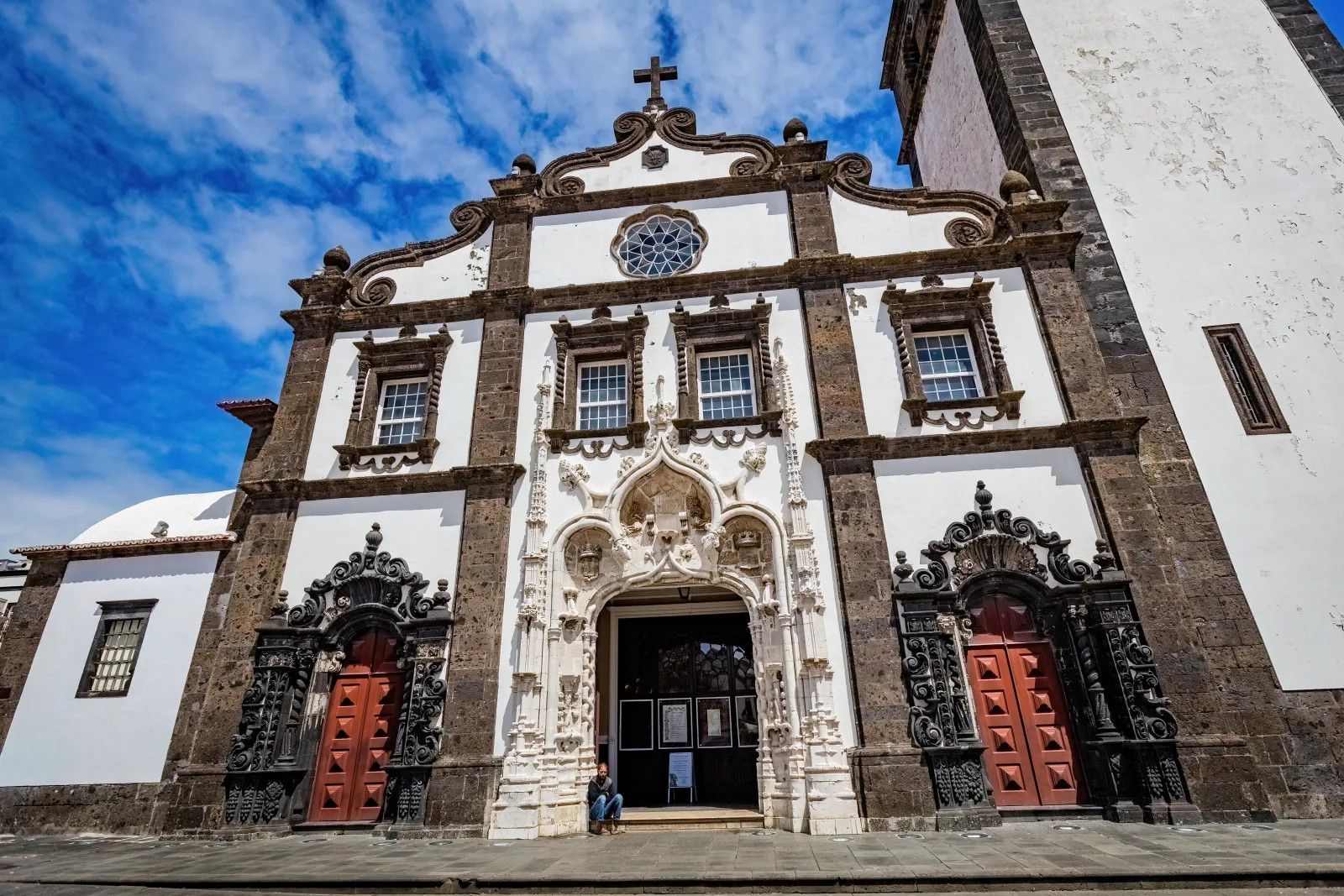
São Miguel festivals run basically year-round, but May through August is when the island doesn’t sleep. I live here, and I’ve watched friends time entire Azores trips around a single procession — and others fly in oblivious, then ask me why every restaurant in Ponta Delgada is suddenly fully booked.
This guide is the answer to both. Every festival worth knowing, by month, with what actually happens, who shows up, and which ones are worth re-routing a trip for. The biggest of the year is Festa do Senhor Santo Cristo dos Milagres in May — but the summer stretch (June to August) is when the island barely stops, with the Cavalhadas horse procession, the São João bonfires, and the big Monte Verde music festival all packed into a few weeks. Depending on what you care about (religious traditions, horse processions, indie rock, flower carpets), a different week might be the right week.
The 2027 festival calendar — what’s already fixed
Most of the São Miguel calendar is locked in years ahead, because the big festas are tied either to a fixed saint’s day or to Easter. Here’s what you can already plan around for 2027.
- Carnival / Batalha das Limas — February 6–9, 2027, Ponta Delgada. The days before Lent.
- Romeiros — February 10 to March 28, 2027. The Lenten pilgrimage, island-wide.
- Festa do Senhor Santo Cristo — April 30 to May 6, 2027, with the grand procession on Sunday May 2. Easter falls early in 2027 (March 28), so the big one lands right at the start of May.
- Corpus Christi flower carpets — May 27, 2027, Povoação and Lagoa.
- Festa de São João — June 23–24, 2027, Vila Franca do Campo and Ribeira Grande.
- Cavalhadas de São Pedro — June 29, 2027, Ribeira Seca. The 500-year-old horseback procession, and my pick for the most distinctive thing on the calendar.
- Festa de Santo António — July 4, 2027, Ponta Delgada.
- Nossa Senhora dos Anjos — August 15, 2027, Água de Pau.
The summer music festivals — North Wave Sound, Faial da Terra Blues, PDL White Ocean, MEO Monte Verde and Azores Burning Summer — cluster between late July and the end of August, but their exact dates and lineups are announced in spring. If one of them is the reason for the trip, wait for the announcement rather than booking flights on last year’s dates.
Travelling in June, July or August? You’ll overlap with at least two festas whatever happens. The detail on each is below.
São Miguel festivals: the calendar at a glance
| Festival | When (2027) | Where | Type |
|---|---|---|---|
| Carnival / Batalha das Limas | February 6–9 | Ponta Delgada | Street, secular |
| Romeiros | Feb 10 – Mar 28 (Lent) | Island-wide | Religious pilgrimage |
| Festa do Senhor Santo Cristo | Apr 30 – May 6 (procession May 2) | Ponta Delgada | Religious, the big one |
| Corpus Christi flower carpets | May 27 | Povoação, Lagoa | Religious |
| São João | June 23–24 | Vila Franca, Ribeira Grande | Parish festas |
| Cavalhadas de São Pedro | June 29 | Ribeira Seca, Ribeira Grande | Horseback procession |
| Santo António | July 4 | Santo António parish, PDL | Parish festa |
| North Wave Sound | Late July (announced in spring) | Ribeira Grande | Music festival |
| Faial da Terra Blues | Late July (announced in spring) | Faial da Terra | Blues festival |
| MEO Monte Verde | Early August (announced in spring) | Praia do Monte Verde | Big music festival |
| Nossa Senhora dos Anjos | August 15 | Água de Pau (Lagoa) | Parish festa |
| Senhor Bom Jesus da Pedra | Late August | Vila Franca do Campo | Religious |
| Azores Burning Summer | Late August (announced in spring) | Praia dos Moinhos | Beach music festival |
If you want to plan around any of these, the next sections explain what each one actually is. Skip to the month that matters to you.
Festa do Senhor Santo Cristo — April 30 to May 6, 2027
This is the festival on São Miguel. It outranks everything else on the calendar in size, history, and emotional weight.
The festa honors a 16th-century statue of the suffering Christ — Senhor Santo Cristo dos Milagres — kept inside the Convento da Esperança in Ponta Delgada. The tradition dates to the late 1600s when the Franciscan nuns of the convent began the public procession. It now draws tens of thousands of people, including a large slice of the Azorean diaspora — flights from Boston and Toronto fill up months ahead for this week specifically.
The date moves every year because it lands on the fifth Sunday after Easter. With Easter on March 28 in 2027, the festa runs April 30 to May 6, with the grand procession on Sunday May 2. For reference, the 2026 edition ran May 8–14 with the procession on May 10.
What actually happens that week
- Monday to Saturday: open church, novena masses, sacred music recitals, smaller processions through the convent neighborhood. The streets around Largo da Matriz and Campo de São Francisco get progressively more decorated.
- Sunday (the big day): the Procissão do Senhor Santo Cristo leaves the convent in early afternoon. The image of Christ — heavy, jewel-encrusted, carried on a flower-decorated baldachin — moves slowly through Ponta Delgada’s main streets, lined the entire route with flower petals laid in geometric patterns. Marching bands, philharmonic orchestras, and clergy walk in formation. The whole route takes hours.
- Every evening: concerts at Coliseu Micaelense and outdoor stages, food stalls, fireworks over the harbor, and a craft fair (Expo Açores Artesanato) at Portas do Mar.
How to do it
If you’ve never been: come on Sunday for the procession. Stake out a spot along Avenida Roberto Ivens or Rua Conselheiro Luís Bettencourt by 2pm. The procession is dense, slow, and visually overwhelming in a way that documentary footage doesn’t capture. Bring water, comfortable shoes, and patience.
Reserve accommodation by February. Ponta Delgada fills up for this week. Furnas and Ribeira Grande are 25–40 minute drives away and stay easier to book.
For more on Ponta Delgada’s neighborhoods and where to base yourself, see where to stay on São Miguel.
Romeiros — the Lent pilgrimage (mid-Feb to early April)
The Romeiros are the most distinct São Miguel tradition you’ll see on the roadside, and most visitors miss them entirely because they don’t know what they’re looking at.
During Lent — the seven weeks between Ash Wednesday and Easter — groups of men called ranchos de romeiros walk roughly 300 km around the entire island in seven days. They pray at every church and chapel they pass, stay overnight with families they don’t know, and walk in formation behind a mestre (leader) who chants while the others respond in unison.
They wear dark capes, carry wooden staffs and rosaries, and the whole experience is austere, deliberately uncomfortable, and centuries old. The tradition emerged after the 1522 Vila Franca do Campo earthquake — a way of asking protection for the island.
Watch, don’t interact mid-walk. They’re praying. If you see them stopped at a chapel or breaking for a meal at a host family’s home, you can greet them. Mid-route, just let them pass.
The deeper cultural context — including how this tradition connects to São Miguel’s broader Azorean culture and pronunciation — is part of why these aren’t tourist performances. They’re real.
Cavalhadas de São Pedro — June 29, Ribeira Seca
This is the festival I send people to when they ask for something they won’t see anywhere else.
The Cavalhadas are a horseback procession with around 500 years of history, held on Saint Peter’s feast day in Ribeira Seca, a parish on the edge of Ribeira Grande. The tradition began after the 1563 volcanic eruption of Pico do Fogo, which threatened the parish but spared the church and the statue of São Pedro. Locals promised an annual cavalcade in thanks, and they’ve kept the promise.
The procession
Riders gather mid-morning near the Solar dos Mafomas, an 18th-century manor house. They wear white tunics, red capes and sashes, and ride in formation behind a Maioral (the king-figure), who has a long beard and is flanked by two lancers.
The cavalcade rides seven laps around the church of São Pedro de Ribeira Seca — symbolizing the seven gifts of the Holy Spirit — then continues to the town hall garden in Ribeira Grande for three laps around it, representing the Trinity. Bugles sound throughout. The procession finishes with a Mass and a parish lunch.
It’s free, it’s photographed by nobody compared to Santo Cristo, and it’s one of the strangest and most beautiful things on the island. If you’re on São Miguel in late June, drive to Ribeira Seca before 10am.
June: three saints’ festas overlap
June is the densest month on the calendar after May. Three things overlap.
Corpus Christi flower carpets — May 27, 2027
Festa do Corpo de Deus falls on the Thursday after Trinity Sunday (May 27 in 2027), and it’s a regional public holiday in the Azores. The standout celebration is in Povoação, on the southeast coast, where residents spend the night before laying intricate flower carpets — geometric mosaics made from petals, leaves, sawdust, and salt — down the procession route. The carpets are then walked over by the Eucharistic procession, which destroys them within minutes. That’s the point.
If you’re staying in Furnas, Povoação is a 20-minute drive east. Go for the morning to see the carpets laid before the procession passes through.
Festa de São João — June 23–24
São João lights up the smaller parishes. Vila Franca do Campo has the biggest São João on São Miguel — bonfires, parades with painted bezerros (heifer effigies), grilled sardines, and street music until 2 or 3am. Ribeira Grande runs a parallel celebration that often extends through June 29.
If you want a bigger version of the São João vibe, that’s on Terceira during Sanjoaninas (ten days around June 23–24), but that’s a different island and a separate trip.
Festa de Santo António — first Sunday of July
A neighborhood festa in the Santo António parish of Ponta Delgada. First Sunday of July is the highlight: morning mass, midday procession through the parish, then sardines grilled on charcoal in the street and live folk music in the evening. It’s the kind of small-scale festa where you can join the table and nobody asks who you are.
Summer music festivals — the Festas de Verão
São Miguel’s music festival season is dense and getting denser. Exact dates are announced each spring — these are the 2026 editions, and the 2027 versions land in the same late-July-to-late-August window.
| Festival | 2026 dates | Location | Vibe |
|---|---|---|---|
| North Wave Sound | July 25 | Ribeira Grande | One-day beach festival |
| Faial da Terra Blues | July 30 – Aug 1 | Faial da Terra (Povoação) | Small blues weekend |
| PDL White Ocean | August 1 | Ponta Delgada marina | All-white dress code, EDM |
| MEO Monte Verde | August 6–8 | Praia do Monte Verde | Big three-day, mainstream |
| Azores Burning Summer | August 28–29 | Praia dos Moinhos | Beach electronic |
MEO Monte Verde — the biggest
Monte Verde takes over Ribeira Grande’s beach for three nights. The 2026 lineup featured Two Door Cinema Club, Calema, Xutos & Pontapés, Xamã, MC Cabelinho, and Trym — a mix of Portuguese-language pop, Brazilian funk, indie rock, and electronic. Camping passes are available alongside daily tickets through See Tickets. Camping fills first.
The festival is walkable from central Ribeira Grande and the beach is right there for daytime recovery.
The smaller ones
Faial da Terra Blues is the most São Miguel of the bunch — a tiny village on the southeast coast with three days of blues sets in a vineyard amphitheater. Capacity is small, the audience is older, the food is village-cooked. Buy tickets the moment the lineup announces.
Azores Burning Summer at Praia dos Moinhos is the closing party of the season. Electronic, beach, late nights.
Carnival — Batalha das Limas, February
São Miguel’s carnival isn’t Rio. It’s smaller, weirder, and more local.
Batalha das Limas (“Battle of the Limes”) runs in Ponta Delgada during the days before Lent (February 6–9 in 2027). Decorated trucks drive slowly through central streets while costumed riders throw water and confetti — historically limes, hence the name, though those went away decades ago. There’s a big parade on Carnival Tuesday and parish-level dances all week.
If carnival’s your trip purpose, Terceira’s carnival is bigger and more elaborate, with its famous bailinhos and danças — comedic folk theater troupes performing for two weeks straight. But if you happen to be on São Miguel in early February, the Batalha das Limas is worth catching for an afternoon.
Other festas worth knowing
A handful of smaller festas round out the year. None are headline acts on their own, but if you’re on São Miguel during one, they’re worth showing up to.
- Festa de Nossa Senhora dos Anjos — August 15, in Água de Pau (Lagoa municipality). Procession in the morning, music and food in the afternoon, fireworks over the ocean at night.
- Festa do Senhor Bom Jesus da Pedra — late August, Vila Franca do Campo. The end-of-summer festa, marking the close of festa season. Sanctuary procession, concerts, and fireworks.
- Festa de São Miguel Arcanjo — May, in Vila Franca do Campo. The patron saint of the island. Smaller community procession, more emotional than touristic.
- Festa de Nossa Senhora do Rosário — first Sunday of October, Ribeira Quente. The “tail” of the season, when most beachgoers have gone home.
How to plan a festival-focused trip
Six things I’d actually do if I were the one planning.
- Decide on a single anchor festival, then build the trip around its dates. Don’t try to catch two big ones unless you’re flexible on weeks — the calendar isn’t kind to that.
- For Santo Cristo, book by February. Hotels in Ponta Delgada go first. Backups are Furnas, Ribeira Grande, or Lagoa — all under 40 minutes’ drive. See where to stay on São Miguel for neighborhood breakdown.
- Rent the car anyway. Even during Santo Cristo when central Ponta Delgada is closed to traffic, you’ll want a car for Furnas, Sete Cidades, and the rest of the island. Buses don’t cover the festas in the smaller parishes.
- For music festivals, buy tickets the day they open. Monte Verde camping passes go in days. North Wave Sound is small-capacity.
- Eat at the festa. Every parish festa has food stalls — bifanas, grilled sardines, sweet malassadas, local wine and kima (the regional passionfruit soda). If you’re learning the São Miguel food scene, the festas are the cheapest, fastest education.
- Layer in non-festival days. Even the busiest festa week leaves mornings free. A 5-day São Miguel itinerary can absorb a festival without losing Sete Cidades or Lagoa do Fogo — see the 5-day itinerary for the timing. If you haven’t settled on a trip length yet, the São Miguel itinerary guide compares the 3, 4, 5 and 7-day plans.
What to expect — etiquette and practical notes
- Processions are not parades. Stand on the sidewalk. Don’t cross the procession path. Hats off when the image of Christ or the patron saint passes.
- Phones are fine, but be respectful — flash photography during the procession itself is poor form even though nobody will stop you.
- Dress simply. No swimwear in town during a religious festa. Long shorts and a t-shirt are fine.
- Cash helps. Festa food stalls often run cash only or take only Multibanco. ATMs around Largo da Matriz have queues during Santo Cristo week — get cash beforehand.
- The fireworks are loud and late. If your hotel is near Coliseu Micaelense or Portas do Mar, expect 11pm–1am fireworks on Santo Cristo nights.
- It rains anyway. Even in August. Even during the procession. A foldable rain jacket lives in my bag year-round. For what to actually wear by month, see Azores temperature by month.
And if you’d rather not assemble all this yourself — picking the right week, booking around festival dates, layering in the right hikes and restaurants — Pocket Guide Azores is the AI travel planner that handles exactly that. It pulls live festival dates, knows which hotels stay bookable through Santo Cristo week, and rebuilds the itinerary when weather or fully-booked restaurants force a pivot. Built by me. From São Miguel. For travelers who’d rather show up to the procession than spend three weekends researching one.
The bottom line
São Miguel is a festival island. The religious calendar — Santo Cristo above all, then Cavalhadas, Corpus Christi, the parish festas — gives the island its rhythm. The summer music festivals layer on top of that for travelers who want both procession and dance floor. The combination is rare in Europe: a small island that takes both tradition and contemporary culture seriously, without dressing either up for tourists.
If I had to point a first-timer at one week, it would be Santo Cristo week in May — the spectacle is real, the diaspora energy is moving, and Ponta Delgada is at its most alive. If I had to send a return visitor, late June for the Cavalhadas — quieter, weirder, more São Miguel.
What to do next
- The Azores in summer — June to August weather, crowds, and what’s on, since most festivals fall in summer
- Best time to visit the Azores — month-by-month weather and crowd patterns
- Best month to visit the Azores — decision framework if you have flexibility
- Things to do in Ponta Delgada — what to do on non-festa days
- São Miguel food guide — what to eat at the festa stalls
Frequently asked questions
When is the Festa do Senhor Santo Cristo in 2027? +
April 30 to May 6, 2027. The grand procession is on Sunday, May 2. It always lands on the fifth Sunday after Easter, so with Easter falling on March 28 in 2027, the festa shifts to the very start of May rather than late May or June. The whole week is busy in Ponta Delgada, with extra masses, decorated streets, music, and fireworks each evening.
What is the biggest festival on São Miguel? +
Festa do Senhor Santo Cristo dos Milagres, by a clear margin. It's the largest religious gathering in the Azores, attracts diaspora visitors from Boston, Toronto, and California, and basically takes over Ponta Delgada for a week. Nothing else on São Miguel — religious or secular — is on the same scale, though MEO Monte Verde in early August is the biggest music festival.
When is MEO Monte Verde 2027? +
MEO Monte Verde runs at Praia do Monte Verde in Ribeira Grande in early August each year — the 2026 edition ran August 6 to 8, headlined by Two Door Cinema Club, Calema and Xutos & Pontapés. The 2027 dates and lineup are normally confirmed in spring, with tickets through See Tickets. Camping passes go first, so book as soon as the lineup is announced if you are planning a trip around it.
What are the Cavalhadas de São Pedro? +
A horseback procession in Ribeira Seca (near Ribeira Grande) on June 29, the feast of Saint Peter. Riders wear white tunics with red capes, the king-figure leads a column of lancers, and they ride seven laps around the parish church (the seven gifts of the Holy Spirit) plus three laps around the Ribeira Grande town hall garden (the Trinity). The tradition dates to a 1563 volcanic eruption that spared the parish — locals have ridden ever since.
Do I need to book accommodation early for Santo Cristo? +
Yes. Ponta Delgada hotels and apartments fill up months ahead for the Santo Cristo week. By the time the festival is six weeks out, the central options are gone. If you want to be in walking distance of the procession route, book by February at the latest. Furnas, Ribeira Grande, and Vila Franca do Campo are easier fallbacks if you don't mind a 25–40 minute drive.
Are the music festivals family-friendly? +
Monte Verde and Azores Burning Summer are mostly adult crowds — late-night sets, camping, alcohol-forward atmosphere. The religious festas are the opposite: families bring kids, grandparents come out, food stalls run until late but the vibe is community-first. If you're traveling with children, time your trip around Santo Cristo, São João, or any village festa — not the big music events.
What's the difference between Sanjoaninas and São João? +
Sanjoaninas is the giant 10-day festival on Terceira (Angra do Heroísmo, ten days around June 23–24) with parades, tourada à corda, and concerts every night. Festa de São João on São Miguel is smaller and more parish-scale, peaking on June 23–24 in towns like Vila Franca do Campo and Ribeira Grande. Same saint, different scale — if you want Sanjoaninas, you fly to Terceira.
Can I see Romeiros on a normal week in São Miguel? +
Only during Lent — the seven weeks between Ash Wednesday and Easter. Outside that window the tradition doesn't run. In 2027 that means February 10 through March 28. You'll spot groups of men in dark capes walking single file on roadsides, often early morning or late afternoon. It's not a tourist event — it's a pilgrimage — so watch, don't approach mid-walk.