The Azores in Summer: June, July & August by a Local
The Azores in July and August by a local — summer weather, ocean temperatures, hydrangeas, crowds, prices, what's on, and what to expect month by month.
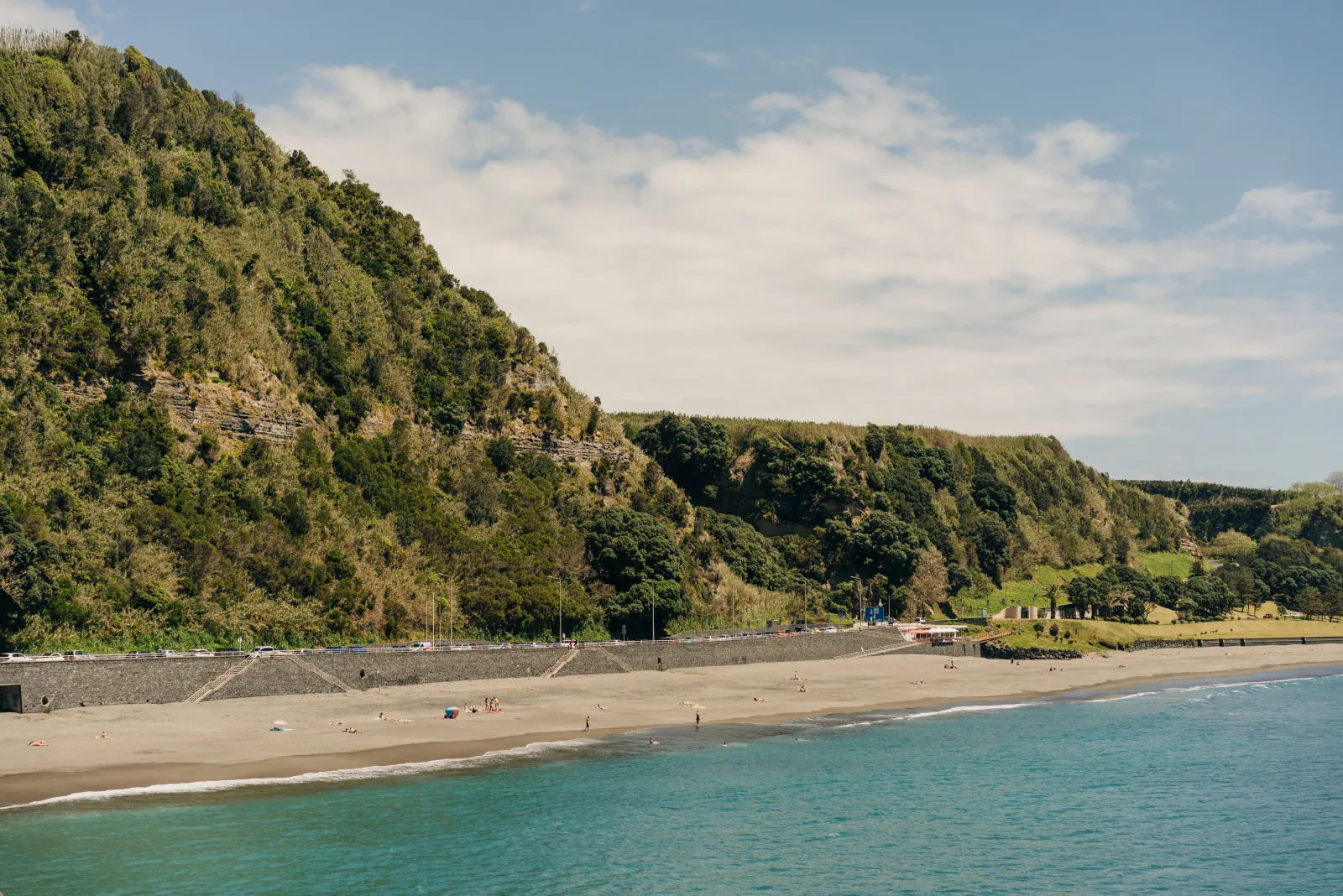
The Azores in July and August are warm, green, and at their liveliest — the warmest weather of the year, the ocean finally warm enough to swim, hydrangeas lining every roadside, and a festival nearly every weekend. I live on São Miguel, and summer is when the island stops feeling like a secret and starts feeling like a celebration. It’s also the busiest and priciest stretch, so it pays to know what you’re walking into.
This guide covers the Azores across the full summer — June, July, and August — month by month: the weather, the ocean, the crowds, the festivals, and what to actually expect. If you’re deciding when to come, the best time to visit the Azores guide weighs all the seasons. This one is the deep dive on summer.
The Azores in summer at a glance
| Month | Air (high / low) | Ocean | Feel |
|---|---|---|---|
| June | 21°C / 16°C | 20°C | Warming up, hydrangeas starting, pre-peak |
| July | 24°C / 18°C | 22°C | Hot, dry, hydrangea peak, peak season begins |
| August | 25°C / 19°C | 23°C | Warmest, busiest, best swimming, biggest festival |
All figures are for Ponta Delgada, São Miguel, at sea level. The central highlands (Sete Cidades, Lagoa do Fogo) run about 4°C cooler. For the full year, see Azores temperature by month.
The short version: summer is the warmest, driest, sunniest season, with the warmest ocean and the fullest festival calendar — balanced against the highest prices and the busiest sights.
The Azores in June
June is the sweet spot before peak season. The weather is warm and stable, the island is at its greenest, and the crowds and prices haven’t fully spiked yet.
- Weather: highs around 21°C, lows around 16°C, with the rainy days dropping to roughly 14 in the month. Long daylight — the sun is up by 6:30 and sets close to 21:00.
- Ocean: warming to about 20°C — swimmable for most, still brisk for some.
- Hydrangeas: starting from mid-June, building toward the July peak.
- What’s on: the festival season is in full swing — Corpus Christi flower carpets (early June), São João bonfires (June 23-24), and the 500-year-old Cavalhadas de São Pedro horseback procession on June 29.
June is the local’s pick if you want summer weather without full peak-season prices. It pairs the warm, stable conditions of July with noticeably more breathing room.
The Azores in July
July is high summer — the driest, sunniest month, and the start of true peak season.
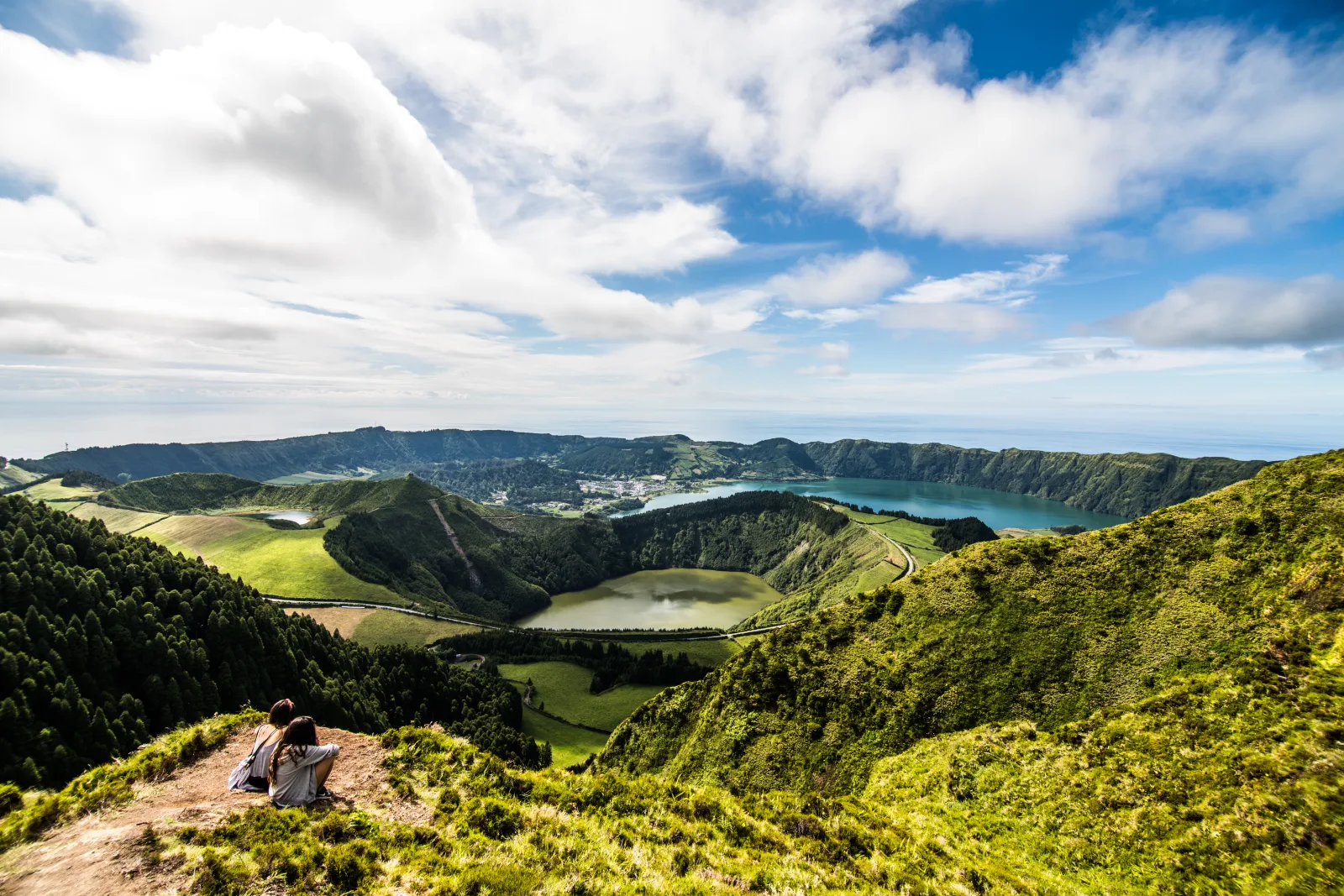
- Weather: highs around 24°C, lows around 18°C, with roughly 230 hours of sunshine across the month and the fewest rainy days of the year. Atlantic showers still pass through, and the crater rims often hold cloud until mid-morning — the Sete Cidades “be there before 10am” rule matters more than ever.
- Ocean: about 22°C — warm enough to swim comfortably without a wetsuit.
- Hydrangeas: peak bloom, especially the first three weeks. The roadsides and crater rims are solid blue and purple.
- What’s on: Festa de Santo António (first Sunday), North Wave Sound beach festival (July 25), and the Faial da Terra Blues weekend (July 30 onwards).
July is the postcard month — but also when you need to book ahead. Accommodation, rental cars, and the Furnas cozido lunch all sell out in advance.
The Azores in August
August is the warmest month, the best for swimming, and the busiest of the year.
- Weather: highs around 25°C, lows around 19°C — the warmest and one of the most stable months. The occasional passing shower and morning crater cloud still apply.
- Ocean: peaks at 23-24°C, the warmest of the year and the best swimming season.
- Crowds and prices: this is the peak. São Miguel’s headline sights feel busy mid-morning, accommodation runs at its highest, and restaurant reservations become necessary.
- What’s on: MEO Monte Verde (August 6-8) is the biggest music festival of the year, Nossa Senhora dos Anjos (August 15), the Senhor Bom Jesus da Pedra festa in Vila Franca do Campo in late August, and Azores Burning Summer to close the season.
If you visit in August, book everything early — and lean on the early-morning habit to beat the crowds at the viewpoints. The full festival rundown is in the São Miguel festivals and events guide.
Summer weather — the honest version
Summer is the most reliable Azorean weather, but “reliable” here is not the same as the Mediterranean. Three things to keep in mind:
- Showers happen in any month. Even July and August get brief Atlantic showers. They pass quickly — a few minutes of rain, then sun. Pack a light waterproof.
- The craters make their own cloud. Sete Cidades and Lagoa do Fogo sit in volcanic basins and often hold morning cloud even on a sunny day at the coast. Go early.
- It never gets truly hot. Summer highs of 24-25°C are warm, not scorching. The Atlantic keeps the islands temperate — comfortable for hiking all day, rarely uncomfortable.
The practical upshot is that summer rewards a flexible plan over a rigid one. Keep one or two weather-proof options in your back pocket each day — a thermal pool, a town walk, a museum — and a passing shower becomes a swap rather than a wasted morning. Locals plan this way instinctively, even in the driest weeks of August. For the underlying month-by-month data, the Azores temperature by month guide has the full air, ocean, and rainfall figures.
Swimming and beaches in summer
Summer is the one season the Azores become a genuine swimming destination.
- Ocean temperature reaches 22-24°C from July through September — warm enough for most swimmers without a wetsuit.
- Black-sand beaches on São Miguel — Santa Bárbara (also the surf beach), Água d’Alto, Mosteiros — are at their best.
- Natural rock pools across every island offer calm, sheltered swimming.
- The Vila Franca islet — a volcanic crater you swim inside — runs its boat season June to October. See the Ilhéu de Vila Franca guide.
- Santa Maria has the warmest water and the only real white-sand beach in the archipelago.
For the full rundown, the best beaches on São Miguel guide covers where locals actually swim.
Hiking and the outdoors in summer
Summer is the prime hiking window in the Azores, and the long daylight helps — the sun is up by 6:30 and down near 21:00, so you can start early and still have a full evening.
- Trails are at their driest. The notoriously muddy Azorean paths firm up in July and August, making the crater-rim walks and coastal trails far easier going than in the wet months.
- Start early for two reasons. You beat both the crater cloud and the midday heat — and you get the viewpoints to yourself before the tour buses arrive mid-morning.
- The big climbs are in season. Mount Pico (on neighbouring Pico Island) is most reliably climbable in summer, when the summit is clearest. The full picture is in the Pico Island guide.
- Carry water and sun protection. The Atlantic sun is stronger than the mild air temperature suggests, and many trails have no shade or facilities.
Pair a morning hike with an afternoon in a thermal pool or a swim, and you have the classic Azorean summer day. The best hikes on São Miguel guide covers the routes worth your time.
Whale watching and wildlife in summer
Summer is excellent for the water, too. Sperm whales are resident year-round, and while the big baleen-whale migration peaks in spring, summer brings calmer seas, warmer weather, and the best conditions for boat trips and dolphin encounters — common, bottlenose, and spotted dolphins are reliable on most trips. It’s also the strongest season for scuba diving, with the warmest water and best visibility. See the whale watching and scuba diving guides for operators and timing.
Crowds, prices, and booking
Peak season is real, so plan for it:
- Accommodation runs 30-50% above shoulder season and the best-value places sell out months ahead. Book by spring for July-August.
- Rental cars — the cheap economy categories go first. Reserve weeks ahead (around €70-€80/day in summer). See do you need a car in the Azores.
- The Furnas cozido needs a reservation a day or more ahead.
- Whale watching and the islet boat book out — reserve early. The whale watching guide has the operator detail.
The upside: despite being “peak,” the Azores never feel overrun the way mainland European hotspots do. An early start still buys you quiet trails and near-empty viewpoints.
What to pack for an Azores summer
The packing list is shorter than for the wet months, but the Atlantic still asks for a couple of non-obvious items:
- Layers. Daytime is t-shirt warm (24-25°C), but the crater rims and high viewpoints run 5-8°C cooler, and evenings near the water are mild rather than hot. A light sweater or fleece earns its place even in August.
- A packable waterproof. Showers pass through in any month. A thin rain shell beats being caught out on an exposed trail.
- Swimwear plus a dark set for the thermal pools. The iron-rich pools at Terra Nostra and Caldeira Velha stain light fabric orange, so bring a dark suit for those specifically.
- Water shoes. Useful for the volcanic rock pools, the thermal pools, and the natural sea pools, where the surfaces are uneven basalt.
- Proper sun protection. The mild air temperature hides how strong the mid-Atlantic sun is — hat, sunglasses, high-SPF sunscreen.
- Grippy walking shoes. Trails are dry in summer but still uneven. Trainers work for the easy routes, boots for anything longer.
If you forget something, Ponta Delgada has the shops to cover it — but the smaller islands and villages do not, so pack for the whole trip before you leave São Miguel.
Is summer the best time to visit the Azores?
It depends on what you want:
- Come in summer (June-August) for the warmest weather, the warmest ocean, the hydrangeas, and the festivals.
- Come in shoulder season (May or September) for nearly-as-good weather, lower prices, and quieter sights. September in particular keeps the warm ocean while the crowds thin out.
If summer is your window, July and June give the best balance of weather and space, while August is warmest but busiest. Whichever month, the 5-day São Miguel itinerary shows how to structure the trip around the morning-cloud rule.
And if you’d rather not assemble all this yourself — matching the month to the festivals, the weather, and the right hotels before they sell out — Pocket Guide Azores is the AI travel planner that does exactly that. Built by me, from São Miguel, for travellers who’d rather enjoy the summer than spend it researching one.
The bottom line
The Azores in summer are the islands at their warmest and liveliest — green, sunny, swimmable, and full of festivals from June’s Cavalhadas to August’s Monte Verde. The cost is peak-season crowds and prices, both manageable if you book ahead and start your days early.
For the best balance, aim for June or early-to-mid July — summer weather, the hydrangea peak, and a little more room than the August crunch. Whenever you come, pack a layer and a waterproof — the Atlantic always keeps a surprise in reserve.
What to do next
- São Miguel festivals and events — the full summer festival calendar
- Azores temperature by month — the weather data behind this guide
- Best time to visit the Azores — how summer compares to the other seasons
- Best beaches on São Miguel — where to swim in the warm months
Frequently asked questions
What are the Azores like in July? +
July is warm, sunny, and the driest stretch of the year. Daytime highs sit around 24°C (76°F), nights around 18°C, with roughly 230 hours of sunshine across the month — though brief Atlantic showers are still possible and the crater rims often hold morning cloud. The ocean reaches about 22-23°C, warm enough to swim without a wetsuit, and the hydrangeas peak mid-month. It's peak season, so book accommodation and the cozido lunch in Furnas well ahead.
What is the weather like in the Azores in August? +
August is the warmest month in the Azores. Daytime highs average 25°C (77°F), nights around 19°C, and the ocean peaks at 23-24°C — the best swimming of the year. It's the driest and most stable month for weather, but also the busiest and most expensive. Expect the occasional passing shower and morning cloud in the calderas. Book everything early, especially July-August accommodation, rental cars, and the Furnas cozido.
Is summer a good time to visit the Azores? +
Yes, with one caveat. June to August has the warmest, driest, sunniest weather, the warmest ocean for swimming, the hydrangeas in bloom, and the busiest festival calendar. The trade-off is peak-season crowds and prices — São Miguel's headline sights (Sete Cidades, Lagoa do Fogo) get busy, and accommodation runs 30-50% above shoulder season. If you want the warmest weather and the festivals, summer is the time. If you want lower prices and quiet trails, May-June or September are better.
Is July or August better in the Azores? +
They're very similar — both warm, dry, and peak-season. July has slightly fewer crowds and the hydrangea peak; August is marginally warmer with the warmest ocean and the biggest music festival (MEO Monte Verde, August 6-8). August is the busiest and priciest week-for-week. If you can choose, early-to-mid July gives you near-identical weather with a touch more breathing room.
Can you swim in the Azores in summer? +
Yes — summer is the best swimming season. The ocean reaches 22-24°C from July through September, warm enough for comfortable swimming without a wetsuit. São Miguel's black-sand beaches (Santa Bárbara, Água d'Alto, Mosteiros), the natural rock pools, and the Vila Franca islet are all at their best. Santa Maria island has the warmest water and the only real white-sand beach in the archipelago.
When do the hydrangeas bloom in the Azores? +
Late June through August, peaking in mid-July. In high summer the roadsides, field borders, and crater rims are lined with blue and purple hydrangeas — it's the look most associated with the Azores. If the hydrangeas are a priority, aim for the first two to three weeks of July, when the bloom is fullest across São Miguel, Faial, and Flores.
Is summer crowded in the Azores? +
Busier than the rest of the year, but not Mediterranean-crowded. July and August are peak season — accommodation books out, popular restaurants need reservations, and São Miguel's most famous viewpoints feel busy mid-morning. But the Azores never get the overwhelming crowds of mainland European hotspots. Go to the viewpoints early (before 10am) and you'll still find quiet trails and near-empty beaches.
What should I pack for the Azores in summer? +
Layers, always — even in summer. Daytime is t-shirt warm (24-25°C) but the crater rims run 5-8°C cooler and evenings are mild. Bring a light waterproof jacket (Atlantic showers happen in any month), swimwear, water shoes for the rock pools and thermal pools, hiking shoes with grip, sun protection, and a warm layer for high elevations. Dark swimwear for the iron-rich thermal pools.