
Also available in Português
The Best Viewpoints on São Miguel: A Local's Ranked Guide
The best viewpoints on São Miguel, Azores, ranked by a local — from Vista do Rei to Nordeste, with cloud-timing tips and the right route order for each one.
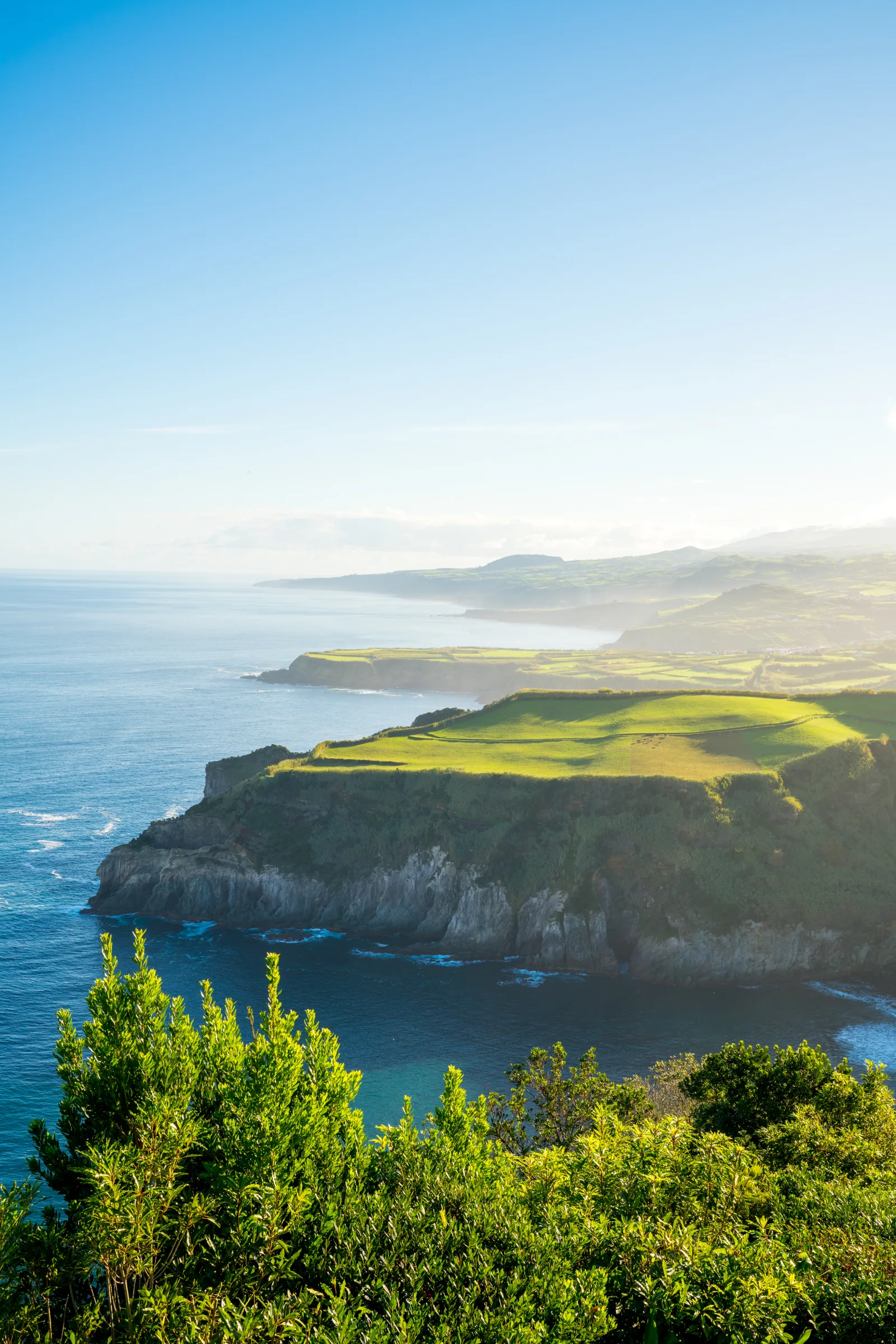
The best viewpoints in São Miguel are the kind that end up in travel photography competitions — twin crater lakes in blue and green, volcanic valleys steaming below you, Atlantic cliff faces that drop straight to the sea. You’ve probably already seen the photos. The real question is whether you’ll actually see those views when you visit, or whether you’ll be standing in cloud looking at grey.
The thing about São Miguel’s viewpoints is that they are cloud-prone by design. The island sits in the middle of the Atlantic, the peaks rise fast from sea level, and moisture comes in constantly from the west. I live here. I’ve watched countless visitors drive all the way to Vista do Rei at 11am, see nothing but mist, and quietly conclude the hype was overblown. It’s not overblown. They were just late. The miradouros on this island reward early risers and punish everyone else — sometimes by just 90 minutes.
This guide covers every viewpoint worth your time on São Miguel, ranked by experience quality, with specific cloud timing advice for each one and a routing plan that actually works.
The Best Viewpoints in Sete Cidades, São Miguel
The western caldeira of São Miguel holds the island’s three most famous viewpoints, all looking down into the same ancient volcanic basin where two lakes — one blue, one green — sit side by side separated by a narrow stone bridge. The color difference is still debated (algae content, light reflection, mineral composition — locals have theories for all of them). What isn’t debatable is what it looks like from the rim on a clear morning.
Vista do Rei
Vista do Rei is the most photographed viewpoint in the Azores. It sits on the southern rim of the Sete Cidades caldeira at roughly 800m elevation, and from the terrace you get a full 180-degree panorama into the crater below — the two lakes, the village of Sete Cidades at the waterline, the green caldeira walls rising all the way around. This is the image. If you only see one viewpoint on São Miguel and the sky is clear, this is the one.
The catch is the westerly wind. It pushes ocean cloud directly up and over the rim throughout the day. By 10am on most days, cloud has crept in and softened the view. By noon, it can be completely gone. The rule: be here before 9am. Before 8am is better. There’s a small café and car park. No entrance fee.
The typical mistake: arriving after breakfast, having driven 35 minutes from Ponta Delgada, finding grey. The local move is to drive out before the hotel restaurant even opens and stop for coffee at the miradouro café on your way back down. You’ll have seen the view — everyone arriving at 10am won’t.
Miradouro da Grota do Inferno
Grota do Inferno — roughly “Hell’s Gorge” — sits on the northern rim of the same caldeira, directly across from Vista do Rei. The angle is completely different: you’re looking across the basin rather than straight down into it, and the drop feels more immediate because the rim is narrower here. Same two lakes, different drama. It’s also consistently less crowded even in high summer, because most tour groups stop only at Vista do Rei and move on.
Cloud timing at Grota do Inferno runs slightly later than Vista do Rei on days with west-to-east cloud movement — the northern rim often stays clear until 10 or 10:30am when the southern rim is already clouded. Worth the extra 10-minute drive from Vista do Rei.
Miradouro do Salto do Cavalo
Salto do Cavalo is the local move for Sete Cidades if you’re prepared to walk. A trail of about 20–25 minutes each way from the road drops down the western flank of the caldeira to a ridge where the green lake sits at nearly eye level below you — not the bird’s-eye panorama of Vista do Rei, but something that feels closer and more real. The scale of the lake becomes tangible in a way it doesn’t from 400m above. On clear mornings it’s quiet. No coach tours, no large groups.
The trail involves uneven basalt footing and some exposed sections. Good shoes matter here. If you’re planning the best hikes on São Miguel, the Salto do Cavalo trail pairs naturally with the full Sete Cidades circuit and adds almost no extra driving.
| Viewpoint | Best time | Drive | Walk |
|---|---|---|---|
| Vista do Rei | Before 9am | ~35 min | None |
| Grota do Inferno | Before 10am | ~40 min | None |
| Salto do Cavalo | Before 11am | ~45 min | ~25 min return |
Central Viewpoints: Lagoa do Fogo and Furnas
Moving east from Sete Cidades, the island’s central spine rises to its highest ground and drops into two more volcanic features that have nothing like them anywhere else in Europe. Both have viewpoints worth serious attention — and both are consistently underused by visitors who spend all their morning hours in the west and run out of time before reaching the centre.
Lagoa do Fogo
Lagoa do Fogo sits at 590m inside a protected nature reserve — no hotels, no restaurants, no vendors anywhere near the shore. The access road from the south climbs through fern meadows and bright-green volcanic peaks, and the first view of the lake from the roadside miradouro at the top is one of those moments where conversation stops. Dark, clear water. Untouched volcanic rim all the way around. Zero development. The silence is almost disorienting after the coast.
The viewpoint itself is from the road: there’s a small terrace on the south side and a second pull-off on the north side that gives a different angle across the lake. Both are worth stopping at. From the south terrace, a trail drops to the lake floor in about 30 minutes (40 minutes back up) — the close-up view from the lake shore is completely different from the rim-level panorama. Full trail conditions and access notes are in the Lagoa do Fogo guide.
Cloud timing here is more forgiving than the Sete Cidades viewpoints. Lagoa do Fogo sits in a sheltered central position and isn’t directly in the path of the main westerly flow. I’ve seen it clear at noon on days when Vista do Rei was already clouded at 9am. On truly overcast days it closes up completely — come before 10am if you can, but don’t panic if your schedule pushes it to mid-morning.
Miradouro do Pico do Ferro
This is my favorite viewpoint on São Miguel that most tourists skip entirely. Miradouro do Pico do Ferro sits on a ridge above the Caldeiras das Furnas at about 600m elevation, and from there you look directly down into the valley floor where the village of Furnas sits — steam rising from dozens of volcanic vents, the dark surface of Lagoa das Furnas visible in the distance, the whole scene looking like something from another planet. There is nothing like this angle elsewhere on the island.
The drive up is on a narrow paved road — the car park is small but free. No entrance fee. Most visitors to the Furnas caldeiras walk among the vents at ground level — seeing the steam up close, watching the cozido pots cook underground, feeling the heat from the earth. That experience is irreplaceable. But Pico do Ferro is what makes you understand the scale of what you’re standing in.
The local move: do the valley floor early (the caldeiras are best before 10am before coach groups arrive), then drive up to Pico do Ferro on your way out. You’ll see the same volcanic landscape from two completely different perspectives in the same morning — and the contrast makes both experiences stronger.
Cloud note: Furnas sits in a protected bowl. The valley below Pico do Ferro tends to stay clear longer than the western viewpoints on most days. Early afternoon often works fine here, which makes it a good fallback if Sete Cidades was clouded in the morning.
| Viewpoint | What you see | Best time | Crowd level |
|---|---|---|---|
| Lagoa do Fogo | Pristine crater lake, 590m | Before 10am | Low–medium |
| Pico do Ferro | Furnas steaming valley floor | Morning or early afternoon | Very low |
The North Coast and the East End
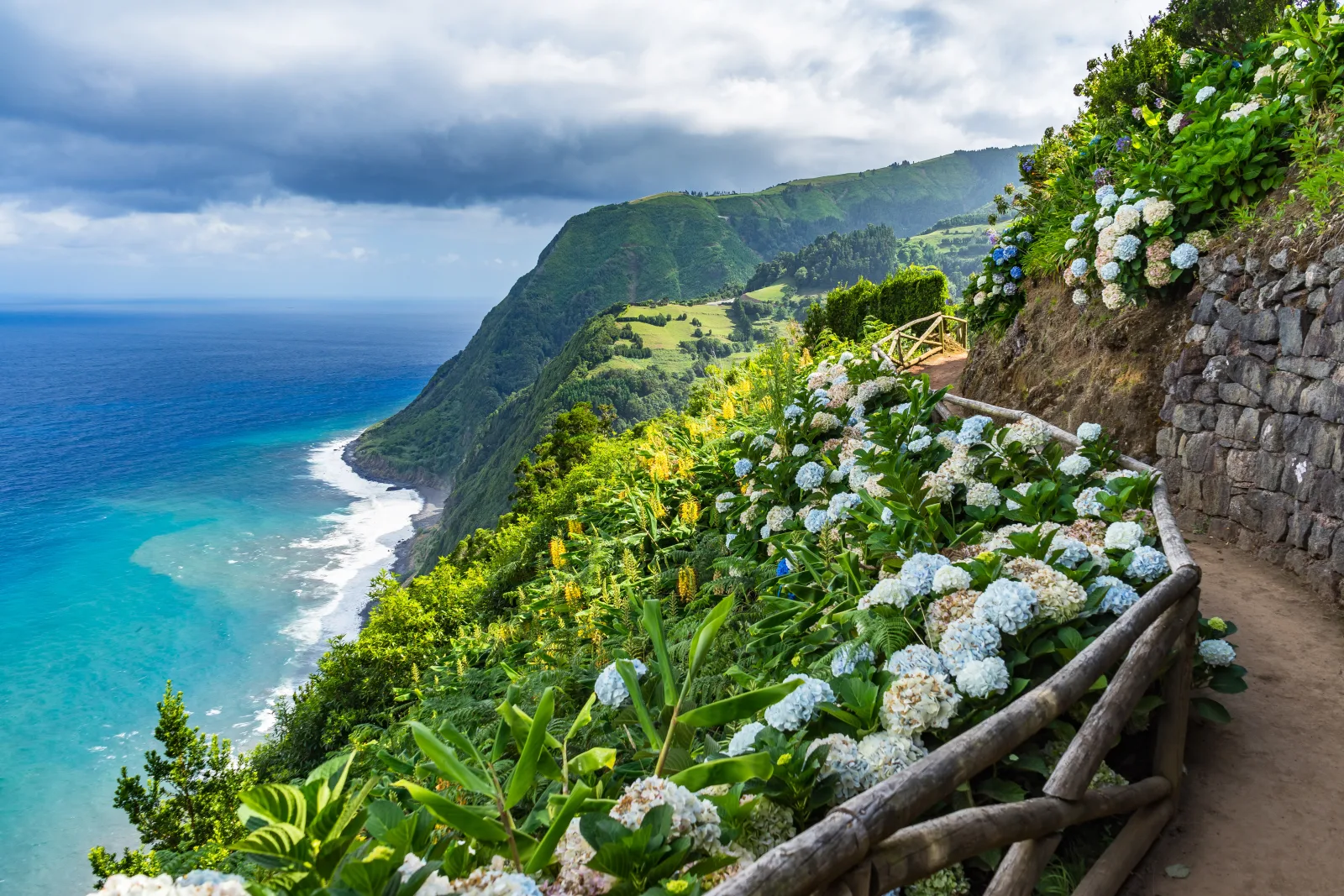
The north coast of São Miguel is a different island from the south. Fewer visitors, no resort strip, just small fishing villages, dairy farms on clifftop pastures, and Atlantic cliffs that take a direct hit from the north wind. The viewpoints here are ocean views — raw, open, and much better than most travel guides give them credit for. The east end around Nordeste is a different story again: wilder, more remote, and worth a dedicated half-day on any trip longer than five days.
Miradouro de Santa Iria
Miradouro de Santa Iria sits on the north coast about 20 minutes east of Ribeira Grande. It’s one of the few ocean viewpoints on São Miguel where you see the full cliff face stretching in both directions — black basalt columns rising from the sea, waves breaking at the base, the ocean flat to the horizon. On a clear morning the light on the north coast comes from behind you and the cliffs glow green-black. A short cliff-walk trail from the car park (about 20 minutes out-and-back) adds elevation and a more dramatic angle than the main terrace. If you’re doing a clockwise island loop, this is a natural mid-morning stop.
Miradouro do Frade
A small clifftop spot in Maia parish, just east of Ribeira Grande. There’s a little park to sit in — a few benches, some grass, the ocean spread out below. Not a dramatic viewpoint and not the headline stop on the north coast, but a relaxed one. Pull in for ten minutes on the way past, eat your padaria pastry, watch the swell come in. The kind of place locals use after work, not the kind tour buses queue at.
Nordeste and Ponta da Madrugada
The east end of São Miguel is the wildest and least-visited part of the island. The road through Nordeste runs along cliff edges with waterfalls visible from the car window, sharp drops to black rock beaches below, and occasional views across to the Pico do Varadouro lighthouse on a promontory jutting out to sea. The road quality is fine but the pace is slow — this is a drive you take for the journey, not just the stops.
Miradouro da Ponta da Madrugada at the island’s easternmost tip gives you unobstructed views east: nothing between you and the Portuguese mainland 1,500km away. The Atlantic at this point feels genuinely vast. On a clear morning the light from the east makes this one of the best sunrise viewpoints on the island — it faces the right direction, and the crowds that chase sunset at Sete Cidades never make it this far east.
The honest tradeoff: the drive from Ponta Delgada to Nordeste is about 90 minutes each way. It is worth it, but treat the east end as a dedicated half-day, not an item on a longer checklist. The reward is as much the drive through the serra and the coastal switchbacks as any single stopping point. For how to fit Nordeste into a multi-day trip, the 5-day São Miguel itinerary has a specific routing suggestion that works well.
The Cloud Rule Every Local Knows
There is one rule that applies to every viewpoint on this island: go early or accept the risk of going home with nothing. “Four seasons in one day” is a real local joke — we say it because it’s true, and it applies to the miradouros more than anywhere else on São Miguel.
The morning window is the reliable one. Cloud builds through the day as moisture from the Atlantic rises up the volcanic slopes and catches on the peaks. By afternoon, the western half of the island is often substantially clouded even on days that started clear. The east and the Furnas bowl are more forgiving, but nothing is immune.
Here’s how the timing breaks down by area:
- Western viewpoints (Sete Cidades area) — clearest between 7am and 9:30am. Cloud moves in from the west and closes the rim by 10am on most days. Vista do Rei specifically: before 9am is the rule, before 8am is ideal.
- Central viewpoints (Lagoa do Fogo, Pico do Ferro) — more forgiving, often clear until 10–11am. The Furnas valley tends to stay clear into the afternoon on mixed days.
- North coast (Santa Iria, Frade) — highly variable. Some mornings perfect, some mornings completely socked in. Can sometimes improve in the afternoon when the west is already clouded.
- East end (Nordeste, Ponta da Madrugada) — the most stable of the four zones. Cloud generally moves west-to-east and the eastern tip often stays clear the longest. A good fallback if you’ve had a clouded morning in the west.
The backup rule: if you arrive at a viewpoint and it’s clouded, don’t immediately leave. Wait up to 30 minutes. São Miguel’s weather is unstable — the cloud will often break for 5–15 minutes, give you a real view, then close again. I’ve seen Vista do Rei transform in 10 minutes from total grey to picture-perfect and back again. Thirty minutes of patience has saved a lot of viewpoint trips.
One more local tactic: check conditions at the caldeira before you commit to the drive. Several tourism sites embed a live webcam feed of the Sete Cidades basin. It has a lag but gives you a read on current cloud height. Not a guarantee, but it’s smarter than driving blind.
All the Main Viewpoints at a Glance
| Viewpoint | Drive | Best time | Crowd |
|---|---|---|---|
| Vista do Rei | ~35 min | Before 9am | High |
| Grota do Inferno | ~40 min | Before 10am | Medium |
| Salto do Cavalo | ~45 min + trail | Before 11am | Low |
| Lagoa do Fogo | ~40 min | Before 10am | Low–medium |
| Pico do Ferro | ~55 min | Morning/afternoon | Very low |
| Santa Iria | ~50 min | Morning | Low |
| Miradouro do Frade | ~40 min | Anytime | Very low |
| Ponta da Madrugada | ~90 min | Morning (sunrise) | Very low |
If I had to pick three for a short trip — say, three days — I’d go: Vista do Rei (early morning, day one), Pico do Ferro (Furnas morning, combine with the caldeiras below), and Lagoa do Fogo (en route between the two). That’s a single well-planned day with three viewpoints that feel genuinely different from each other. Two lakes and one steaming valley, each from a different elevation and angle.
For a longer trip, add the north coast loop on a separate day and give Nordeste its own half-day morning. The full island makes sense over five or seven days — pushing it into three creates a schedule that works on paper and exhausts you in practice.
Guided options around here, if you’d rather not piece the logistics together yourself:
What to Do Next
The viewpoints are the preview. Here’s where to go deeper on each part of the island:
- Sete Cidades — the lakes don’t stop at the viewpoint. A half-day on the valley floor, around the lake shore itself, is a completely different experience from looking down at it. The village, the walking paths, the boat rentals — all covered in the full guide.
- Furnas — Pico do Ferro is just the aerial introduction. The caldeiras at ground level, the underground cozido lunch, and Terra Nostra thermal park make this the best single day on the island for most visitors.
- Lagoa do Fogo — trail conditions, access notes, and what to pack are in the dedicated guide. Worth reading before you go, especially if you plan to hike down to the lake floor.
- Best Hikes on São Miguel — several of the island’s best hiking routes start or finish at miradouros. Salto do Cavalo is one — Lagoa do Fogo has its own descent. The hike guide has the full circuit options with difficulty ratings and timing.
The bottom line: the viewpoints on São Miguel are some of the best in Europe when the sky cooperates. Plan around the morning window, don’t fight the cloud, and leave room to revisit anything that was socked in. The island rewards patience more than a packed schedule — I’m biased, but I live here and I’ve watched a thousand trips. The ones that slow down consistently do better.
And if you’d rather not sequence all of this yourself — matching each viewpoint to its optimal morning window, routing Vista do Rei at 8am before crossing to Furnas, building the backup plan for when the west is clouded — Pocket Guide Azores is the AI travel planner that does exactly that. Pick the spots from this guide and get an optimized day-by-day plan with timings and microclimate-aware sequencing built in, updated to your specific travel dates by someone who actually lives on the island.
Frequently asked questions
What is the best viewpoint on São Miguel? +
Vista do Rei, overlooking the Sete Cidades twin lakes, is the most iconic. Go before 9am — clouds roll in fast and can block the view completely by mid-morning.
What time should I visit the viewpoints on São Miguel? +
As early as possible — ideally before 9am. São Miguel's viewpoints are cloud-prone by nature. The western viewpoints (Sete Cidades area) clear earliest in the morning. The eastern viewpoints around Nordeste often stay clearer longer into the day.
Do I need a car to visit the viewpoints on São Miguel? +
Yes. Most of the island's best viewpoints are only reachable by car. A few near Ponta Delgada can be reached by taxi, but if viewpoints are a priority, renting a car is essential — there's no practical alternative.
Is Vista do Rei worth visiting? +
Yes — when it's clear, it's one of the best views in all of Europe. The blue-and-green twin lakes of Sete Cidades from above is genuinely spectacular. But go early or you'll likely see only cloud.
What is the best viewpoint near Furnas? +
Miradouro do Pico do Ferro, above the Caldeiras das Furnas valley. It gives you a bird's-eye view of the steaming volcanic valley floor — completely different from any other viewpoint on the island.
Are the north coast viewpoints worth the drive? +
Yes, especially Miradouro de Santa Iria and the Nordeste coastline. The north coast is wilder and less visited than the south, and on a clear day the Atlantic cliff views are outstanding.
Can I visit all the main viewpoints in one day? +
Not comfortably. The island is about 65km long and cloud conditions change fast. I'd split viewpoints across two days: western area (Sete Cidades, Lagoa do Fogo) on day one, north coast and east end (Santa Iria, Nordeste) on day two.
What should I do if the viewpoint is clouded over? +
Wait up to 30 minutes — São Miguel's clouds are unstable and often break briefly. If it's still completely clouded after 30 minutes, move on and try again the next morning. The island rewards patience.