
Also available in Português
Azores vs Madeira: Which Portuguese Islands Should You Visit?
Azores vs Madeira, honestly compared by a local — landscape, weather, hiking, food, cost and getting there, plus a clear verdict on which island wins for you.
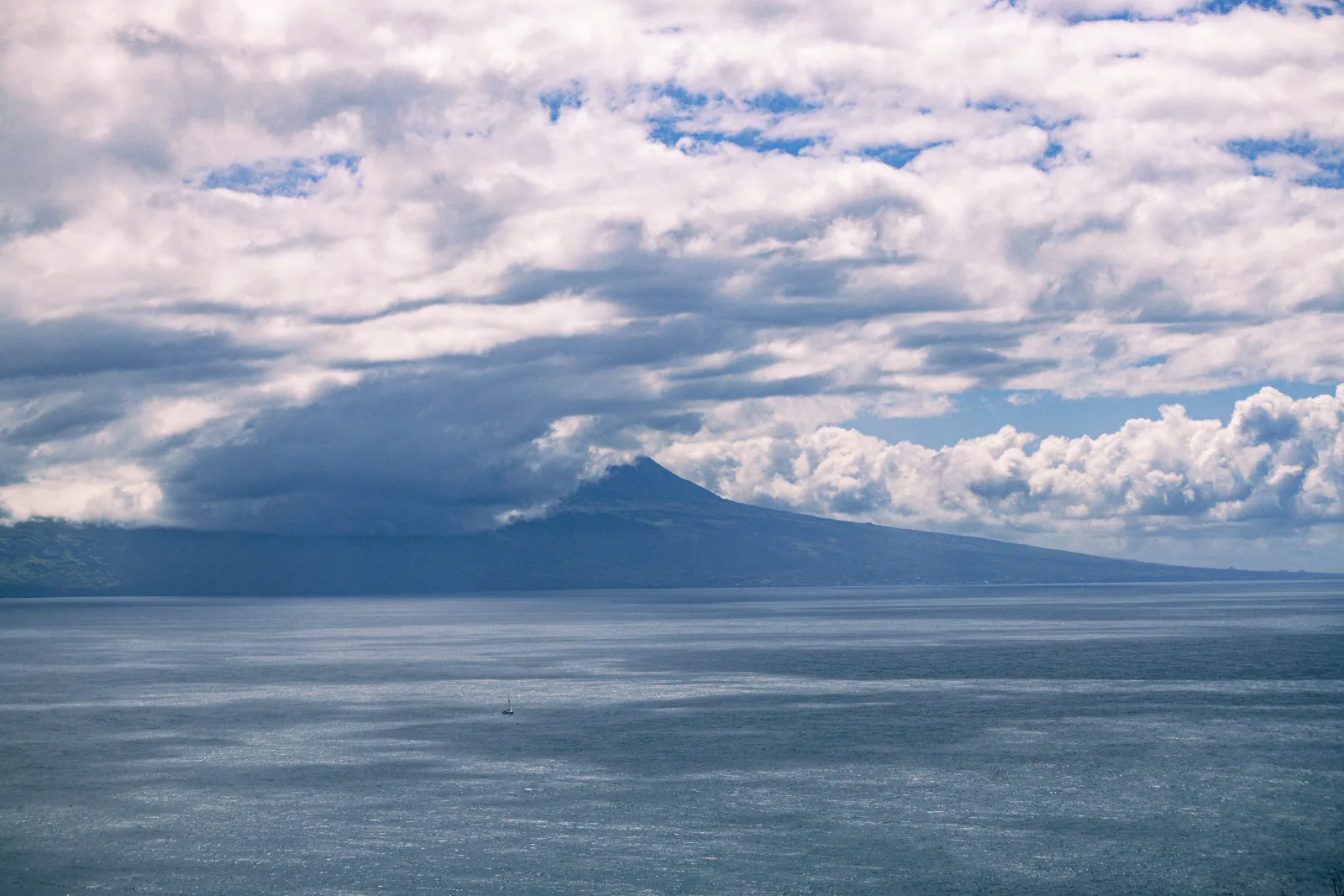
Azores vs Madeira is the question I get asked most by people planning their first trip to Portugal’s Atlantic islands. Both are Portuguese, both volcanic, both green, and both in the middle of the Atlantic. But they’re very different trips — different landscapes, different climates, different vibes, and different kinds of travelers love each one.
I’m biased — I’m Azorean — but I’ll be honest about both. I’ve spent time on Madeira and respect what it offers. Here’s the real comparison.
Azores vs Madeira: the 30-second version
| Azores | Madeira | |
|---|---|---|
| Landscape | Volcanic calderas, twin lakes, geothermal fields, nine islands | Dramatic mountain ridges, levada channels, laurel forest, one main island |
| Weather | Changeable, cooler (15-25°C), rainy spells | Warmer, drier (20-26°C), more predictable |
| Vibe | Wild, quiet, undiscovered, agricultural | Polished, established tourism, cosmopolitan Funchal |
| Hiking | Crater rims, volcanic peaks, coastal cliffs | Levada walks, ridge trails, laurel forest |
| distinctive to each | Thermal hot springs, whale watching, cozido das Furnas, nine islands | Levadas, Madeira wine, Funchal nightlife, Monte toboggan ride |
| Best for | Nature lovers who want adventure + solitude | Hikers who want comfort + warm weather |
Landscape and geography
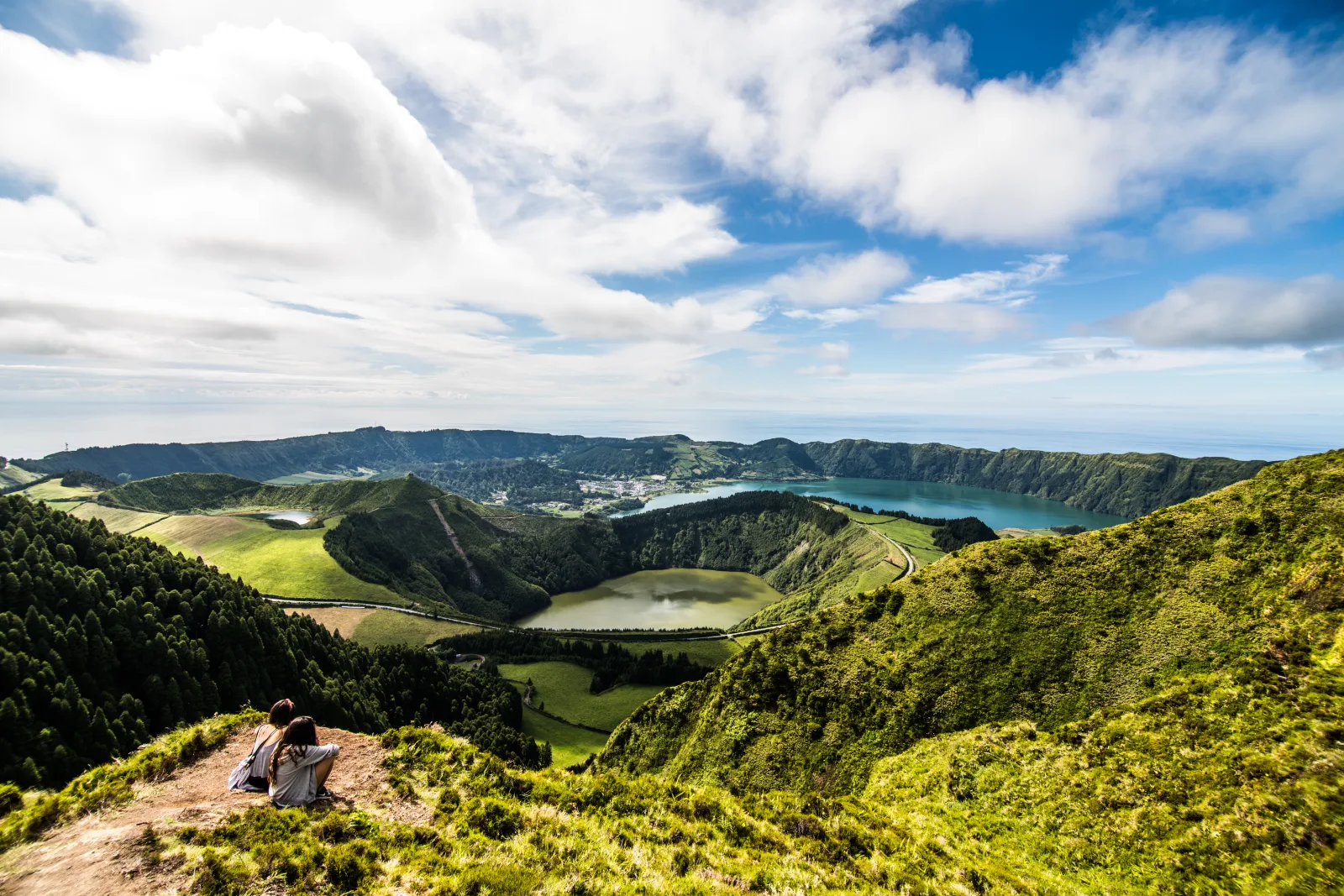
The Azores are an archipelago of nine islands spread across 600 km of ocean. The landscape is dominated by volcanic calderas — massive craters filled with twin-colored lakes (Sete Cidades), hidden crater lakes (Lagoa do Fogo), geothermal fields where the ground steams and lunch cooks underground (Furnas), and Pico Mountain at 2,351m. Each island has its own character. The Azores feel like a place the world hasn’t found yet.
Madeira is essentially one main island (plus the small Porto Santo island). The landscape is a single dramatic mountain ridge rising to 1,862m (Pico Ruivo), cut by deep valleys filled with laurel forest (a UNESCO World Heritage site). The coastline is steep cliffs plunging into the ocean. Funchal, the capital, sits on the sunny south coast and feels like a small European city. Madeira feels like a well-established destination that’s earned its reputation.
Verdict: The Azores for geological variety and the feeling of discovery. Madeira for concentrated drama on one island.
Weather
This is often the deciding factor, so I’ll be blunt.
Madeira wins on weather. Funchal averages 20-26°C year-round, gets significantly less rain than the Azores, and has a south-facing coast that’s reliably sunny. The north side and highlands get more cloud and rain, but most visitors stay in the south.
The Azores are cooler (15-25°C depending on month — see our month-by-month guide), rainier, and famously unpredictable. “Four seasons in one day” is a real local saying. You can drive 20 minutes and gain clouds, lose the sun, and find it again. This is part of the magic for some travelers and a dealbreaker for others.
Verdict: If warm, reliable weather is non-negotiable, go to Madeira. If you’re flexible and pack layers, the Azores’ shifting light and drama is genuinely beautiful.
Hiking
Both islands are world-class hiking destinations, but the style is completely different.
Madeira is famous for levada walks — gentle trails that follow historic stone irrigation channels through laurel forest, often with dramatic valley views. Most levada walks are flat or gently graded, making them accessible to casual walkers. The star trail is Pico do Arieiro to Pico Ruivo — a ridge walk above the clouds that’s plausibly the most scenic day hike in Southern Europe.
The Azores have more volcanic terrain — crater rim hikes with views into twin-lake calderas, descents to hidden beaches at the bottom of volcanic craters (the Lagoa do Fogo Praia trail), coastal cliff paths, and the summit of Pico Mountain (Portugal’s highest point, a serious full-day hike). The trails are spread across multiple islands, so you get variety but need more logistics.
Verdict: Madeira for accessible, well-marked trails and the levada experience. Azores for volcanic variety and more challenging terrain.
Food
Madeira has a more developed food scene. Funchal has serious restaurants, Michelin-recognized dining, and a deep wine culture (Madeira wine is one of the world’s great fortified wines, with a 500-year history). The local specialties — espetada (beef on a laurel skewer), bolo do caco (garlic bread), black scabbard fish with banana — are distinctive and widely available. You’ll eat very well in Funchal.
The Azores food culture is more rustic and agricultural. The standout is cozido das Furnas — a stew cooked underground using volcanic steam, found nowhere else on earth. Beyond that: São Jorge cheese, Azorean beef (some of the best in Portugal — the cows graze on volcanic grassland), Azorean pineapple (grown in antique greenhouses), and Gorreana tea (Europe’s only commercial tea estate). Ponta Delgada’s restaurant scene has improved significantly but it’s not Funchal-level.
Verdict: Madeira for restaurant dining and wine. Azores for the singular food experiences (cozido, tea, volcanic pineapple) and farm-to-table quality.
Cost
Both destinations are affordable by European standards, especially compared to mainland Portugal’s Algarve or Lisbon.
| Azores | Madeira | |
|---|---|---|
| Hotel (mid-range, double) | €60-€120/night | €70-€140/night |
| Dinner for two | €25-€50 | €30-€60 |
| Rental car per day | €70-€80 | €70-€85 |
| Flight from Lisbon | €60-€150 RT | €50-€130 RT |
Verdict: The Azores is slightly cheaper across the board, but neither is expensive. Budget travelers will find both manageable.
Getting there
Madeira has more flight connections. Funchal airport has direct flights from most European capitals year-round, plus some seasonal transatlantic routes. It’s well-served by low-cost carriers (Ryanair, easyJet, Transavia).
The Azores (Ponta Delgada) has fewer direct routes but growing connections. Direct flights from Lisbon, Porto, London, Frankfurt, Boston, Toronto, and a few others. Azores Airlines (SATA) and Ryanair are the main carriers. Getting between Azores islands requires SATA inter-island flights (short, inexpensive, but limited schedules).
Verdict: Madeira is easier to reach from most European cities. The Azores has better North American connections (Boston, Toronto direct).
Azores or Madeira: who should go where?
| If you are… | Go to… |
|---|---|
| A first-time visitor wanting “the safe bet” | Madeira — polished, warm, easy |
| Someone who wants to feel like an explorer | Azores — wilder, less touristed |
| A casual hiker who likes flat, scenic walks | Madeira — levadas are perfect |
| A hiker who wants volcanic summit challenges | Azores — Pico Mountain, crater descents |
| A foodie who cares about restaurants and wine | Madeira — Funchal dining + Madeira wine |
| Someone who wants a rare food experience | Azores — cozido das Furnas, nowhere else |
| A whale watching enthusiast | Azores — one of the best spots in the world |
| A winter sun seeker | Madeira — reliably warmer |
| A hot springs lover | Azores — Terra Nostra, Poça da Dona Beija, Caldeira Velha |
| A couple on a short romantic trip | Madeira — Funchal’s hotels and restaurants |
| A family with young kids | Madeira — easier logistics, warmer pools |
| An adventurous traveler with 10+ days | Both — fly into one, out the other |
Azores vs Madeira by season
The right choice changes depending on when you’re going. Here’s the local read:
Winter (December–February). Madeira wins clearly. Funchal averages 18–20°C, is rarely properly cold, and the levada hikes stay open year-round. The Azores in winter is moody, beautiful, and significantly wetter — you can have spectacular days, but you can also lose three days to a stalled Atlantic low. If you need reliable winter sun, Madeira.
Spring (March–May). A near-tie. Madeira is warmer and drier on average. The Azores gets hydrangeas starting to bloom in late May, whales arriving on migration, and noticeably fewer tourists than summer — locals quietly call May the best month on São Miguel. If your trip falls in May and you can flex weather, the Azores rewards more.
Summer (June–August). Both are at their best, but they reward different things. Madeira is hot enough to feel Mediterranean, with Funchal’s restaurant scene at full throttle. The Azores is cooler, the trade winds keep the air mild, and the long evenings are made for outdoor dinners. If you want beach lounging, Madeira (or honestly, mainland Portugal). If you want hiking and crater views, the Azores.
Autumn (September–November). Azores edges ahead. Water temperature is at its peak warmth (24°C), the hydrangeas are gone but the green remains, summer crowds drop sharply, and prices fall by ~25%. Madeira stays warm but the same is true everywhere in southern Europe. The contrast favours the Azores in shoulder season.
Specific island pairings within each archipelago
A nuance most guides miss: “the Azores” isn’t one place, and where you go inside the Azores changes the comparison entirely. Madeira’s main island is the only realistic destination on that side (Porto Santo is a small add-on). Inside the Azores, you have nine islands and three reasonable starter combinations:
- São Miguel only. The standard first trip. Volcanic calderas, thermal pools, cozido. Closest equivalent to “all of Madeira” in concentration. See the 5-day São Miguel itinerary.
- São Miguel + Pico. Adds Portugal’s highest peak and the UNESCO vineyard landscape. Closer in feel to Madeira’s mountain side. See the 7-day multi-island itinerary.
- São Miguel + Terceira. Adds historic architecture and a different food scene. Less wild, more cultural.
So when someone asks me Azores vs Madeira, the actual question is often Madeira vs which Azores combination — and the answer changes accordingly. A Madeira trip vs a São Miguel-only trip is one comparison. A Madeira trip vs a multi-island Azores trip is a different comparison. The multi-island version delivers more variety than Madeira — the single-island Azores version is more comparable.
The practical takeaway: if you’re flying transatlantic (especially from Boston, New York, or Toronto), the Azores is closer and easier than Madeira. If you’re flying from anywhere in Europe, both are reachable in 2–4 hours and the choice comes down to landscape preference, not logistics. People who picture themselves drinking wine in a polished European town centre usually prefer Madeira. People who picture themselves in a thermal pool while it rains, with no other tourists in sight, usually prefer the Azores. Neither is wrong. Both are real.
Can you do both?
Yes, and it’s a great trip. The typical pattern:
- 5-7 days in the Azores (our 5-day itinerary is a solid starting point)
- Flight to Madeira via Lisbon (direct Azores-Madeira flights exist but are infrequent)
- 4-5 days in Madeira
- Total: 10-12 days
The two destinations complement each other perfectly — the Azores for volcanic wildness and thermal pools, Madeira for ridge hikes and Funchal’s cosmopolitan side. You’ll have no sense of repetition.
The honest answer
There’s no wrong choice. Both are among the best island destinations in Europe. Madeira is the more comfortable, established option. The Azores is the more adventurous, surprising one.
If I had to summarise: Madeira makes the most postcard-perfect first impression and stays warm enough to enjoy in winter. The Azores rewards staying longer, asks for slightly more flexibility with weather, and gives you experiences (volcanic cooking, iron-rich thermal pools, watching whales from a Lajes harbour) you can’t replicate anywhere else in Europe. Two completely different versions of “Portuguese island holiday” — both worth doing if you can get to them. The order doesn’t matter. The depth of either one does. Pick the one that matches what you actually want from a week, and don’t let other people’s preferences talk you out of it. The Azores islands and Madeira will both be there next year too.
If you only have time for one and you’ve never been to either: go to whichever one speaks to you more after reading this page. You’ll love it. And you’ll come back for the other.
If you’re leaning toward the Azores and want help planning, Pocket Guide Azores builds AI-generated, weather-aware itineraries from the spots you pick — built by someone who lives here and knows both islands well enough to tell you honestly when Madeira is the better call.
Frequently asked questions
Should I visit the Azores or Madeira? +
Visit the Azores if you want volcanic calderas, thermal hot springs, whale watching, multiple islands to explore, and a wilder, less touristy experience. Visit Madeira if you want one compact island with dramatic levada hikes, a warmer year-round climate, a more developed tourism infrastructure, and Funchal's food and wine scene. Both are spectacular — neither is objectively better.
Which is cheaper, Azores or Madeira? +
The Azores is slightly cheaper overall. Hotel rates are 10-20% lower, restaurant meals cost €12-€25 vs Madeira's €15-€30, and rental cars are comparable (€70-€80/day). Flights from Lisbon are similar in price. The Azores has fewer luxury resorts and high-end restaurants, which keeps the average spend lower. Madeira has a wider price range from budget to luxury.
Which has better weather, Azores or Madeira? +
Madeira is warmer and drier year-round. Funchal averages 20-26°C and gets significantly less rain than the Azores. The Azores are cooler (15-25°C depending on season), rainier, and famously changeable — four seasons in one day is normal. If you want guaranteed warm, sunny days, Madeira wins. If you don't mind layers and flexibility, the Azores' microclimate drama is part of the charm.
Which has better hiking, Azores or Madeira? +
Both are world-class but different. Madeira is famous for its levada walks — gentle, flat trails along historic irrigation channels through laurel forest, plus the dramatic Pico do Arieiro to Pico Ruivo ridge walk. The Azores has more volcanic terrain — crater rim hikes, descents to hidden lakes, coastal cliff paths, and the Pico Mountain summit (2,351m, Portugal's highest). Madeira has a more developed trail network; the Azores has more variety across its nine islands.
Can I visit both the Azores and Madeira in one trip? +
Yes, but allow at least 10-12 days total (5-6 per destination). Direct flights between the Azores and Madeira exist but are infrequent — most connections go through Lisbon. A common pattern is to fly into one and out of the other with a Lisbon connection, spending 5-7 days on each. Don't try to do both in under a week.
Which has better beaches, Azores or Madeira? +
Neither is a beach destination in the Mediterranean sense. The Azores has a few natural swimming pools (Ferraria, Mosteiros), volcanic black-sand beaches, and the Ilhéu de Vila Franca natural pool. Madeira has pebble beaches and the golden sand of Porto Santo island (a 2-hour ferry). If beaches are your top priority, consider the Algarve or Canary Islands instead.