
Also available in Português
The Best Day Trips from Ponta Delgada (Ranked by a Local)
Seven day trips from Ponta Delgada, ranked by drive time, cloud risk, and what actually makes each one worth the journey — from a local who does these weekly.
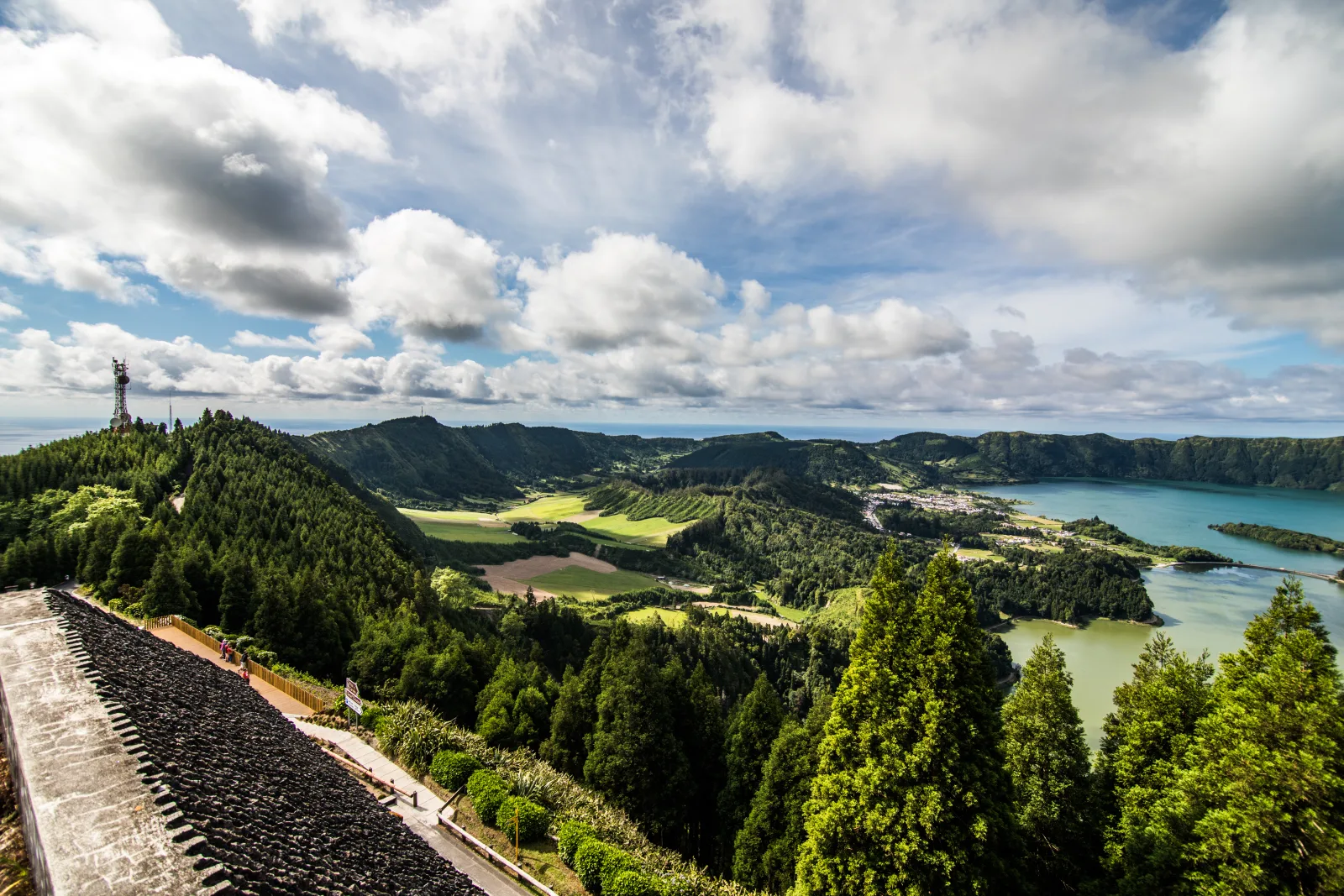
Ponta Delgada is the operational base for everything on São Miguel. The island is 65km tip to tip, and every major attraction is within 45 to 60 minutes of driving from the city center. That’s the good news. The less obvious part: São Miguel’s weather varies wildly from one valley to the next, and the order and timing of your day trips matters as much as which ones you pick.
I live here. I’ve watched hundreds of tourists drive to Sete Cidades at 11am and find nothing but low cloud and a car park full of disappointed faces. I’ve seen people skip Lagoa do Fogo because “it’s just another lake” and regret it immediately. This guide ranks the seven best day trips from Ponta Delgada the way I’d explain them to a friend landing tomorrow morning — by drive time, cloud risk, and what you actually get when you do them right.
Day Trips from Ponta Delgada at a Glance
| Day Trip | Drive | Best Start | Cloud Risk |
|---|---|---|---|
| Sete Cidades | 45 min | 7:00–9:00 | Very High |
| Furnas | 45 min | 9:00–10:00 | Moderate |
| Lagoa do Fogo | 30 min | 7:30–9:00 | High |
| Caldeira Velha | 35 min | Any | Low |
| Nordeste | 60 min | 10:00–11:00 | Moderate |
| Ribeira Grande | 30 min | Afternoon | Low |
| Pico da Vara | 60 min | 6:30–8:00 | Very High |
Cloud risk here is the probability that the best viewpoints will be socked in when you arrive. “Very High” doesn’t mean skip it — it means go early and have a backup plan for the afternoon.
Sete Cidades — The One That Breaks You When It’s Cloudy
Sete Cidades is the twin-lake caldera that São Miguel is famous for. Two lakes — one blue, one green — separated by a narrow stone bridge, sitting inside a volcanic crater ringed by steep green walls. When it’s clear, it’s the most photographed view in the Azores. When it’s in cloud, you drive 45 minutes to stare at grey nothing from a gift-shop car park.
The local move: leave Ponta Delgada no later than 7:00am. The crater clears most mornings between 7:30 and 9:30 before cloud builds back up. By 11am on most days, the Vista do Rei viewpoint — the best one — is invisible. This happens year-round. It’s not a winter problem. It’s a São Miguel problem.
Three viewpoints worth knowing before you go:
- Vista do Rei — the classic shot from the crater rim. Short walk from the car park. This is the angle in every Azores travel photo and the one that makes people cry when it’s clear.
- Boca do Inferno — lower down on the road into the crater. Often clearer than Vista do Rei because it sits below the cloud layer. When the top is socked in, start here.
- Miradouro da Grota do Inferno — on the eastern approach, a different angle that includes the ocean. Very few people stop here. Worth it if you have the time.
After the viewpoints, drive down into the village of Sete Cidades itself. It’s tiny — a church, a handful of houses, a lake that looks completely different from the valley floor than it did from the rim. You can rent a kayak and paddle the green lake for an hour, or walk the path along the water’s edge. The small café on the main square serves coffee and local pastries. That’s the whole experience. It’s enough.
The one mistake most people make: combining Sete Cidades with Furnas on the same day. The drives go in opposite directions from Ponta Delgada, and both places deserve your full attention. See the Sete Cidades guide for the viewpoint-by-viewpoint breakdown and what to do when you arrive to fog.
Furnas — The Day Everyone Remembers Most
If Sete Cidades is the postcard, Furnas is the story. It’s a small village in the volcanic interior of the island where the ground steams in a dozen places, lunch is cooked underground, and you end the afternoon floating in a warm iron-rich thermal pool the color of strong tea. There is no other place in Europe quite like it.
Drive time: 45 minutes east from Ponta Delgada via the IP1 expressway. Mostly highway, straightforward navigation, almost no traffic after 9am.
A well-paced Furnas day looks like this:
09:00 — Arrive at Caldeiras das Furnas. Walk the fumarole field — watch the steam rise from the buried clay pots. Understand immediately that this is how people actually cook here, not a tourist performance. The smell of sulphur is real and not unpleasant.
10:00 — Walk through the village, drop into the church, confirm your lunch reservation. If you haven’t booked, go directly to Tony’s and ask — they sometimes have walk-in space before 10:30.
12:00 — Lunch. The cozido das furnas — pork, chicken, blood sausage, chouriço, and root vegetables braised in volcanic earth for six hours — is the thing. Heavy, earthy, exactly right. Tony’s (O Miroma) is my preference for the atmosphere — the Terra Nostra restaurant is more polished and more expensive.
14:00 — Terra Nostra Garden. Twelve hectares of botanical garden dating to the 18th century, with remarkable trees from every continent and a lily pond the guidebooks don’t mention. Flat paths, takes 45 minutes to walk without rushing.
15:00 — The thermal pool inside Terra Nostra. Amber-orange from dissolved iron, about 37°C, open to the sky. You’ll stay longer than you planned.
17:00 — Start the drive back. Stop at the Lagoa das Furnas viewpoint if it’s clear.
Reserve in advance. Both Tony’s and Terra Nostra fill up by 10am on any day between May and October. The Terra Nostra thermal pool can be booked separately if you’re not staying at the hotel — entry also covers the garden.
Read the Furnas guide for the full breakdown of every option, the restaurants ranked, and the one thing I’d cut if time was short.
Lagoa do Fogo — The One Locals Go Back To
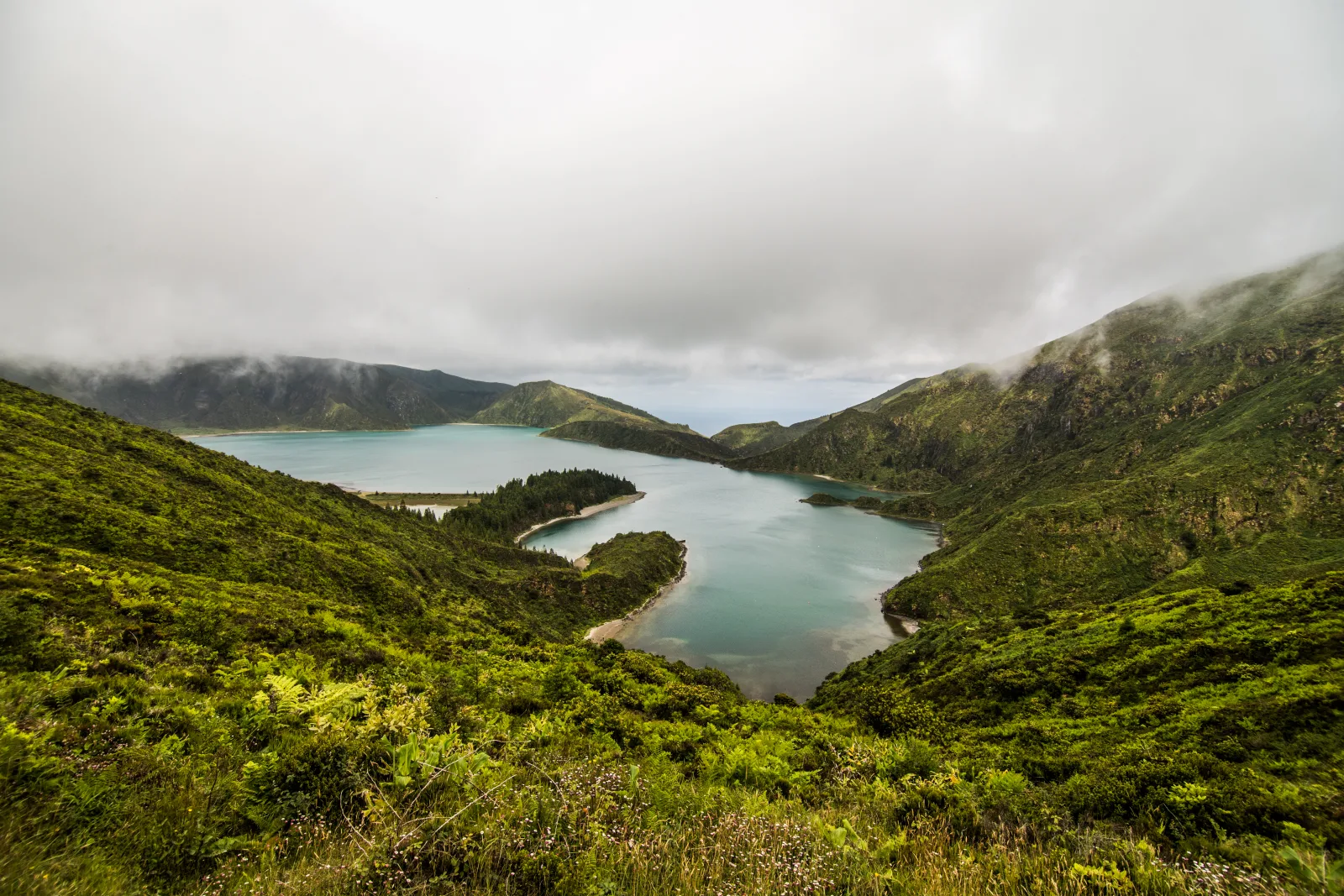
Lagoa do Fogo means “Fire Lake.” It sits inside an active volcanic crater at 590m elevation and, on a clear morning, looks like something from another planet: a perfectly still, deep-blue lake ringed by bare ridgelines and a thin strip of white volcanic sand. No boats. No commercial facilities. Just the lake, the crater walls, and the wind.
Drive time: 30 minutes from Ponta Delgada to the trailhead pullout on the crater rim road.
The honest answer: most people drive to the miradouro viewpoint above the lake, take a photo, and leave. That’s fine — the view from the top is dramatic on its own. But the lake itself is the payoff, and getting there means a trail that takes 45 minutes to an hour each way, descends steeply through low scrub, and requires proper shoes. Worth every hour.
Timing is the whole game here. The crater fills with cloud by mid-morning on most days. Be at the trailhead before 8:30am. The trail is also genuinely slippery when wet, so fog is a practical problem, not just a visibility one — loose volcanic soil on a steep descent in fog is not the move.
The beach at the lake is volcanic sand and smooth rounded stones. Swimming is cold: water temperatures sit around 16–18°C even in August. The appeal isn’t the swim. It’s the silence, the scale of the crater walls above you, and the fact that almost no one makes it to the shore. Most tourists turn back at the rim. That’s their loss.
Lagoa do Fogo works well as a morning trip combined with Caldeira Velha in the afternoon — they’re on the same mountain road and the two experiences complement each other well. For trail conditions by month and what to bring, see the full Lagoa do Fogo guide.
Caldeira Velha — The Thermal Pool Most Tourists Miss
Caldeira Velha is a small nature reserve on the north slope of the Água de Pau volcano — the same volcanic system that feeds Furnas and Lagoa do Fogo. A hot waterfall pours into a shallow thermal pool in the middle of dense fern forest. That’s the whole thing. It is genuinely pleasant.
Entry costs €5–€8 depending on season. The pools reach 35–40°C. The setting is tree ferns, moss, running water, and on a weekday morning, maybe ten other people. It feels more like discovering a natural swimming hole than visiting a commercial complex.
When it makes sense: Caldeira Velha works well as an afternoon add-on to a Lagoa do Fogo morning — the reserve is 15 minutes east on the same mountain road. Or it’s the right call on a lower-energy day when you want something thermal without crowds.
When to skip it: if you’re doing the full Furnas day with the Terra Nostra pool, don’t add Caldeira Velha to the same day or even the same week. The two experiences are similar enough that doing both feels redundant. The thing about Caldeira Velha is it shines brightest when it’s the main event, not an afterthought.
Sequencing Your Day Trips Across the Week
Cloud-sensitive days belong early in your trip. Sete Cidades on day four is a real gamble — you need it to be clear, and by then half your trip is gone. Here’s how I’d sequence a five-day visit from Ponta Delgada, with the logic for each:
| Day | Destination | Why That Order |
|---|---|---|
| Day 1 | Sete Cidades | Go first, leave by 7am — motivation is highest on day one |
| Day 2 | Furnas (full day) | Most logistically complex — best done while you’re fresh |
| Day 3 | Lagoa do Fogo + Caldeira Velha | Morning hike, afternoon soak — a natural pairing |
| Day 4 | Nordeste drive | Recovery day — slow, beautiful, no schedule pressure |
| Day 5 | Ponta Delgada city | Markets, the harbour, pastéis de nata, and the Friday market |
The principle: front-load the cloud-sensitive days, back-load the flexible ones. You can run the Nordeste drive in fog and still have a good day. You cannot run Sete Cidades in fog and salvage it.
If you have seven days instead of five, use the 5-day São Miguel itinerary as your base framework and add Nordeste and Ribeira Grande as your two extension days. Both are lower-stakes destinations that reward a slower pace.
Nordeste — When You Want the Real Island
Nordeste is the far northeastern corner of São Miguel — the part most tourists never reach. The drive from Ponta Delgada takes about an hour along the south coast road, through small farming villages, past stretches of cliff road above the Atlantic, through parishes that feel like the island felt before anyone discovered it.
The draw here isn’t one specific landmark. It’s the texture: narrow ribeiro valleys, hydrangea-hedged lanes in summer, dairy farms where cows outnumber people by a ratio the island takes pride in, fishing villages where the boats are still painted the traditional blue and white. The Miradouro da Ponta do Sossego has a formal garden right on the cliff edge with views down the coast toward Nordeste village. The Miradouro do Nordeste gives a long view over the coastline in both directions on a clear day.
Nordeste is best saved for day four or five — after you’ve done the crater lakes and the volcanic valley and you want to understand what the island actually is when it’s not performing for visitors. The local move is to stop for lunch in Nordeste village at one of the simple tascas rather than planning anything specific. Ask what’s on that day. Order it. The seafood is whatever came in that morning.
Best conditions for this drive: cloudy days work fine because you’re moving through the landscape rather than waiting for a crater to clear. This is the ideal day to schedule when Sete Cidades is forecasted to stay grey and you’ve already done your cloud-sensitive days.
One practical note: the road from the south coast up through Nordeste has some narrow sections and sharp bends. It’s not difficult — I’ve driven it in a small hatchback a hundred times — but it’s not the road to attempt if you’re jet-lagged and it’s dark.
Guided options around here, if you’d rather not piece the logistics together yourself:
What to Read Next
Guides that go deeper on individual day trips:
- Furnas guide — everything to book, the restaurants ranked properly, and why Terra Nostra’s pool timing matters more than people expect
- Sete Cidades guide — viewpoint timing, the trail down to the lake, and what to actually do when you arrive to fog
- Lagoa do Fogo guide — trail conditions by month, what the cloud risk looks like at different times of day, and swimming conditions
- Best time to visit the Azores — the cloud risk numbers in the table above shift significantly depending on your travel window — this changes your sequencing strategy
Towns and areas to fold into a day trip:
- Things to do in Ponta Delgada — the city itself, for the half-days you don’t drive far
- Ribeira Grande — the north-coast town, an easy half-day with the tea plantations nearby
- Vila Franca do Campo — the historic former capital on the south coast
- Ilhéu de Vila Franca — the volcanic islet boat trip, a day trip in itself
- Rabo de Peixe — the Azores’ biggest fishing town, best at dawn
- São Miguel road trip — when you’d rather string the coast together than base from one spot
Planning which of these to run on which day — accounting for the actual weather forecast for the days you’re there, your hotel location, what you’ve already seen — is exactly the kind of thing that’s tedious in a spreadsheet and trivial with Pocket Guide Azores. The app builds a weather-aware day-by-day plan for your specific dates, sequences your cloud-sensitive days automatically, and updates the plan if the forecast changes before your trip. It’s built on the same local knowledge used in this guide, by the same local Azorean writing it. Get it on iOS or Android if you want the plan without the logistics homework.
Frequently asked questions
What is the best day trip from Ponta Delgada? +
Furnas is the most memorable single day from Ponta Delgada — volcanic caldeiras, lunch cooked underground, and Terra Nostra thermal pool make it unlike anywhere else in Europe. Sete Cidades is the most dramatic if you get clear weather.
How far is Sete Cidades from Ponta Delgada? +
Sete Cidades is about 45 minutes from Ponta Delgada by car via the expressway, roughly 35–40km. Traffic is rarely a factor. Add 15–20 minutes if you stop at the Boca do Inferno viewpoint on the road down into the crater.
Can you do Furnas and Sete Cidades in one day? +
Technically yes, but I don't recommend it. Both places deserve time to breathe. Doing both means you're always watching the clock. If you only have one day, pick Furnas. Save Sete Cidades for another day — or a different trip.
Do you need a car for day trips from Ponta Delgada? +
For most day trips, yes — a rental car is essential. Public buses exist but run infrequently and don't reach most viewpoints. Tours are available if you'd rather not drive, but you lose the flexibility to leave early or stay late, which matters enormously given São Miguel's shifting weather.
How long does it take to drive around all of São Miguel? +
The full loop around São Miguel is about 150km and takes 3 to 4 hours of driving with no stops — longer on the mountain roads. Most visitors split it into east and west halves across two separate days rather than circling the whole island in one go.
Is Lagoa do Fogo worth visiting? +
Yes — and I'm biased, but it's the most underrated spot on the island. The lake sits inside an active volcanic crater and the trail to the water level takes about an hour each way. Go before 9am when the cloud is lowest and the water is glassy and still.
What is the best day trip from Ponta Delgada for families? +
Furnas is the most family-friendly option. The caldeiras park is walkable and fascinating for kids, the Terra Nostra garden has flat paths, and the thermal pool is warm year-round. The cozido lunch makes it a full, memorable day with no strenuous hiking required.
Can you visit Sete Cidades without a car? +
You can take a tour bus from Ponta Delgada — the Carris Macário tourist service runs a half-day Sete Cidades route with stops at the main viewpoints. The downside: you're on their schedule, not yours, and the optimal window for cloud-free views is early morning.