
Also available in Português
Rabo de Peixe: Fishing Village Guide (and the Netflix Series)
Rabo de Peixe, São Miguel — the real 2001 story behind the Netflix series, what the Azores' biggest fishing town is like today, and whether it's worth a visit.
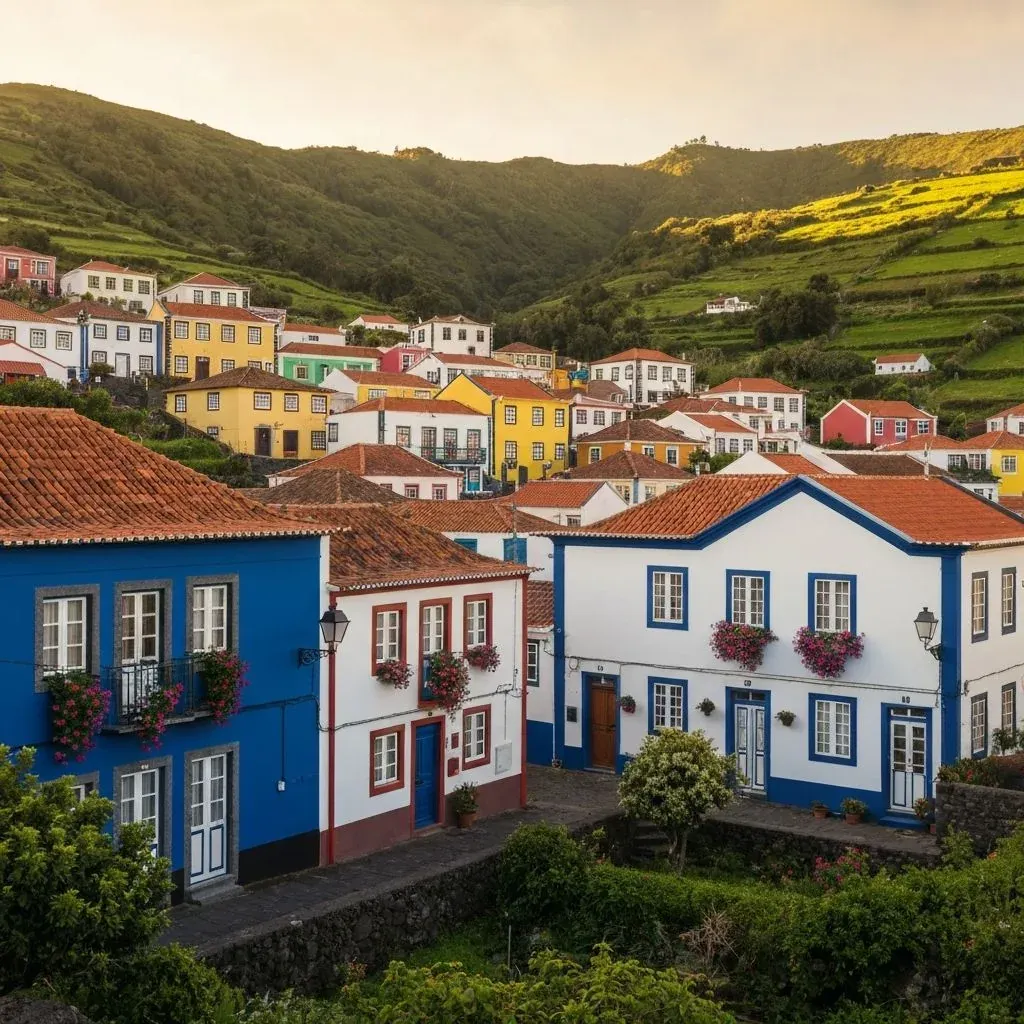
Rabo de Peixe is the biggest fishing town in the Azores — and, since 2023, the most internationally famous place name on São Miguel that most travellers had never heard before. I live on São Miguel, and the Netflix series changed how people ask about this town overnight. So this guide does two things: it tells you what Rabo de Peixe actually is, and it separates the real town from the screen version.
The honest framing up front: Rabo de Peixe is not a tourist destination in the usual sense. It’s a working town with a strong identity, a remarkable fishing port, and a real story behind the famous one. Go for the authenticity, not for a checklist.
Where Rabo de Peixe sits
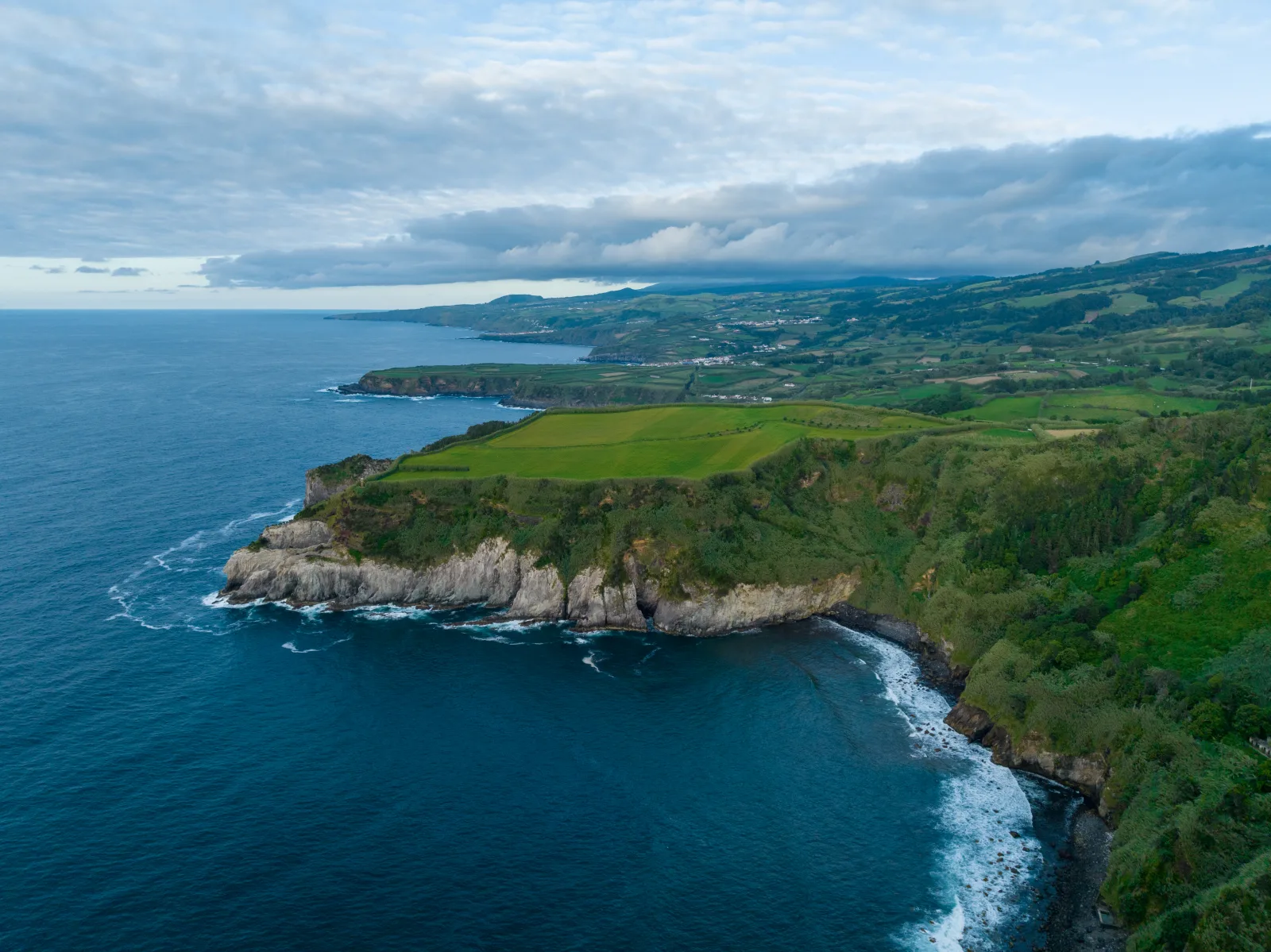
Rabo de Peixe is on the north coast of São Miguel, in the municipality of Ribeira Grande. It’s about 15 minutes from Ponta Delgada and 10 minutes from Ribeira Grande — close to both, just off the main north-coast road.
It was elevated to town status in 2004 and is the most populous town in the Ribeira Grande municipality. The defining feature is the fishing port — the largest in the Azores — which dominates a long stretch of the north coast and shapes everything about the town’s identity and economy.
The name translates literally as “fish tail” — appropriate for a community whose entire history runs through the Atlantic.
The real Rabo de Peixe
Before the Netflix version, here’s the actual town.
Rabo de Peixe is a dense, working fishing community. The houses cluster tight, the streets are busy, and the rhythm of the town is set by the sea — when the fleet goes out, when it comes back, what the catch is worth. It’s the most concentrated maritime culture on São Miguel.
The town has real social and economic challenges — like many fishing communities worldwide, it has faced unemployment and hardship as the fishing industry has changed. It is also a place with strong community bonds, deep tradition, and a character that’s entirely its own. The Netflix series leaned into the hardship. The town is more than that.
What to see:
- The fishing port — the heart of the town and the largest fishing harbour in the Azores. Best at dawn, when the fleet returns and the catch is landed and sorted. It’s a genuine working scene, not a performance.
- Igreja do Bom Jesus — the parish church, completed in 1885, a solid example of Azorean baroque with a wide nave and painted interior. The town’s standout building.
- The waterfront — walk it to take in the scale of the fishing operation and the north-coast Atlantic.
Be respectful when you visit. This is people’s home and workplace, not a set. Photograph the harbour and the boats, not people going about their lives without asking.
The fishing port — the Azores’ biggest
The port is what makes Rabo de Peixe matter, and it’s worth understanding why.
Rabo de Peixe operates the largest fishing fleet and port in the Azores. The town’s economy, identity, and daily rhythm all run through it. Generations of the same families have fished these waters, and the knowledge — where the fish are, how the weather turns, how to read the north-coast swell — is passed down rather than taught.
The fleet is mostly small and mid-sized boats working the waters off São Miguel’s north coast. They target the species that have always sustained the Azores: mackerel, horse mackerel, tuna in season, and the various bottom-dwelling fish that end up in the island’s caldeiradas and grilled-fish plates. Much of what the boats land supplies São Miguel’s restaurants and markets — when you eat fresh fish in Ponta Delgada, there’s a good chance it came through Rabo de Peixe.
Watching the fleet return at dawn is the single best reason to visit. The boats come in, the catch is landed in crates, the sorting and selling happens fast, and the whole working choreography unfolds without any concession to spectators. It’s one of the few genuinely unstaged scenes left on São Miguel — no ticket, no tour, just a town doing what it has always done.
The fishing industry has not been kind to the town in recent decades. Quotas, changing fish stocks, and economic pressure have made the traditional living harder, and that strain is part of Rabo de Peixe’s modern story. But the port is still very much alive, and the maritime culture is the real thing.
The Netflix series — fact and fiction
The reason most international visitors now know the name.
“Turn of the Tide” (Portuguese title: “Rabo de Peixe”) is a Portuguese drama series that premiered on Netflix in May 2023. It follows a young fisherman, Eduardo, and his friends, who find a boat-load of cocaine washed ashore near their village and decide to sell it. The series was a major global success, reaching Netflix’s worldwide top 10 in dozens of countries.
The true story behind it
The series is loosely based on a real event. In 2001, a sailboat carrying a large quantity of high-purity cocaine was damaged off the coast of São Miguel. Packages washed ashore near Rabo de Peixe and along the north coast. The real aftermath in the community became locally infamous and is still remembered on the island.
The series dramatises and fictionalises heavily — the characters, the plot, the arc are invented. It’s “inspired by” the event, not a retelling of it. Treat the show as drama, and the 2001 incident as the seed it grew from.
Filming locations across São Miguel
The series was filmed around São Miguel, and several locations are worth visiting in their own right:
- Monte Palace hotel ruins — the abandoned hotel above Sete Cidades, a haunting concrete shell that features heavily in the series
- Arnel lighthouse — the oldest lighthouse in the Azores, on the eastern tip near Nordeste, the setting of a key scene
- Rabo de Peixe itself — the town and port appear throughout
- North-coast locations — various recognisable stretches of coastline
A Netflix-fan itinerary of São Miguel ends up being a solid general itinerary anyway — most of the filming locations are places you’d want to see regardless. The Monte Palace ruins overlook the Sete Cidades crater lakes, the Arnel lighthouse anchors a scenic stretch of the eastern coast, and the north-coast scenes simply route you along one of the island’s better drives. In other words, you don’t have to choose between “seeing São Miguel” and “following the series” — they overlap almost completely.
A short history of the town
Rabo de Peixe grew, like its name, entirely from the sea. The settlement appears in São Miguel’s records from the early centuries of the island’s colonisation, always as a fishing community on the exposed north coast — the side of the island the swell hits hardest.
For most of its history it was a poor parish. The north coast lacked the sheltered harbour and the fertile orange-growing valleys that made Ribeira Grande and Ponta Delgada prosper. Rabo de Peixe’s people fished because the land offered little else, and the town developed the dense, tightly-packed housing that still defines it — homes built close because the families lived close, generation on generation.
The 20th century brought a growing population but not growing prosperity. The town became known across São Miguel for its hardship and its strong, inward-facing community — a place that looked after its own because no one else did. That reputation, fairly or not, has followed Rabo de Peixe into the present, and the Netflix series amplified it to a global audience.
The town reached official town status in 2004, recognition of its size if not its wealth. Today Rabo de Peixe is working to reframe its story — the fishing port modernising, community programmes growing, and a slow trickle of curious visitors arriving because of the series. Whether that attention helps the town or just turns its struggles into entertainment is an open question, and one worth holding in mind if you visit.
For the wider story of how Azorean communities developed — the emigration, the agricultural cycles, the maritime culture — see the Azores culture and pronunciation guide.
Is Rabo de Peixe worth a visit?
An honest answer, because the Netflix fame distorts expectations.
Visit if you want:
- To see authentic, working Azorean maritime culture
- The largest fishing port in the Azores at dawn
- To understand São Miguel beyond the viewpoints and crater lakes
- To see the real town behind the series
Don’t expect:
- A polished tourist circuit
- Cafés, shops, and amenities geared to visitors
- A “set” matching the Netflix version
Rabo de Peixe rewards curiosity and respect, not a checklist mentality. An hour in the town and at the port, ideally early morning, is the right dose for most visitors. It pairs naturally with a north-coast day based around Ribeira Grande.
Nearby — building a north-coast day
Rabo de Peixe is small, so the smart move is to fold it into a wider north-coast itinerary.
- Ribeira Grande — the historic town, 10 minutes away, with the eight-arched bridge and the Gorreana tea plantation nearby
- Miradouro de Santa Iria — one of the best north-coast viewpoints, a short drive east
- Gorreana tea plantation — the oldest tea in Europe, 15 minutes east
- Caldeira Velha — the forest thermal pool, 25 minutes south
- Lagoa do Fogo — the crater lake, 30 minutes south
Sample north-coast morning
07:00 — Rabo de Peixe fishing port at dawn, as the fleet returns 08:30 — Coffee, then the Igreja do Bom Jesus 09:30 — Drive to Ribeira Grande, walk the historic centre 11:00 — Gorreana tea plantation and tasting
For the full island loop, see the São Miguel road trip guide.
And if you’d rather not assemble the routing yourself — which filming locations are worth it, how to fold Rabo de Peixe into a north-coast day, when the port is most alive — Pocket Guide Azores is the AI travel planner that does exactly that. Built by me, from São Miguel, with the local context to tell you what’s worth your time and what isn’t.
When to visit
Rabo de Peixe is a year-round working town, so there’s no closed season — but timing the day matters more than timing the year.
| Timing | Notes |
|---|---|
| Dawn / early morning | Best — the fishing fleet returns, the port is alive |
| Midday | Quieter at the port, fine for the church and a walk |
| Summer | Warm, pairs with a full north-coast day |
| Winter | Big Atlantic swell, dramatic but the port is weather-dependent |
For the full month-by-month weather picture, see best time to visit the Azores.
The bottom line
Rabo de Peixe is the working maritime heart of São Miguel — the biggest fishing port in the Azores, a town with a strong, unvarnished identity, and the real place behind a fictionalised Netflix hit.
Go for the right reasons: to see authentic island life, to watch the fleet return at dawn, to understand São Miguel beyond the crater lakes. Visit with respect — it’s a community, not a film set. Fold it into a north-coast day with Ribeira Grande and the tea plantations, and you’ll come away with a truer picture of the island than any viewpoint gives you.
What to do next
- Ribeira Grande — the historic town 10 minutes away
- Sete Cidades — home to the Monte Palace ruins filming location
- São Miguel road trip — the full north-coast loop
- Sao Miguel hidden gems — more of the island beyond the postcard sights
Frequently asked questions
What is Rabo de Peixe? +
Rabo de Peixe is the largest fishing town in the Azores, on the north coast of São Miguel, in the municipality of Ribeira Grande. It has the busiest fishing port in the archipelago and a strong working-maritime identity. It became internationally known through the 2023 Netflix series 'Turn of the Tide' (Portuguese title 'Rabo de Peixe'), which is loosely based on a real 2001 event in the town.
Is Rabo de Peixe worth visiting? +
It depends what you want. Rabo de Peixe is not a polished tourist destination — it's a working fishing town with a real, unvarnished character. If you want to see authentic Azorean maritime life, watch the fishing fleet, and understand the island beyond the postcard sights, it's worth an hour. If you're looking for attractions and amenities, you'll find more elsewhere. Many visitors come because of the Netflix series.
What is the Netflix series Rabo de Peixe about? +
'Turn of the Tide' (Portuguese: 'Rabo de Peixe') is a Portuguese Netflix drama that premiered in May 2023. It follows a young fisherman and his friends who find a load of cocaine washed ashore in their village. It's loosely based on a true 2001 event, when a damaged sailboat spilled a large quantity of cocaine off the Azorean coast near the town. The series was a global hit, reaching Netflix's worldwide top 10 in dozens of countries.
Did the cocaine story really happen in Rabo de Peixe? +
The core event is real. In 2001, a sailboat carrying a large quantity of high-purity cocaine was damaged off São Miguel's coast, and packages washed ashore near Rabo de Peixe and along the north coast. The real aftermath in the community became locally infamous. The Netflix series dramatises and fictionalises the story heavily — it's 'loosely based' on the event, not a documentary retelling.
Where was the Netflix series Rabo de Peixe filmed? +
Across São Miguel, including the town of Rabo de Peixe itself and several recognisable island locations. The abandoned Monte Palace hotel ruins above Sete Cidades feature prominently, and the historic Arnel lighthouse on the eastern tip of the island appears in a key scene. Fans of the series can build a São Miguel itinerary around the filming locations, most of which are sights worth visiting in their own right.
How do you get to Rabo de Peixe? +
Rabo de Peixe is on the north coast of São Miguel, about 15 minutes by car from Ponta Delgada and 10 minutes from Ribeira Grande. It sits just off the main north-coast road. A rental car is the simplest way to visit. There are buses, but they don't make a casual visit convenient.
Is Rabo de Peixe safe to visit? +
Yes. Despite the reputation the Netflix series might suggest, Rabo de Peixe is an ordinary working town and visiting during the day is straightforward and safe. It has social and economic challenges like many fishing communities, but it's not dangerous for visitors. Treat it as you would any working town — be respectful, it's people's home, not a film set.
What is there to see in Rabo de Peixe? +
The main draw is the fishing port — the largest in the Azores — best seen early morning when the fleet returns. The Igreja do Bom Jesus, an 1885 baroque church, is the town's notable building. Beyond that, Rabo de Peixe is more about atmosphere than attractions. The nearby Santa Iria viewpoint over the north coast is a short drive and one of the best on the island.