
Also available in Português
4 Days in São Miguel: The Perfect Itinerary (Local's Version)
The best 4 days in São Miguel itinerary — Sete Cidades, Furnas, Lagoa do Fogo, and the local spots most visitors miss, planned by an Azorean who lives here.
4 days in São Miguel is not a compromise. It’s the ideal length for a first trip — long enough to go deep on the two experiences that define the island, with enough room left for a crater lake hike and a proper morning in Ponta Delgada. The visitors who leave disappointed are the ones who tried to rush it into two days, or spread five days across the island without a clear plan.
I live here. I’ve walked friends through some version of this itinerary more times than I can count, and what’s below is what I’d actually hand someone I cared about — not a generic highlights loop, but a sequence that respects the weather logic, builds properly, and leaves room for the moments you can’t plan.
4 Days in São Miguel at a Glance
| Day | Focus | Key Stops | Drive from Ponta Delgada |
|---|---|---|---|
| Day 1 | West — Sete Cidades | Vista do Rei, crater village, Mosteiros coast | ~35 min |
| Day 2 | East — Furnas | Caldeiras, cozido lunch, Terra Nostra pool | ~50 min |
| Day 3 | Centre — Lagoa do Fogo | Lagoa do Fogo hike, Caldeira Velha, Ribeira Grande | ~30 min |
| Day 4 | Ponta Delgada + Wild Card | Mercado da Graça, city walk, afternoon pick | 0 min |
One rule that applies to all four days: start early. The island’s two most spectacular viewpoints — Vista do Rei at Sete Cidades and the rim above Lagoa do Fogo — are reliably clear in the early morning and reliably clouded by mid-morning on most days. This is not weather drama — it’s microclimate physics. Build your days accordingly.
Day 1: West — Sete Cidades and the Atlantic Coastline
The thing about Sete Cidades is that the experience lives or dies by when you arrive at the viewpoint. Most visitors show up at 10 or 11am, find it buried in cloud, and leave with a vague sense that the Azores are overrated. Don’t be that person.
Morning: Vista do Rei Before the Clouds
08:00 — Arrive at Vista do Rei. The parking area is small — weekdays are fine, but in peak season it fills by 9am on weekends.
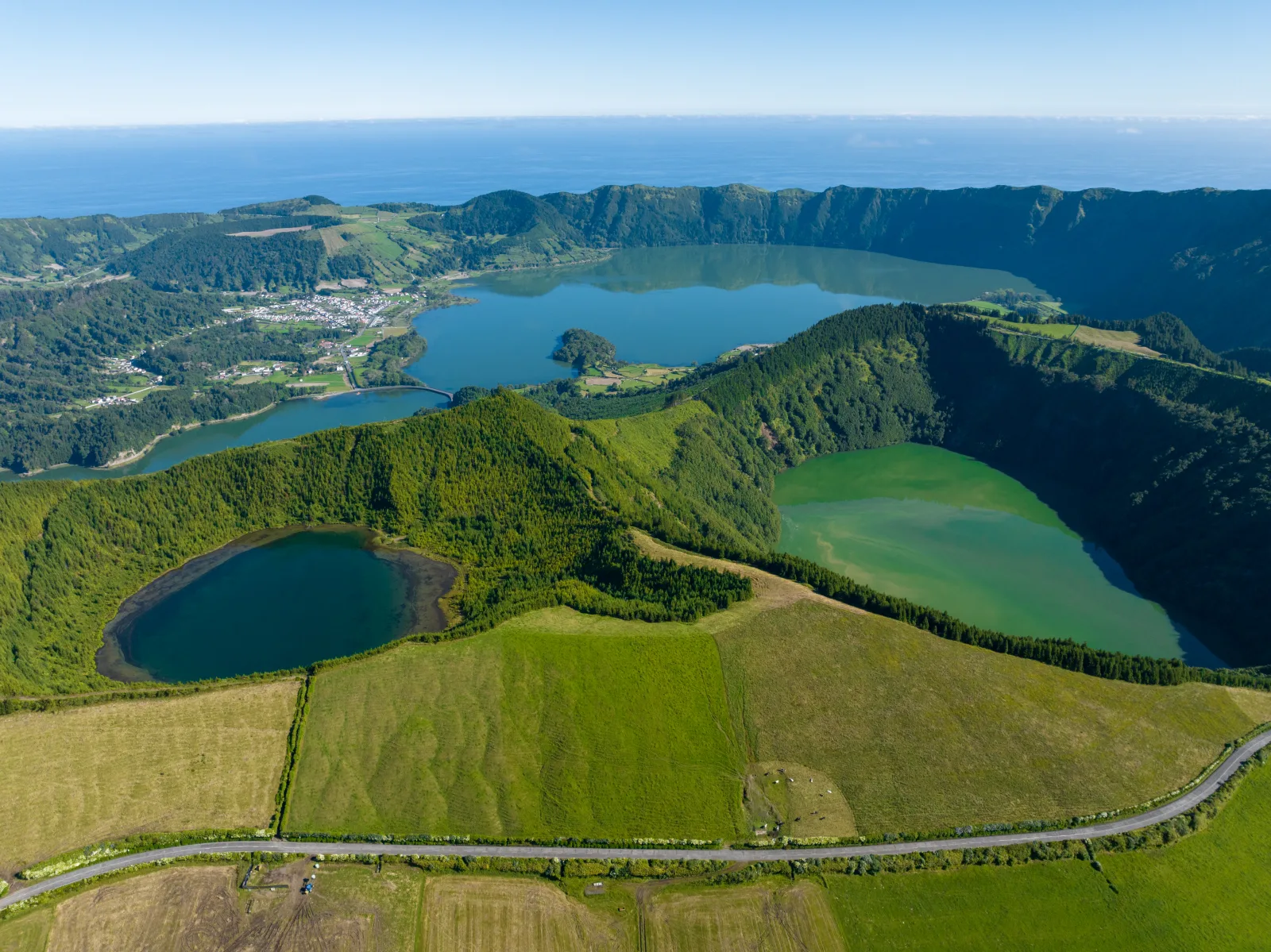
08:05 — Walk to the viewpoint. On a clear morning: two crater lakes, one a deep Prussian blue (Lagoa Azul), one a soft green (Lagoa Verde), separated by a thin strip of road and a small white church. The different colours come from light angle and microscopic algae, not any geological magic. Still extraordinary.
09:00 — If the crater fills with cloud before you’ve had a proper look, try Miradouro da Boca do Inferno, a 10-minute drive to the northwest. It clears faster and gives you the crater wall perspective rather than the bird’s-eye view — different angle, nearly as good.
09:30 — Descend to the crater floor and the village of Sete Cidades itself. A cluster of farms and whitewashed houses beside a small church on the lake edge. Walk to the water. The scale changes completely when you’re inside the crater versus looking down into it from the rim.
The Sete Cidades guide goes deeper on hiking routes, but the summary for a 4-day itinerary: unless the weather is clear and you have serious trail legs, don’t commit the whole day to the PR01 crater rim trail. It’s 12km and 4 hours, and if cloud closes in at midday you’ll walk the second half in grey. A two-hour wander through the village and along the lake shore is more reliable and nearly as satisfying.
Afternoon: Mosteiros + North Coast
12:30 — Lunch in the village at Restaurante 7 Cidades (reliable local food, €12–18 per person) or back toward the coast.
14:30 — Drive north from the crater to Praia dos Mosteiros, about 25 minutes. A black volcanic beach with basalt sea stacks rising straight out of the Atlantic. The surf is too strong for swimming on most days, but for late-afternoon photography and sheer geological drama, it’s one of the best spots on the island.
16:00 — Walk the clifftop path north from Mosteiros. No formal trail, just a rough track along the edge. The north coast here is exposed and windswept in a way the south coast isn’t.
17:30 — Drive back to Ponta Delgada (~35 min). Shower. Rest.
Evening options in Ponta Delgada: Tasca O Pescador on Rua João Moreira for grilled limpets and fresh fish, or Anfiteatro near the marina for a slightly more composed dinner.
Day 2: East — Furnas, the Volcanic Village
Furnas has a dedicated Furnas guide for a reason — there’s a lot happening in one small area and the sequencing matters. For a 4-day itinerary, here’s how to fit it in a single long day.
Morning: The Caldeiras
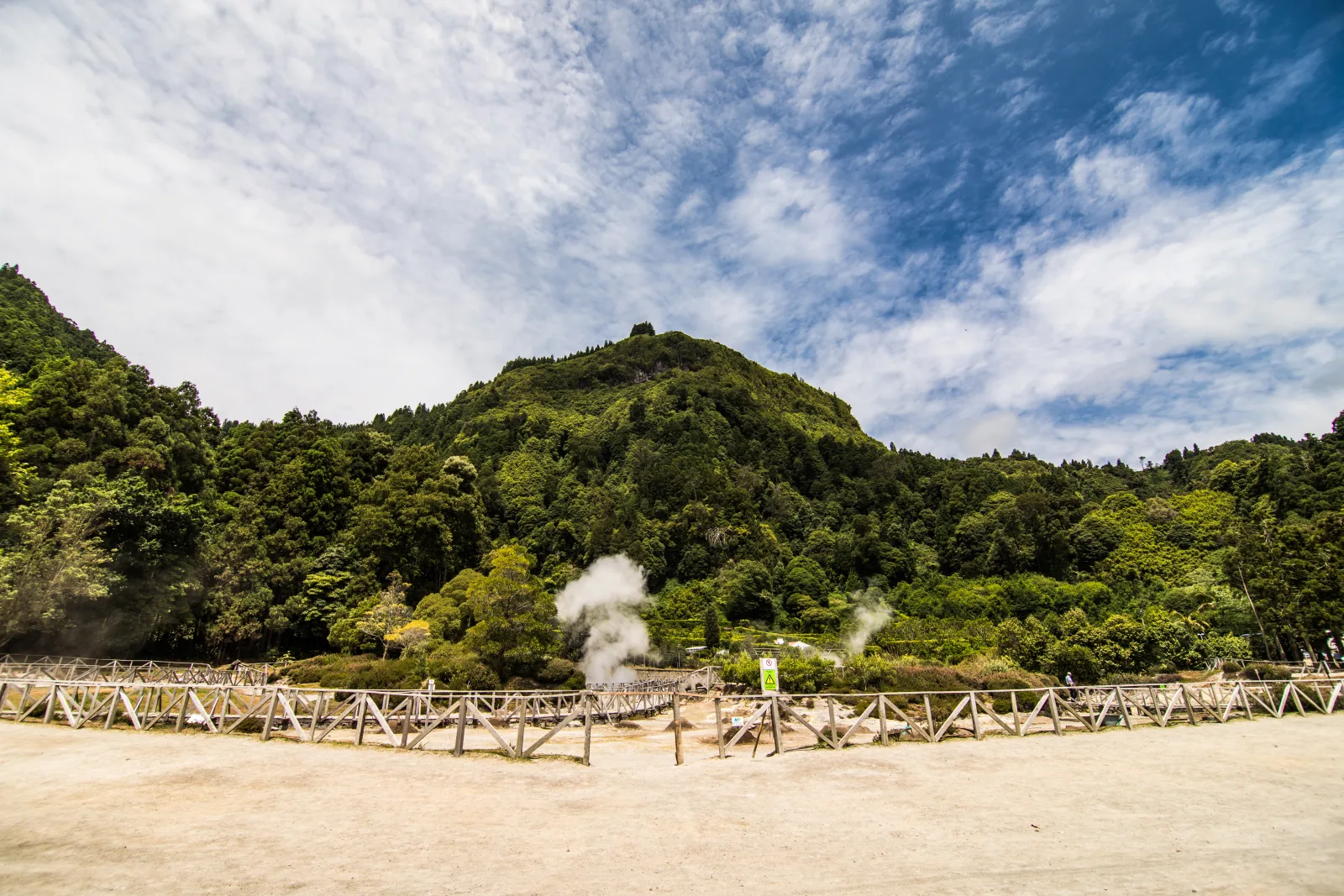
09:00 — Caldeiras das Furnas, the fumarolic field at the edge of Lagoa das Furnas. Free entry. A short walk reveals boiling mud pots, steam vents, and geothermal springs marked with handwritten temperature signs — some vents above 100°C. The smell is sulphur. Sharp, volcanic, specific. You’ll either love it or find it overwhelming, but there’s nothing else quite like it in Western Europe.
09:45 — Walk the lake shore. Lagoa das Furnas is nearly a kilometre wide, ringed by eucalyptus and hydrangeas. The geothermal cooking pots where restaurants cook the cozido are on the south shore — a cluster of covered holes in the ground, steam wisping from the edges. Worth seeing before lunch to understand what you’re about to eat.
10:30 — Drive 5 minutes into Furnas village. Walk the central square. The Parque Terra Nostra botanical garden entrance is here — save the thermal pool for after lunch when you need it most.
Afternoon: Cozido + Terra Nostra Pool
The cozido das Furnas is the meal of this itinerary. A traditional stew of beef, pork, blood sausage, chouriço, and vegetables slow-cooked for 6–8 hours in terracotta pots buried in the geothermal ground at the lake edge. Tony’s and Restaurante Furnas are the two reliable options. The local move: reserve a table in advance, especially April through September. Doors open at 12:30pm and seats go fast.
Cost: €18–€25 per person. Worth every hour it cooked. The geothermal process produces a different texture in the meat and a mineral quality in the broth that no conventional kitchen can replicate.
12:30 — Cozido lunch. Eat slowly. Order the local wine. This is not a meal to rush.
14:30 — Terra Nostra Garden Hotel thermal pool. Entry for non-hotel guests: €18. The pool is terracotta brown — iron minerals in the water — permanently at 38–40°C, and it will stain light-coloured swimwear. The botanical garden wrapping the pool has 150 years of subtropical plantings: tree ferns, camellias, ginkgos, a dragon tree at the centre. You don’t have to care about plants to find it extraordinary.
16:30 — Exit Terra Nostra. Optional: stop at the small grocery near Furnas square for queijo de São Miguel, the local semi-cured cheese.
20:00 — Poça da Dona Beija, if you have any energy left. Public thermal pools on the river at the edge of the village, genuinely beautiful at night — steam rising from dark water under a dark sky. Entry by small donation (€3–5). Open until 11pm. Don’t skip these.
Day 3: Centre — Lagoa do Fogo and the North Slope
Day 3 has the same structure as the first two: early start required, more relaxed afternoon. The centrepiece is a hike to a crater lake that most visitors miss because they arrive an hour too late.
Morning: The Hike to Lagoa do Fogo
Lagoa do Fogo — Lake of Fire — sits at 590m in the interior of São Miguel and is the most purely wild thing on the island. No development. No facilities at the lake itself. Just a volcanic crater lake ringed by humid laurisilva forest. The Lagoa do Fogo guide has the full detail, but the essential timing rule is the same as Sete Cidades:
08:30 — Arrive at the Miradouro da Lagoa do Fogo trailhead on the EN3 central road. On a clear morning, the lake is visible from the road before you start walking. That’s your green light. If it’s already buried in cloud at 8:30am, go do something else and try again in the afternoon — it can clear briefly in late afternoon on some days.
09:00 — Start the descent. The trail drops 350m over roughly 3km on a well-marked path. Slippery after rain — wear hiking shoes with grip. The laurel forest closes in below the treeline, and the lake appears suddenly as the trail opens onto the crater floor.
10:30 — At the lake. Swimming is not allowed. Sit at the edge, eat something, watch the water. On a clear morning the silence here is the specific quality that this island does better than almost anywhere — no traffic, no voices, just wind and birds.
11:30 — Back at the trailhead. Drive north over the ridge toward Ribeira Grande.
The hike is 6–7km return with about 350m of elevation change — moderate difficulty. Allow 2.5–3 hours for the full loop including time at the lake.
Afternoon: Caldeira Velha + North Coast
12:00 — Caldeira Velha, a short detour on the north slope of the central massif. A waterfall drops through tree ferns into a shallow thermal pool at roughly 27°C. Entry: €2.50. The pool temperature is cooler than Terra Nostra — more refreshing than soaking — and the setting underneath the fern canopy is genuinely beautiful. Budget 45 minutes.
13:30 — Ribeira Grande for lunch. This is a working north-coast town that doesn’t particularly care about tourism, which makes it better. Cervejaria Estrela da Noite or any of the lunch spots around Largo do Marquês de Pombal are reliable and cheap (€10–15 per person). Skip the tourist cafe near the seafront — locals eat further into the centre.
15:30 — Optional: drive east along the north coast toward Nordeste. This stretch rarely appears in itineraries and is better for it — rolling green hills, terrace farms, and a wetter microclimate that feels noticeably different from the south side of the island. Worth an hour if you’re curious about what São Miguel looks like when it’s not being photographed.
17:00 — Return to Ponta Delgada via the EN1-1A south coast road. About 40 minutes.
Costs and Logistics at a Glance
| Item | Cost | Notes |
|---|---|---|
| Car rental, 4 days | €280–€320 total | Book well ahead — prices spike July–August |
| Accommodation, 4 nights in Ponta Delgada | €240–€400 total | Mid-range guesthouses — lower end via Airbnb |
| Cozido das Furnas lunch | €18–€25 per person | Reserve the restaurant in advance |
| Terra Nostra thermal pool | €18 per person | Garden and pool included — stains light swimwear |
| Caldeira Velha | €2.50 per person | |
| Lagoa do Fogo hike | Free | Parking €2/hour at peak weekends |
| Vista do Rei / Sete Cidades | Free | Parking €2/hour peak weekends |
| Poça da Dona Beija | €3–€5 donation | Evening — open until 11pm |
| Average restaurant meal, Ponta Delgada | €12–€22 per person | Local tascas at the lower end |
Daily budget estimate (per person, mid-range): €100–€140 all-in. Budget travelers staying in guesthouses and eating at local restaurants can do €70–€90. The island is not expensive for what you get.
A note on accommodation: Terra Nostra Garden Hotel in Furnas (~€200–€300/night) is genuinely one of the best places to stay on São Miguel. If the Furnas experience is a priority, book one night there — Night 2 of your trip — and you’ll have the thermal pool to yourself in the early morning before the day visitors arrive.
Day 4: Ponta Delgada and Your Wild Card
Three early starts means Day 4 begins at a civilised hour. This is the day to actually be in the city you flew into.
Morning: The City You Flew Into
Most visitors to São Miguel spend their time in Ponta Delgada only in transit — arriving jet-lagged on Day 1, leaving loaded with luggage on the last morning. Day 4 fixes that.
07:30 — Mercado da Graça, the covered market just off Avenida Infante D. Henrique. Opens at 7am. Fresh fish from the overnight boats, queijo de ilha (sharp and salty, the island’s everyday cheese), greenhouse pineapples grown in São Miguel’s volcanic soil, Azorean butter in waxy slabs, and pastéis de feijão at the bakery stalls inside. Buy something. Eat it at a table on the street outside.
09:00 — Jardim António Borges. Five minutes from the market and almost completely ignored by tourists. Tree ferns ten metres tall, duck ponds, ruined Victorian follies, and subtropical planting that’s been growing undisturbed for over a century. Free entry. It’s the one spot in Ponta Delgada that feels genuinely local rather than visitor-facing.
10:30 — Portas da Cidade, the baroque gates at the harbour front. Walk west along the promenade toward the marina. The view back to the city across the waterfront — low whitewashed buildings against the hillside, the fortified harbour wall in the foreground — is the best photography angle in Ponta Delgada.
12:30 — Lunch. Restaurante A Colmeia on Rua do Rego for traditional Azorean food, or O Mercado near the market for alcatra, bacalhau, and grilled limpets.
Afternoon: Your Wild Card
Four options, pick one based on what you haven’t done yet:
Snorkeling near Lagoa (30 min south of Ponta Delgada): clear Atlantic water, volcanic rock covered in anemones and sea urchins, parrotfish. No facility, almost no crowds on weekday afternoons. Bring your own mask — water temperature in summer is around 22–24°C.
Ribeira dos Caldeirões (northeast, 40 min from Ponta Delgada): a waterfall system cascading through old water mills in a narrow green gorge. It photographs like a fantasy film set — in person it’s even better. Small park entrance, well-maintained trail. Budget 1.5 hours.
Whale watching from Ponta Delgada marina: April and May are peak season for blue whales in the Azores — the largest animals on earth, visible on a good morning within 30 minutes of the harbour. Trips run 3–4 hours and cost €65–€75 per person. Book through a local operator rather than an aggregator. The whale watching guide covers what each operator offers and how to read sea conditions before you book.
Return visit: If Sete Cidades was fogged in when you arrived on Day 1, go back this afternoon. You know the roads now, and the light on the crater lakes in late afternoon is completely different from morning light. It won’t be crowded on a weekday.
The Bottom Line
Four days in São Miguel is the honest answer to most first-time planning questions. It’s enough to feel like you’ve actually been somewhere rather than just passed through. You’ll leave having done Sete Cidades, Furnas, and Lagoa do Fogo — the three experiences that define the island — with time for a city morning and one afternoon of your choosing. You’ll also leave with a mental list of things you want to come back for. Most people who do four days here return for a longer trip within a year or two. That’s not a failure of the itinerary — it’s what the island does to people.
The two things that make the biggest practical difference: start early every day and book Furnas in advance. Everything else is negotiable.
I’m biased, obviously. But four days on São Miguel done properly is worth every hour it takes to get here.
If you want the bookable parts of this plan sorted before you arrive, these are the ones that fill up first:
What to Read Next
If you’re still planning the broader trip, these guides cover the decisions that come before you fill in the days:
- How long to actually spend here: How many days in the Azores? — the honest case for 4 days vs 5 vs a longer trip, and when it makes sense to add a second island.
- If four days isn’t quite enough: The 5-day São Miguel itinerary adds a full north coast day and makes the Furnas overnight more viable.
- The hikes in more detail: Best hikes in São Miguel covers seven routes with difficulty ratings, timings, and the ones that aren’t worth the effort.
Have more or less time? The São Miguel itinerary guide compares the 3, 4, 5 and 7-day plans side by side, so you can see what each extra day adds before you commit.
But it’s also the kind of plan Pocket Guide Azores generates in one click — and adapts to your specific dates, the weather forecast for each of your four days, where you’re staying, and whether the Day 4 wild card for you is snorkeling or whale watching or just sleeping in. That’s the actual product. If this itinerary sounds useful and you’d rather not maintain it as a Google Doc, get it on iOS or Android — same plan, customized to your trip, weather-aware, and updated continuously by the same local Azorean writing these guides.
Frequently asked questions
Is 4 days enough for São Miguel? +
Four days is the sweet spot for most first-time visitors. You can cover the two essential experiences — Sete Cidades and Furnas — plus Lagoa do Fogo and still have time for Ponta Delgada. You won't see everything, but you'll leave with a real sense of the island rather than a rushed highlights reel.
What is the best order to visit São Miguel in 4 days? +
West (Sete Cidades) on Day 1, East (Furnas) on Day 2, Centre (Lagoa do Fogo and north coast) on Day 3, and Ponta Delgada city on Day 4. This distributes the driving evenly and puts your heaviest days first while you have the most energy.
Do I need a car for 4 days in São Miguel? +
Yes. There is no realistic way to visit Sete Cidades, Furnas, and Lagoa do Fogo without a car. Taxis exist but the costs stack up fast and you lose all timing flexibility. Rent a car at the airport on arrival — it's the single best logistical decision you can make for this trip.
How much does 4 days in São Miguel cost per person? +
Budget roughly €115–€155 per person per day covering accommodation, car rental, food, and entrance fees. Mid-range stays in Ponta Delgada run €60–€100 per night. Furnas thermal pools (Terra Nostra) cost €18. Cozido lunch at Furnas is €18–€25. The island is noticeably cheaper than mainland Portugal for food.
Where should I stay for a 4-day São Miguel trip? +
Ponta Delgada for all 4 nights is the practical choice — it's central, has the best dining options, and you can reach every corner of the island in under an hour. The one exception: if the full Furnas hot-spring experience is your priority, one night at Terra Nostra Garden Hotel in Furnas is worth every euro.
Is 4 days enough to see both Furnas and Sete Cidades? +
Yes, comfortably. Sete Cidades on Day 1 and Furnas on Day 2 is the standard local recommendation. Each is a full day on its own — don't try to combine them. Four days also gives you Day 3 for Lagoa do Fogo and Day 4 for the city.
What's the best time of year for 4 days in São Miguel? +
May through October gives you the best odds of clear views at Sete Cidades and Lagoa do Fogo. June and September are the local recommendation — good weather, fewer crowds. July and August are peak season: warm and reliable but busier. Winter trips are doable but the hilltop viewpoints will be clouded in more often.
What should I know before visiting São Miguel for the first time? +
Bring a light rain jacket regardless of the forecast — the weather shifts fast. Book Furnas restaurants and Terra Nostra in advance if visiting April to September. Rent a car the moment you land. Build flex time into each day: São Miguel rewards people who slow down.