
Also available in Português
Azores in January: Weather, What's Open & What to Do (A Local's Guide)
The Azores in January from a local: real weather, what's open, the thermal pools, whale watching, a 3-day plan, and who should (and shouldn't) come this month.
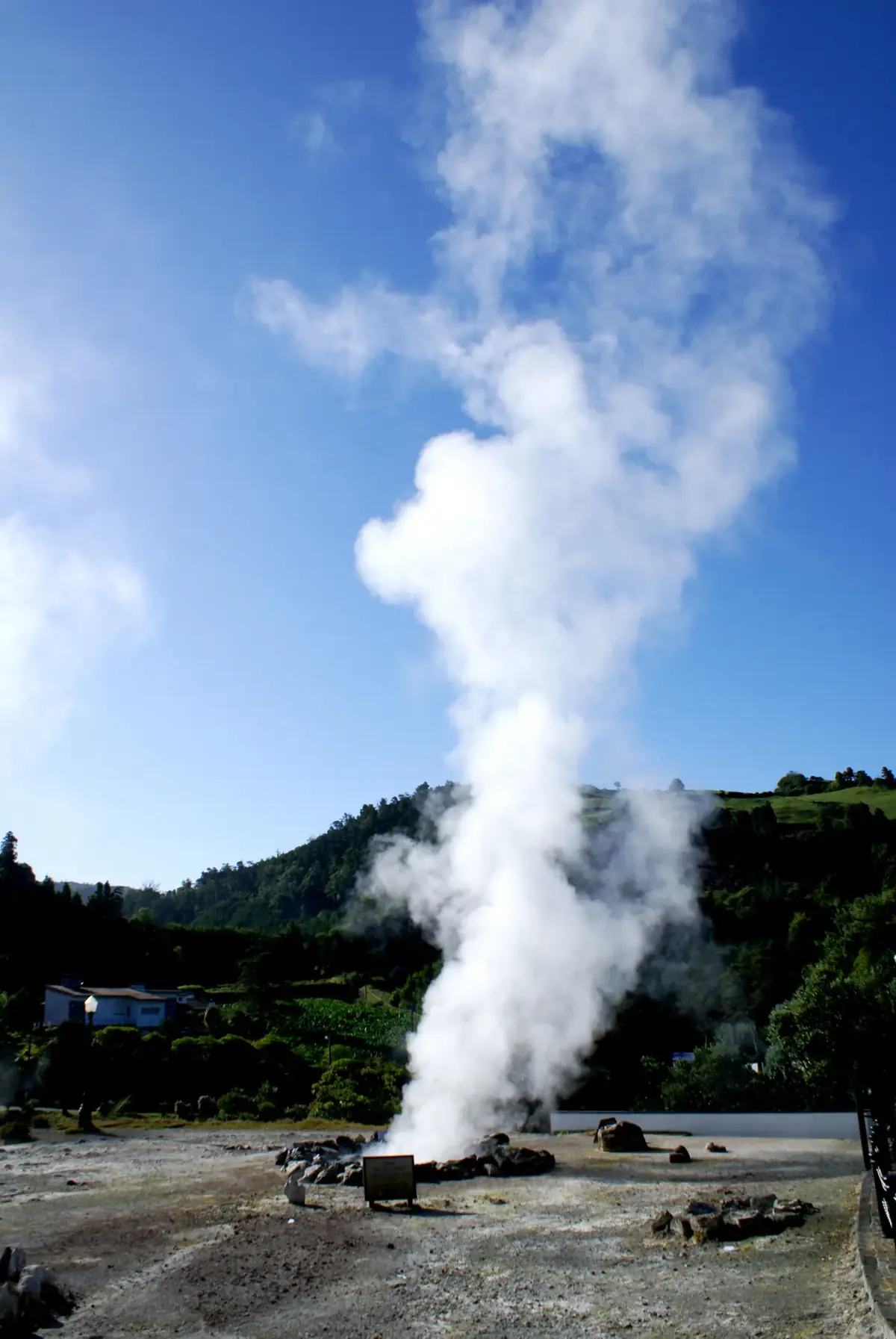
The honest answer about the Azores in January: it’s not the month for postcard crater views, and it’s the best month of the year for thermal pools. If you can live with the first half of that sentence, you get the second half almost to yourself — empty trails, steam rising from Furnas in the cold air, and the lowest prices of the year.
I live on São Miguel. January is when we use the hot springs the most, eat cozido on a rainy Sunday, and watch the Atlantic throw itself at the north coast. Below is what the month is really like, what’s open, what isn’t, and how to plan days around weather that changes every couple of hours.
What is the weather like in the Azores in January?
Mild, wet and changeable — rarely cold, rarely settled. Here’s the realistic picture for São Miguel at sea level:
| What | January in the Azores |
|---|---|
| Daytime high | ~16-17°C (61-63°F) |
| Night-time low | ~11-13°C (52-55°F) |
| Sea temperature | ~16-17°C (61-63°F) |
| Days with some rain | ~15-20 (sources differ) |
| Sunrise / sunset (Ponta Delgada) | ~08:00 / ~17:35-17:50 |
| Daylight | Just under 10 hours |
| Crowds | The quietest month of the year |
| Prices | The lowest of the year |
Three things those numbers don’t tell you:
- The rain comes in bands, not days. A grey 9am is often a bright 2pm. Most locals don’t cancel plans because of the morning forecast — we move them.
- Altitude changes everything. The crater rims at Sete Cidades and Lagoa do Fogo are 500-900 m up. They’re colder, windier, and in cloud far more often than the coast. Frost on clear nights is possible up there.
- Wind matters more than temperature. A 15°C day with a strong northerly feels colder than the number suggests. Pack for wind, not for cold.
For the full month-by-month data, see the Azores weather by month guide.
What is open in the Azores in January?
Almost everything you’d want — with a few honest exceptions.
| Place / activity | January status | Notes |
|---|---|---|
| Terra Nostra (Furnas) | Open | Botanical garden + large thermal pool. Hours vary by season — check before you go. |
| Poça da Dona Beija (Furnas) | Open | Several small pools, open into the evening. Best after dark on a cold night. |
| Caldeira Velha | Open, shorter hours | Winter hours run roughly 9:30-17:30 with last entry at 16:30. Book the timed slot on the official Parques Naturais site. |
| Ponta da Ferraria | Depends on the sea | The ocean hot spring is only usable when the swell is low. |
| Whale watching | Running, weather-dependent | Sperm whales and dolphins. Boats cancel on rough days. |
| Ilhéu de Vila Franca boat | Closed | Summer only (12 June–11 October in 2026). |
| Restaurants in towns | Open | Some small rural places shorten hours or close for a week or two. Ring ahead for cozido. |
| Hiking trails | Open | Expect mud. Some trails close after heavy rain — check the official trails site before driving out. |
The Caldeira Velha details live in my Caldeira Velha guide, including the €10 vs €3 ticket difference and the official booking link.
What to do in the Azores in January
Make the thermal pools your anchor
This is the month they were made for. The colder the air, the better the 35-40°C water feels — and in January you’ll often share the pool with a handful of people instead of a tour bus.
My order of preference in winter:
- Poça da Dona Beija after dark. Small pools under the trees, steam everywhere, open late. The best end to a wet Furnas day.
- Terra Nostra in the morning. The big orange pool inside one of the best gardens in Portugal. Go early, then walk the garden while you dry off.
- Caldeira Velha on a grey day. Fog in the forest and the warm waterfall feel wild in winter. Book the slot online — it still sells out on weekends.
Every pool compared, with prices and temperatures: thermal pools in São Miguel.
Eat cozido das Furnas on the wettest day
Cozido — meat and vegetables slow-cooked for hours in the volcanic ground by the Furnas lake — is winter food. Watch the pots being lifted out of the earth around mid-morning, then book a table for lunch. On a rainy January day, this is the local move.
Watch the north coast in a storm
The north coast around Ribeira Grande and the Nordeste cliffs is at its most dramatic when a winter swell rolls in. Stay well back from the edge and the breakwaters — the sets are bigger than they look and rogue waves are real.
Hike — but pick the trail by the weather
Coastal and lower forest trails are fine in January. Crater-rim hikes (Sete Cidades rim, Lagoa do Fogo) are worth it only on a clear morning — climb into the cloud and you’ll see white. Expect mud on most paths, so bring waterproof shoes with grip. One safety note: on very windy days, skip the forest trails — strong gusts bring down branches and trees across the paths.
On a wet afternoon: the indoor list
When the rain sets in for a few hours, these are the places locals actually send visitors to. Several run shorter winter hours, so check before you drive over:
- Museu Carlos Machado (Ponta Delgada) — natural history and Azorean life, in an old convent.
- Plantação de Ananás Arruda (Fajã de Baixo, next to Ponta Delgada) — the pineapple greenhouses, free to walk through.
- Cerâmica Vieira (Lagoa) — a traditional pottery workshop where you can watch the work being done.
- Observatório Vulcanológico e Geotérmico (Lagoa) — how the volcanoes under your feet actually work.
- Gorreana tea plantation (north coast) — one of Europe’s oldest tea plantations, free to visit.
- Gruta do Carvão (Ponta Delgada) — a lava tube under the city. Visits run on set days and times, especially in low season.
Go whale watching on the calmest day
Sperm whales are resident, so January trips can still be excellent. Book a flexible ticket and give the operator your whole stay — they’ll move you to the calmest day.
Join the end of the Christmas season
The first days of January still belong to the Christmas season. On São Miguel, groups of friends, families and parishes go out singing the cantorias de Reis in the days leading up to Dia de Reis (6 January), visiting houses with traditional songs, sweets and liqueurs. If you’re on the island in the first week, ask at your accommodation — locals love it when visitors take an interest.
Book dinner early on the “friendship Thursdays”
The four Thursdays before Carnival are a very Azorean tradition, strongest on São Miguel and Terceira: Dia dos Amigos (men’s friends), Dia das Amigas (women’s friends), then Compadres and Comadres. Groups go out for long dinners, and restaurants in Ponta Delgada fill up. Carnival falls on 9 February 2027, so by my count that puts the Amigos on 14 January and the Amigas on 21 January, with Compadres on 28 January — check local listings, because the dates move with Easter every year. If you’re dining out on one of those Thursdays, book ahead.
A 3-day January plan for São Miguel
This assumes you’re based in Ponta Delgada and that you’ll swap days around depending on the forecast. Check the live webcams each morning before deciding.
Day 1 — Furnas (any weather)
09:30 — Drive to Furnas (about 45 minutes). Walk to the caldeiras in the village and watch the steam in the cold air. 10:30 — Lagoa das Furnas shore: see the cozido pots come out of the ground. 13:00 — Cozido lunch (booked the day before). 15:00 — Terra Nostra pool and garden. 18:30 — Poça da Dona Beija after dark, then drive back.
Day 2 — The clear-morning day
08:30 — If the webcams show a clear rim, drive straight to Sete Cidades and the Vista do Rei viewpoint. 11:00 — Down to Mosteiros on the coast if the cloud closes in. 14:00 — Late lunch in Ponta Delgada, then the old town on foot. 16:00 — Caldeira Velha on your booked slot (last entry 16:30 in winter).
Day 3 — The wild coast
09:00 — Whale watching from Ponta Delgada if the sea allows. If not, swap with Day 2. 13:00 — Ribeira Grande and the north coast in the afternoon swell. 16:00 — Gorreana tea plantation on the way back, before it gets dark.
The rule for January: decide each morning, not the night before.
Who should come in January — and who shouldn’t
| You’ll love January if… | Choose another month if… |
|---|---|
| Hot springs and food are high on your list | You need clear crater views every day |
| You want empty trails and quiet towns | Swimming in the sea is a priority |
| You’re happy to rearrange days around the weather | You’re on a tight, fixed schedule |
| You want the lowest flight, hotel and car prices | You want long days — light goes before 6pm |
| Moody light and big seas sound like photography | You hate rain, full stop |
If January sounds wrong for you, the best time to visit the Azores guide walks through every month. And if you’re deciding between the two coldest months, February is very similar but with slightly more light and Carnival — see the Azores in February.
Which island in January?
São Miguel is the right base for most January trips. It has the most flights, the thermal pools, the most indoor options for a wet afternoon, and enough micro-regions that one side of the island is usually drier than the other. Base yourself in Ponta Delgada for restaurants and easy access to both coasts, and consider one night in Furnas so you can walk to the thermal pools after dark.
- Terceira works well too. Angra do Heroísmo, the old UNESCO-listed town, is one of the best wet-day places in the archipelago — and Terceira’s Carnival starts building in February.
- Pico is beautiful in winter, but the mountain is a different story: the summit can carry snow and ice, every climb has to be registered at the Casa da Montanha, and climbs are stopped when conditions are bad. Don’t build a January trip around summiting Pico.
- Flores and Corvo are the most exposed islands. Winter flights there are often delayed or cancelled, so only go with spare days on both ends.
What to pack for January
- Waterproof jacket with a hood — umbrellas don’t survive the wind.
- Warm mid-layer (fleece or light down) for the highlands and evenings.
- Waterproof hiking shoes with grip — the trails are muddy.
- An old or dark swimsuit — iron-rich thermal water stains light fabric orange.
- Quick-dry trousers and a spare pair of socks in the car.
- Flip-flops for the thermal pool changing areas.
The bottom line
January in the Azores isn’t the brochure version — it’s the local version. Fewer people, lower prices, the thermal pools at their best, and weather that rewards anyone willing to plan day by day. Come for Furnas, the hot springs, the food and the coast, and treat every clear crater view as a bonus rather than a promise.
What to read next
- Best time to visit the Azores — every month compared, side by side
- Azores in February — the next month: a little more light, plus Carnival
- Thermal pools in São Miguel — your main activity this month
- Azores weather by month — the raw air, sea and rain numbers
And if you’d rather not juggle the January weather yourself, Pocket Guide Azores builds optimized day-by-day itineraries that account for the island’s microclimates and the forecast for your actual dates — so you can focus on the thermal pools and the cozido, not on refreshing webcams every morning.
Frequently asked questions
Is January a good time to visit the Azores? +
It's a good time for a specific kind of trip: thermal pools, food, quiet trails, dramatic coastline and the lowest prices of the year. It's a poor time if your plan depends on clear crater views every day or on swimming in the sea. Come with a flexible plan and rain gear, and January is one of the most atmospheric months on São Miguel.
How cold is the Azores in January? +
Mild rather than cold. At sea level, daytime highs sit around 16-17°C (61-63°F) and nights around 11-13°C (52-55°F). The highlands around Lagoa do Fogo and Sete Cidades feel noticeably colder and windier, and frost is possible up there on clear nights. Snow at sea level isn't part of the picture — it only appears on the summit of Mount Pico.
Does it rain every day in January? +
Most days bring at least one shower, and climate sources count roughly 15 to 20 days with some rain in January. The good news is that Azorean rain usually comes in passing bands rather than all-day downpours, so a wet morning often turns into a bright afternoon. Plan each day around the forecast and the webcams instead of a fixed schedule.
Can you swim in the Azores in January? +
The sea is around 16-17°C (61-63°F), which is too cold for most people. The thermal pools are the swim of the month: Terra Nostra, Poça da Dona Beija and Caldeira Velha are open year-round, and the contrast between cool air and warm iron-rich water is at its best in January.
Can you see whales in the Azores in January? +
Yes, sperm whales live in Azorean waters year-round and dolphins are common. The big migratory species — blue, fin and sei whales — arrive from around March. In January, boats only go out on calm days, so book a flexible ticket and keep a spare day in your plan.
Is the Vila Franca islet open in January? +
No. The boat to Ilhéu de Vila Franca only runs in summer — in 2026 the season was 12 June to 11 October. In January you can see the islet from the Vila Franca do Campo seafront or from a boat tour that doesn't land.
Do I need a car in the Azores in January? +
Yes, if you want to react to the weather. The whole trick of a January trip is moving between the clear side of the island and the thermal pools as the clouds shift, and that needs your own wheels. The good news is that January is when car rental prices are at their lowest.
What should I pack for the Azores in January? +
A proper waterproof jacket, a warm mid-layer, waterproof hiking shoes, quick-dry trousers, and an old or dark swimsuit for the thermal pools (the iron-rich water stains light fabric). An umbrella is close to useless in the Azorean wind — pack a hood instead.